
10 reasons why Commerce & Arts students are rethinking their post-12th plan in 2026

For decades, there was one honest answer to "how do I get an IIT degree": clear JEE. If you weren't from a PCM background, or your JEE rank didn't land, the IIT ecosystem simply wasn't on the table. That's no longer true and a growing number of Class 12 students, parents, and career counsellors are noticing it.
This isn't a listicle about test prep hacks or which coaching institute to join. It's about a shift already underway: more students from commerce, arts, and even science backgrounds are choosing a different route into a serious, credentialed, IIT-affiliated degree one built around business and technology rather than pure engineering. Here are 10 reasons that shift is happening.
1. The JEE-or-nothing model was never built for most students
JEE Main and Advanced are built to test one thing: aptitude for engineering, filtered through Physics, Chemistry, and Mathematics. That's a fair test for students who want engineering. It's an irrelevant gate for a commerce student who wants to work in product strategy, or an arts student who wants to work in policy analytics. For years, the IIT ecosystem simply had no on-ramp for these students regardless of how capable they were. That gap is exactly what's shifted in 2026.
2. AI has changed what "employable" actually means
Ten years ago, "technical skills" mostly meant "can you code." In 2026, the more valuable and rarer skill is understanding how AI, data, and automation change a business decision pricing, marketing, operations, hiring. That's a business-and-technology skill set, not a pure engineering one, and it's exactly why programmes combining management fundamentals with applied AI and Big Data are seeing rising demand from students who never intended to become software engineers in the first place.
3. Commerce and arts toppers have nowhere to put an IIT ambition until now
Every year, thousands of commerce and arts students score well enough in Class 12 to be genuinely IIT-calibre, but their stream makes zero difference to their eligibility, because B.Tech admissions run entirely through JEE and PCM-based qualification. For the first time, there's a route into an IIT undergraduate degree that doesn't require having taken Physics and Chemistry in Class 12 at all just a 60% aggregate and a reasoning-based qualifier test.
4. Parallel-degree students want a real credential, not busywork
A growing number of students enrolled in a B.Com, BBA, or humanities degree want to add something more rigorous alongside it not a certificate course, an actual degree with academic weight. A fully online, weekend-live-session format designed specifically to run alongside another full-time course fills exactly this gap, letting students graduate with two credentials instead of choosing between them.
5. Competitive exam aspirants are done losing years to a single outcome
CAT, UPSC, CLAT these are exams where even excellent preparation can fail to convert, for reasons entirely outside a student's control. Increasingly, aspirants are unwilling to leave a one-to-two-year gap in their academic record while they prepare. A parallel, credentialed degree with staged exit points a Certificate, a Diploma, a full Bachelor's means the years spent preparing for a competitive exam are never academically wasted, regardless of the exam's outcome.
6. The hiring market is rewarding a specific hybrid skill set
Roles like Product Management Associate, Business Analyst, and Digital Strategy Analyst are among the fastest-growing entry-level categories right now and they all reward the same combination: business fundamentals plus fluency in AI, data, and cloud systems. That combination used to require stitching together an MBA after a B.Tech, or a B.Com plus a separate analytics certification. Students are increasingly choosing to get both, integrated, from year one rather than bolting them together after the fact.
7. NEP 2020 flexibility is finally showing up in real degree structures
The National Education Policy's promise of multiple entry and exit points has mostly stayed theoretical for most Indian institutions. Degrees genuinely structured this way a recognised Certificate after one year, a Diploma after two, a full Bachelor's after three, Honours after four are still rare enough that students actively seek them out, specifically because every year completed leaves them with something, rather than requiring a single four-year bet.
8. Working professionals want an IIT credential without quitting their job
There's a specific, growing group of early-career professionals who want an IIT-affiliated qualification but can't take four years away from work to get one. A fully online model with weekend live sessions and recorded lectures no age limit, no requirement to be a full-time student is opening a door that simply didn't exist for this group before.
9. Students are prioritising optionality over prestige-only bets
A degree that only pays off if you finish all four years and land a specific outcome is a high-stakes bet. Students in 2026 are increasingly choosing programmes where a Year 1 exit still leaves them with a real, recognised Certificate, and a Year 2 exit leaves them with a Diploma reducing the downside risk of committing to something new, without giving up the upside of completing it fully.
10. The "IIT ecosystem" is no longer synonymous with "B.Tech only"
Perhaps the biggest shift: for the first time, IIT alumni status, campus convocation eligibility, and an IIT-issued degree are available through a route that has nothing to do with JEE or core engineering. That's a genuinely new category, not a rebranded old one and it's exactly why interest has run ahead of expectations.
Where this is actually happening right now
The clearest example of this shift is the IIT Jodhpur B.S. in Management and Technology, delivered in partnership with Masai a 141-credit, 4-year degree open to Class 12 students from any stream, with no JEE requirement, built around business fundamentals combined with applied AI, Big Data, and Industry 4.0 coursework.
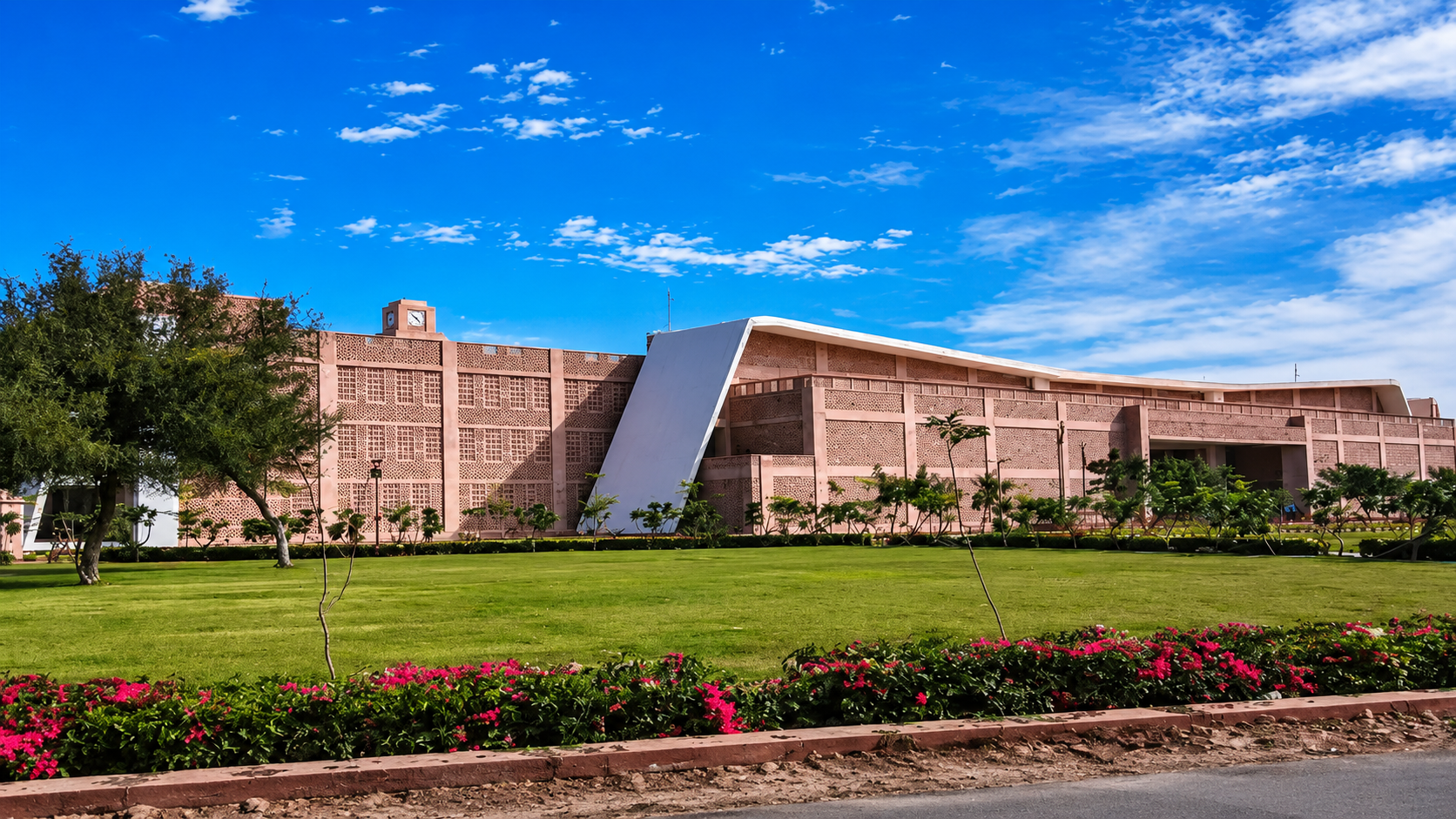
Because demand for the first batch has run ahead of what was initially planned for, IIT Jodhpur and Masai have opened Batch 2, with the next entrance test scheduled for 13th September 2026 you can check full eligibility, curriculum, and admission details on the official programme page here.
A quick look at what makes it relevant to everything above:
Admission process and Batch 2 dates
If any of the reasons above sound like your own situation, here's how the process works.
Step 1: Apply online. Pay the ₹999 entrance test fee and complete the application form.
Step 2: Clear the qualifier test. The next entrance test is on 13th September 2026, conducted online 60 MCQs across Logical Reasoning, Verbal Ability, and Numerical Ability in 120 minutes. No advanced mathematics is required.
Step 3: Attend counselling. Shortlisted candidates go through detailed programme guidance and confirm their seat with a ₹5,000 seat booking amount.
Step 4: Begin the programme. Year 1 fee is ₹1,35,000, with Years 2-4 at ₹1,40,000 each a total of ₹5,60,000 across four years.
Check eligibility and apply for Batch 2 →
The bigger shift
None of this means JEE is going away, or that a B.Tech stops mattering. It means the IIT ecosystem has, made room for a different kind of student one whose strengths were never going to show up on a Physics-Chemistry-Mathematics paper, but who's exactly the profile the AI-and-business hiring market is now looking for.
Also Read
- IIT Jodhpur B.S. Degree in Management and Technology: A new way into the IIT ecosystem
- Is IIT Jodhpur's BS in Management and Technology worth it? Careers, salary & job scope in 2026
- IIT Jodhpur BS Management & Technology: 7 Careers You Can Pursue After Graduation
- IIT Jodhpur BS Management & Technology Curriculum 2026: Subjects, AI, Big Data & Career Skills
For queries: WhatsApp +91 87929 74750 | iitj.programs@masaischool.com