
Business Analyst vs Data Analyst: 2026 career guide

A hiring manager posts a Business Analyst role. A candidate applies with a portfolio full of Python and regression models. Neither is wrong, the two titles have blurred that much. Banking, retail, healthcare, and SaaS companies are hiring aggressively for both roles right now, but they're not interchangeable. This guide lays out exactly where they split: the daily work, the pay bands, the tools worth learning, and how to figure out which lane actually suits you.
What does a Business Analyst actually do?
A business analyst sits between a company's leadership and its technical teams. Their job is to spot inefficiencies in a workflow, a budget, an IT system, or an organizational structure and recommend fixes that are grounded in evidence, not guesswork. On a given day, a business analyst might:

- Gather and prioritize functional requirements from stakeholders
- Build financial models to justify a proposed change
- Use SQL or Excel to validate an assumption with real numbers
- Present findings to leadership using charts, dashboards, and plain-language summaries
- Map enterprise architecture essentially, how a business's systems and processes fit together
The role leans heavily on communication. A business analyst who can't translate a spreadsheet into a compelling business case isn't doing the job, no matter how sharp their Excel skills are.
What does a Data Analyst actually do?
A data analyst lives closer to the raw numbers. Where a business analyst asks "what should we do about this problem" a data analyst asks "what does the data actually say is happening." Typical responsibilities include:
- Writing SQL queries to pull data from relational databases and warehouses like Snowflake or BigQuery
- Cleaning and transforming messy datasets using Python (pandas, NumPy) or R
- Building statistical models regression, clustering, time-series forecasting to find patterns
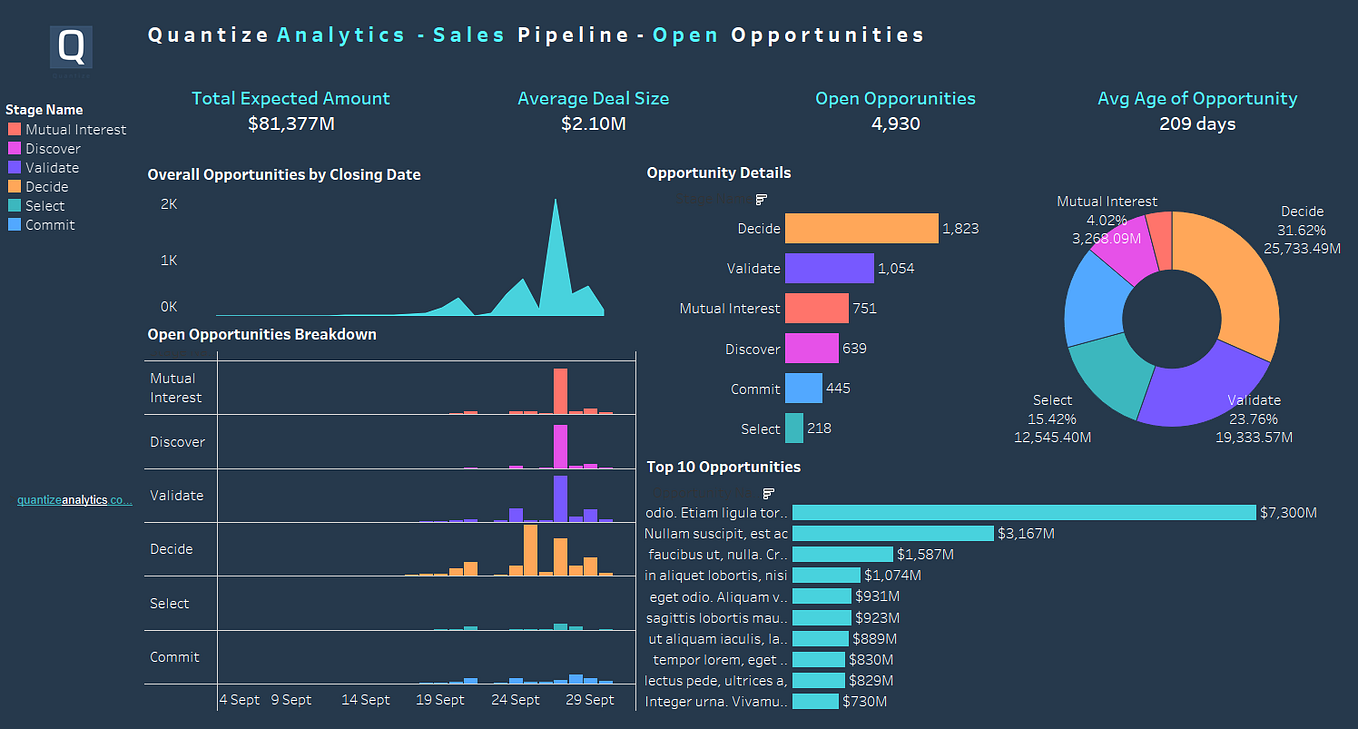
- Creating dashboards in Power BI or Tableau that let non-technical teams self-serve insights
- Running A/B tests and interpreting the results for product or marketing teams
Both roles ultimately serve the same goal better business decisions but they attack the problem from opposite ends: business analysts start with the business question, data analysts start with the dataset.
Business Analyst vs Data Analyst: Quick Comparison
Salary Snapshot: India, 2026
Compensation is one of the most-searched parts of this comparison, so here's where the numbers currently stand. According to Glassdoor's India salary data, the average annual business analyst salary nationally sits around ₹9,00,000, with city-level variation Bengaluru runs highest at roughly ₹10,60,000, while Mumbai and Chennai average closer to ₹8,00,000 each.[^1] Business data analyst roles, which blend both skill sets, report an average closer to ₹17,65,698 per year once you include mid-career professionals with strong SQL and BI expertise.
Globally, the pattern holds: data analysts tend to out-earn business analysts by roughly 5-15% at comparable seniority, with the gap widening further in tech and finance where Python and machine-learning skills push analysts toward data-science-adjacent pay bands.
Which role is growing faster in 2026?
Both careers are expanding, but not at the same rate. The global business analytics market is projected to grow at a CAGR of 9.63% between 2024 and 2031, reaching an estimated $176.41 billion by 2031 a sign that demand for BAs isn't slowing down. Meanwhile, data-focused roles are riding a steeper curve: U.S. Bureau of Labor Statistics projections show market research analyst positions, one data-analyst-adjacent category, growing from roughly 941,700 jobs in 2024 with tens of thousands more expected by 2034.
Independent 2026 industry comparisons echo this split data analysts are currently seeing faster hiring growth thanks to AI and automation adoption, while business analysts remain essential to strategy, operations, and digital-transformation projects that don't disappear just because a company adopts AI tools.
Skills you actually need for each path
If you enjoy sitting in requirement-gathering meetings and translating vague business pain into a clear roadmap, lean business analyst. If you'd rather open a Jupyter notebook and let the numbers tell you what's actually happening, lean data analyst. Many professionals also start in one lane and cross over business analysts who pick up SQL, a BI tool, and basic Python typically make the switch to data analytics within 3-6 months of focused upskilling, and their business context becomes a real advantage rather than a handicap.
Explore the Data Analytics with AI & Gen AI programme from E&ICT Academy, IIT Roorkee to build these skills through practical, industry-oriented learning.
Industries hiring right now
Both roles show up across nearly every sector, but the day-to-day work shifts by industry:
- BFSI (Banking, Financial Services, Insurance): credit risk scoring, fraud detection, portfolio modeling
- Retail & e-commerce: demand forecasting, customer segmentation, inventory optimization
- Healthcare: clinical outcomes analysis, claims processing, population health tracking
- Tech & SaaS: funnel analysis, churn prediction, A/B testing, product telemetry
- Manufacturing & supply chain: predictive maintenance, IoT-driven production monitoring
Making the call
There's no universally "better" option here; it comes down to how you like to work. Business analysis rewards people who thrive on stakeholder conversations and translating ambiguity into a plan. Data analysis rewards people who'd rather validate every claim with a query, a chart, and a p-value. The good news: the skill sets overlap enough that starting in either role rarely locks you out of the other. Learn SQL regardless of which title you chase it's the one tool that shows up on both sides of this table.
Explore BITSoM's Business Analytics with Gen & Agentic AI programme to build a stronger foundation across business, analytics and emerging AI capabilities.
Frequently Asked Questions
1. Which is better in 2026: Business Analyst or Data Analyst?
Neither role is universally better. Data Analyst may be a stronger fit if you enjoy SQL, statistics, dashboards, Python, and working directly with datasets. Business Analyst may be better if you enjoy stakeholder management, requirements gathering, process improvement, and translating business problems into solutions.
The better choice depends on your strengths, preferred work style, and the type of career you want to build.
2. Can a Business Analyst become a Data Analyst?
Yes. Business Analysts already develop useful skills such as Excel, SQL, business understanding, reporting, and stakeholder communication. To transition into data analytics, they typically need to strengthen advanced SQL, statistics, data visualisation, Python, and hands-on analytics projects.
The transition can be particularly valuable because business knowledge helps analysts understand why a pattern matters, not just identify that it exists.
3. Do Business Analysts need to know SQL and Python in 2026?
SQL is increasingly useful for Business Analysts, particularly when they need to validate business assumptions or work directly with databases. Python is generally less essential than it is for Data Analysts, but basic Python can be useful for automation and data manipulation.
The exact requirements vary by company and role, so candidates should prioritise the tools mentioned in the job descriptions they are targeting.
4. Which role requires more coding: Business Analyst or Data Analyst?
Data Analysts generally require more technical and coding skills. They may use SQL frequently and Python or R for data cleaning, automation, statistical analysis, and more advanced analytics. Business Analysts usually rely more on Excel, SQL for reporting or validation, BI tools, documentation, process modelling, and stakeholder communication.
Neither role necessarily requires software-engineering-level programming.
5. Which role has a higher salary in India: Business Analyst or Data Analyst?
Salary varies by experience, company, location, industry, and technical skills, so there is no universal winner. Data Analysts with strong SQL, Python, BI, statistical and AI-related skills can access higher-paying analytics and specialised roles, while experienced Business Analysts can command strong compensation in consulting, product, BFSI, and digital-transformation roles.
When comparing salaries, it is better to compare experience, location, company and job scope, rather than job titles alone.
6. Can a Data Analyst become a Business Analyst?
Yes. Data Analysts already understand data, metrics, reporting, and quantitative problem-solving. To move into Business Analysis, they should build skills in requirements gathering, stakeholder management, process mapping, business cases, documentation, and domain knowledge.
In fact, the combination of strong analytics and business communication can be valuable for hybrid roles such as Business Data Analyst, Product Analyst, Analytics Consultant, and Strategy Analyst.
7. What skills should I learn for a Data Analyst career in 2026?
A strong 2026 Data Analyst foundation includes SQL, Excel/Google Sheets, statistics, Power BI or Tableau, data cleaning, data visualisation, and business communication. Python is increasingly useful for automation and advanced analysis, while familiarity with AI-assisted analytics tools can improve productivity.
The priority should be understanding the analytical process, not simply collecting tool certifications.
8. What skills should I learn for a Business Analyst career in 2026?
Business Analysts should prioritise requirements gathering, stakeholder communication, process mapping, business documentation, problem-solving, Excel, data interpretation, and domain knowledge. SQL and BI tools are increasingly useful, particularly for data-driven decision-making.
For technology-focused BA roles, familiarity with Agile, Jira, product workflows, APIs, and basic technical concepts can also be valuable.
9. Is Data Analyst a more technical role than Business Analyst?
Generally, yes. Data Analyst roles tend to involve deeper technical work with databases, SQL, statistics, programming, data transformation, and visualisation. Business Analyst roles tend to be more focused on business processes, requirements, stakeholders, and translating business needs into actionable solutions.
However, the distinction is not absolute: some Business Analysts are highly technical, while some Data Analysts work primarily with SQL and BI tools.
10. Which career is easier to enter as a fresher: Business Analyst or Data Analyst?
There is no universal answer because entry-level requirements vary significantly by employer. Business Analyst roles may be accessible to candidates with strong communication, business and analytical skills, while Data Analyst roles often expect evidence of technical ability through SQL, Excel, BI dashboards, statistics, or projects.
For either path, a portfolio demonstrating real problem-solving rather than only course completion can strengthen a fresher's profile.