
Data scientist vs AI engineer as data science jobs turn to GenAI
Data scientist vs AI engineer in India: foundit found machine learning in 34% of AI postings in 2025 and generative AI in 22%, up 58% on the year before.

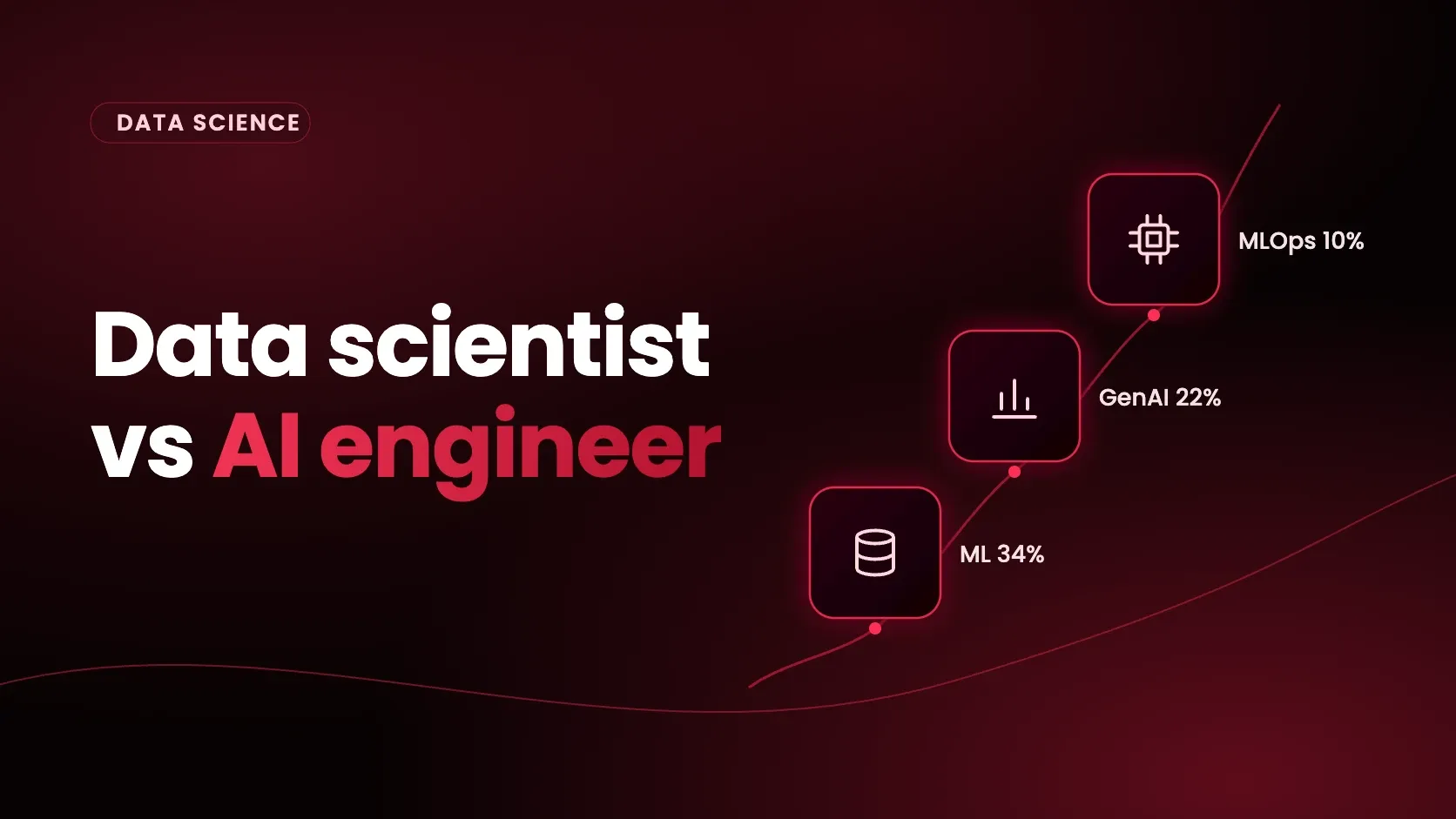
A data scientist mostly turns data into models and decisions, while an AI engineer builds and runs AI systems, including LLM applications, inside products. In foundit's 2025 data, machine learning appeared in 34% of India's AI job postings, generative AI and LLMs in 22% and data science with advanced analytics in 18%, so both skill sets are in demand.
What does a data scientist do compared with an AI engineer?
A data scientist frames a business question as a data problem, prepares the data, builds and evaluates models, and explains the result to the people who decide. An AI engineer takes models, including large language models, and makes them work inside software by connecting them to data and APIs, testing their outputs, and deploying and monitoring them.
The overlap is large and titles vary between employers, so postings compare better by skills than by titles. What can be compared is the skills postings list. In NASSCOM and Indeed's skills analysis, covered by CXOToday on 21 May 2026, the top skills in tech AI roles were AI, Python, machine learning, Azure and TensorFlow. Across industries the list included cloud and infrastructure integration, generative AI and LLMs with prompt engineering, MLOps and deployment, and data analytics and visualisation.
LinkedIn's Skills on the Rise 2026 for India, as reported by Storyboard18 on 24 February 2026, lists prompt engineering, workflow automation, LLMOps, AutoML and API integration among the top rising skills nationally. LinkedIn measured skill growth between December 2024 and November 2025. Its data and analytics cluster covers querying, database optimisation, data storytelling and data-driven decision-making. The first list reads closer to software work and the second closer to analysis.
Which skills appear most in AI job postings in India?
foundit's Annual Hiring Trends 2025 found machine learning the most in-demand AI skill, appearing in 34% of AI job postings in India. Generative AI and LLMs followed at 22%, data science and advanced analytics at 18% and MLOps and model deployment at 10%. These shares are of AI-tagged postings only, not of all data jobs.
Growth tells a second story. Postings asking for generative AI and LLMs grew 58% on 2024, MLOps and model deployment 42%, machine learning 29% and data science and advanced analytics 24%. Every family grew, and the fastest growth was in the skills that sit closest to building and running systems.
The wider market context is that AI mentions are spreading across job ads. Indeed's India data, as reported by Storyboard18, found 11.7% of Indian job postings explicitly mentioned AI in September 2025, up from 8.2% a year earlier. As reported by IANS in March 2026, about 14% of January 2026 postings referenced AI.
The table sets the posting-skill data beside WEF's projections for the two role families.
| Signal | Source and period | AI and ML side | Data science side |
|---|---|---|---|
| Share of AI postings asking for the skill | foundit, 2025 | Machine learning 34%; generative AI and LLMs 22%; MLOps and model deployment 10% | Data science and advanced analytics 18% |
| Growth in postings asking for the skill | foundit, 2025 against 2024 | Machine learning +29%; generative AI and LLMs +58%; MLOps and model deployment +42% | Data science and advanced analytics +24% |
| Projected net growth in the role, India | WEF, 2025 to 2030 | AI and machine learning specialists 176% | Data analysts and scientists 54% |
| Projected net growth in the role, global | WEF, 2025 to 2030 | AI and machine learning specialists 82% | Data analysts and scientists 41% |
Are data science jobs just GenAI now, or turning into AI engineering?
Not on the posting data. Generative AI and LLMs appeared in 22% of AI postings, behind machine learning at 34%, and data science and advanced analytics skills still appeared in 18% and grew 24%. Role projections point the same way: among surveyed employers operating in India, WEF projects 176% net growth for AI and machine learning specialists and 54% for data analysts and scientists by 2030. Both are growth, at different rates.
Whether data scientist roles are being converted into AI engineer roles with heavier software engineering is a question of skills rather than titles. The skills evidence is consistent with a broader job, though. The NASSCOM-Deloitte 2025 compensation survey says the technical proficiency expected of campus hires has moved from basic coding and cloud fundamentals to advanced data analytics, AI/ML and DevOps, and postings asking for MLOps and model deployment grew 42% in foundit's 2025 data.
Enterprise demand adds a nuance. In NASSCOM's October 2026 agentic AI study of 200 India-headquartered enterprises, 71% say they need AI/ML and agent engineering capabilities, followed by 67% seeking data engineering skills, and the top concerns include poor data quality and the availability of skillsets. Indeed's India data, as reported by IANS in March 2026, found AI referenced in 40% of data and analytics postings in January 2026 against 29% of software development postings, which fits a role that is absorbing AI skills.
What do pay premiums for AI and ML skills look like in market data?
The NASSCOM-Deloitte 2025 compensation survey found AI/ML roles attract the highest pay premiums among premium-skill roles, followed by cybersecurity and cloud computing, though its landing page states a ranking and no premium percentage. TeamLease Digital's Digital Skills and Salary Primer for FY2026-27 says AI-Core roles start at 2.5-3 times the pay of AI-Support roles.
Absolute figures are thinner. Indeed India's average base salary for data scientists is Rs 11,97,456 a year (301 salaries, updated 15 October 2026), and AmbitionBox's 2026 employee-reported data averages Rs 16.1 lakh.
The one fresher range is a HAN Digital outlook, reported by CXOToday on 28 October 2026, which estimates that AI/ML engineers with AI-ready skills could command Rs 8-22 lakh a year against Rs 6-12 lakh without them, and says a similar premium appears in data science and analytics roles without ranges. It is a single staffing-industry estimate with no sample or method stated. For wider pay context, see the blog's guide to highest-paying AI and ML jobs in India.
Data science vs AI engineer vs ML engineer vs data engineering: what suits whom?
A stats-first person, comfortable with probability, experiments and explaining uncertainty, sits closest to the data scientist role. WEF's India survey has 79% of employers listing analytical thinking among core skills of 2025, and data analytics and visualisation appears among the top cross-industry skills in the NASSCOM and Indeed analysis.
A builder who prefers shipping software sits closest to AI engineering, where the work is APIs, cloud, deployment and monitoring. API integration and LLMOps are on LinkedIn's rising list, Azure is named among the top skills in tech AI roles, and MLOps and model deployment postings grew 42%. ML engineering sits between the two, and the blog's machine learning engineer roadmap covers it.
Data engineering deserves a place in the comparison. In NASSCOM's October 2026 study, 67% of enterprises seek data engineering skills, and foundit's mid-2026 snapshot lists data engineers as the top trending role in GCC IT, up 32% year on year. The study's top concerns, poor data quality and safe data sharing, are data engineering problems as much as data science ones.
How can a data scientist move to AI engineering without starting over?
Most of the base transfers. Python, SQL, model evaluation and the habit of checking data quality all carry over. What is usually missing is the engineering around the model, and the steps below follow the skills in the postings above.
- Serve a model through an API and write tests for its outputs.
- Add versioning, monitoring and a repeatable deployment, which is the MLOps layer.
- Build one retrieval-based generative AI project with an evaluation set, so quality is measured and not assumed.
- Learn the basics of one cloud platform, since cloud and infrastructure integration is among the top cross-industry skills in the NASSCOM and Indeed analysis.
Analysts with SQL and dashboard experience start from a different place, which the analyst-to-scientist route map covers, and graduates from other engineering branches can start with the switch from mechanical engineering.
Candidates who want a structured route can look at Certification in Data Science and Artificial Intelligence, an online programme from E&ICT Academy, IIT Roorkee, run with Masai as the implementation partner, with live online sessions and an optional campus immersion at IIT Roorkee. It covers Python, data analysis, SQL, statistics, machine learning and generative AI, and its modules include Machine Learning and GenAI for Data Science, followed by a capstone project (Build & Evaluate).
Frequently asked questions
Which is the better career, data scientist or AI engineer?
Both roles are growing. In India, WEF projects 176% net growth to 2030 for AI and machine learning specialists and 54% for data analysts and scientists, and NASSCOM and Deloitte find AI/ML skills carry the highest pay premium in tech. Fit matters more: analysis and communication point to data science, shipping software to AI engineering.
What is the fresher salary of an AI engineer in India?
A HAN Digital outlook, reported by CXOToday on 28 October 2026, puts fresher AI/ML engineers with AI-ready skills at Rs 8-22 lakh a year against Rs 6-12 lakh without them. It rests on one staffing-industry report with no sample or method stated, so treat it as market data and not an offer.
What is the ML engineer roadmap?
The skills in postings give the order: Python and SQL first, then machine learning, then deployment. foundit's 2025 data has machine learning in 34% of AI postings and MLOps and model deployment in 10%, up 42% on the year. The blog's machine learning engineer roadmap sets the sequence out step by step.
Do AI engineer roles require a computer science degree?
Employers are split. In the NASSCOM and Indeed survey, 40% prefer demonstrable AI skills or certifications over a degree, CXOToday reports that 32% weigh skills, certifications and degrees equally, and WEF found 30% of Indian employers expect to drop degree requirements. Demonstrable work carries weight either way.
Is generative AI replacing classic machine learning in job postings?
No. In foundit's 2025 data, machine learning appeared in 34% of AI postings against 22% for generative AI and LLMs. Generative AI grew faster, at 58% against 29%, so it is adding to the skills list and not displacing the core. The data covers one year of postings, so it shows direction and not a settled trend.
Next step
The Certification in Data Science and Artificial Intelligence, E&ICT Academy IIT Roorkee page sets out the curriculum and how to apply.