
What is Cybersecurity? Types, Importance in 2026


Every 39 seconds, a new cyberattack hits somewhere on the internet. If you've ever wondered what cybersecurity is, why it's suddenly everywhere in the news, or why companies are pouring billions into it, this guide breaks it down in plain English: no jargon, no fluff.
By the end, you'll understand what cyber security actually means, the 5 core types of cybersecurity, the biggest threats of 2026 (including AI-driven attacks), and why the importance of cyber security has never been higher.
What is the definition of cybersecurity?
Cybersecurity is the practice of protecting computers, networks, servers, mobile devices, and data from digital attacks, unauthorized access, and damage. It combines people, processes, and technology to keep sensitive information safe from cybercriminals.
In simple words: cybersecurity is digital self-defense. Just like you lock your front door to keep burglars out, cybersecurity locks down your devices, accounts, and data to keep hackers out.
According to IBM, cybersecurity protects people, systems, and data from cyberattacks using layered technologies, processes, and policies and it now sits at the center of enterprise risk management strategy. Cisco frames it similarly, describing it as the convergence of people, processes, and technology working together to defend organizations and individuals from digital attacks.
Cybersecurity vs. Information Security, What's the Difference?
These two terms are often used interchangeably, but they're not identical.
As SNHU notes, information security is the wider umbrella and cybersecurity is the digital subset that most people mean when they say cyber security.
Why is cybersecurity important in 2026?
Cybersecurity isn't just an IT department problem anymore it's a business survival issue. Here's the data-driven case for why it matters right now.
The takeaway: attacks are getting more expensive, more frequent, and harder to detect - while the workforce needed to stop them is shrinking relative to demand. This gap is exactly why the importance of cyber security keeps climbing every year, not just for corporations but for every individual with a smartphone or bank account.
What's driving the risk higher in 2026?
- Cloud & multicloud sprawl - more misconfigured storage and exposed APIs
- Remote & hybrid work - more endpoints, more entry points for attackers
- IoT expansion - smart devices are often unsecured by default
- Generative & agentic AI - both defenders and attackers now use AI; researchers recently documented the first ransomware campaign run end-to-end by an autonomous AI agent
- Deepfake-powered social engineering - voice and video impersonation scams are rising fast heading into late 2026
The 3 pillars of cybersecurity: people, process, technology
A strong cybersecurity posture isn't built on software alone. Cisco's framework breaks it into three complementary pillars:
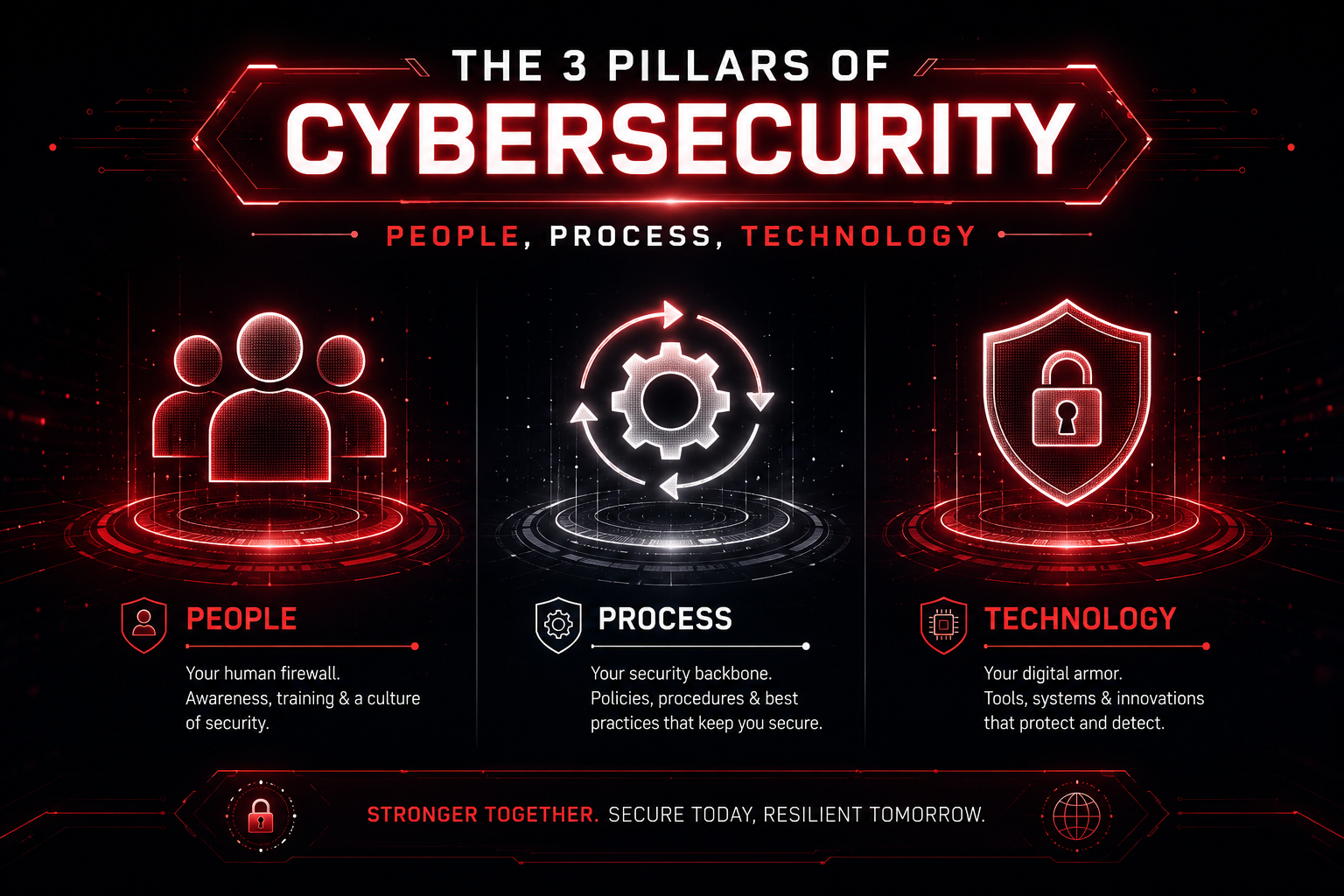
Skip any one pillar, and the whole defense weakens; most breaches happen not because software failed, but because a person clicked a malicious link.
5 Types of cyber security you should know
When people search "types of cybersecurity" they usually find long, technical lists. Here are the 5 types of cyber security that matter most, simplified into one table.
Bonus mention: AI Security and Critical Infrastructure Security are now emerging as the "6th and 7th types" protecting AI models from prompt injection and data poisoning, and safeguarding power grids, hospitals, and financial systems, respectively.
Most common cybersecurity threats in 2026
Understanding cybersecurity threats and attacks is the first step to preventing them. Here's a breakdown of what's actually hitting inboxes and networks right now.
Cybersecurity best practices: A quick-start checklist
You don't need an enterprise budget to significantly reduce your risk. These fundamentals apply to individuals and businesses alike:

- Use strong, unique passwords - a 12-character password takes trillions of times longer to crack than a 6-character one
- Turn on multi-factor authentication (MFA) on every account that offers it
- Update software and operating systems regularly to patch known vulnerabilities
- Back up data on a separate, secure system so ransomware can't hold it hostage
- Train employees to recognize phishing emails and suspicious links
- Adopt a zero trust approach - never automatically trust a user or device, always verify
- Encrypt sensitive data so it's useless even if stolen
- Have an incident response plan ready before an attack happens, not after
Cybersecurity Careers: A fast-growing field
If this topic has you curious about a career, the numbers are hard to ignore. The US Bureau of Labor Statistics projects information security analyst roles will grow far faster than the average occupation through the next decade, and CyberSeek data shows hundreds of thousands of open cybersecurity roles across the US alone. Entry points range from a Security+ certification to a full cybersecurity degree, with common early roles including cybersecurity analyst, SOC analyst, and penetration tester.
Key Takeaways
- Cybersecurity protects systems, networks, and data from digital attacks using people, process, and technology working together.
- There are 5 core types of cyber security: network, cloud, application, endpoint/IoT, and identity & access management.
- The importance of cyber security in 2026 is driven by rising breach costs (USD 4.99M average), a 56% jump in AI-driven attacks, and a global talent shortage.
- The biggest emerging threats are AI-powered phishing, deepfake social engineering, and autonomous ransomware agents.
- Strong basics MFA, updates, backups, and training still stop the vast majority of attacks.
Frequently Asked Questions
What is cybersecurity in simple words?
Cybersecurity is the practice of protecting computers, networks, mobile devices, and data from unauthorized access, theft, or damage. It combines people, processes, and technology like passwords, firewalls, and employee training to keep digital information safe from hackers.
Why is cybersecurity important?
Cybersecurity is important because cyberattacks can steal sensitive data, disrupt business operations, and cause direct financial loss. In 2026, the average data breach costs organizations USD 4.99 million, and AI-driven attacks have increased by 56%, making strong digital defenses essential for every business and individual.
What are the 5 types of cyber security?
The 5 main types of cyber security are: network security, cloud security, application security, endpoint/IoT security, and identity and access management (IAM). Together, they protect an organization's systems, data, users, and connected devices from different categories of digital threats.
What is the difference between cybersecurity and information security?
Cybersecurity focuses specifically on protecting digital systems, networks, and online data from cyberattacks. Information security is broader it covers digital and physical data protection, including paper documents, encryption, and overall confidentiality, integrity, and availability of information.
What are the most common types of cyberattacks?
The most common cyberattacks are phishing, ransomware, malware, social engineering, DDoS attacks, and identity-based attacks using stolen credentials. In 2026, AI-powered attacks and deepfake scams have also become major, fast-growing threats.
How can I protect myself from cyberattacks?
You can protect yourself by using strong, unique passwords, enabling multi-factor authentication (MFA), updating software regularly, backing up important data, and staying alert to phishing emails or suspicious links. These basic habits stop the majority of real-world cyberattacks.
Is cybersecurity a good career in 2026?
Yes. Cybersecurity is one of the fastest-growing career fields, with the US Bureau of Labor Statistics projecting much-faster-than-average job growth for information security analysts and over 500,000 open cybersecurity roles in the US alone. Entry paths include certifications like CompTIA Security+ or a cybersecurity degree.
What is the biggest cybersecurity threat in 2026?
The biggest emerging threat in 2026 is AI-powered cyberattacks including autonomous AI agents running ransomware campaigns, deepfake voice and video scams, and AI-generated phishing content that's harder to detect than traditional attacks.