
IIM MBA without CAT: is it really possible?

Every October, the same anxiety shows up on cue. CAT registrations open, LinkedIn fills up with "60 days to CAT" countdowns, and thousands of working professionals who haven't touched a percentile-based exam in years start wondering if an IIM MBA is even realistic for them anymore.
Here's the part most people miss: it already isn't the only door in. And for one specific group of applicants, working professionals with a few years of experience already behind them, there's a route into a top-ranked IIM that doesn't run through CAT at all.
That route is IMAT, and it leads to the MBA-PGPM at IIM Mumbai.
Why "IIM without CAT" is a genuinely different question for working professionals
Most articles on this topic are written for fresh graduates trying to dodge CAT preparation entirely, and honestly, for that group, the answer is usually "not really." Full-time IIM programmes are still built around CAT.
But if you've already got a first-class degree, a few years of work experience, and a career you don't want to pause for two years, you're not asking the same question a 22-year-old fresher is. You're asking something more specific: is there a legitimate, IIM-branded MBA that evaluates working professionals on their own terms, rather than forcing them back into a fresher's admission funnel?
That's exactly the gap IIM Mumbai's MBA-PGPM was built to close.
Enter IMAT: IIM Mumbai's own entrance gateway
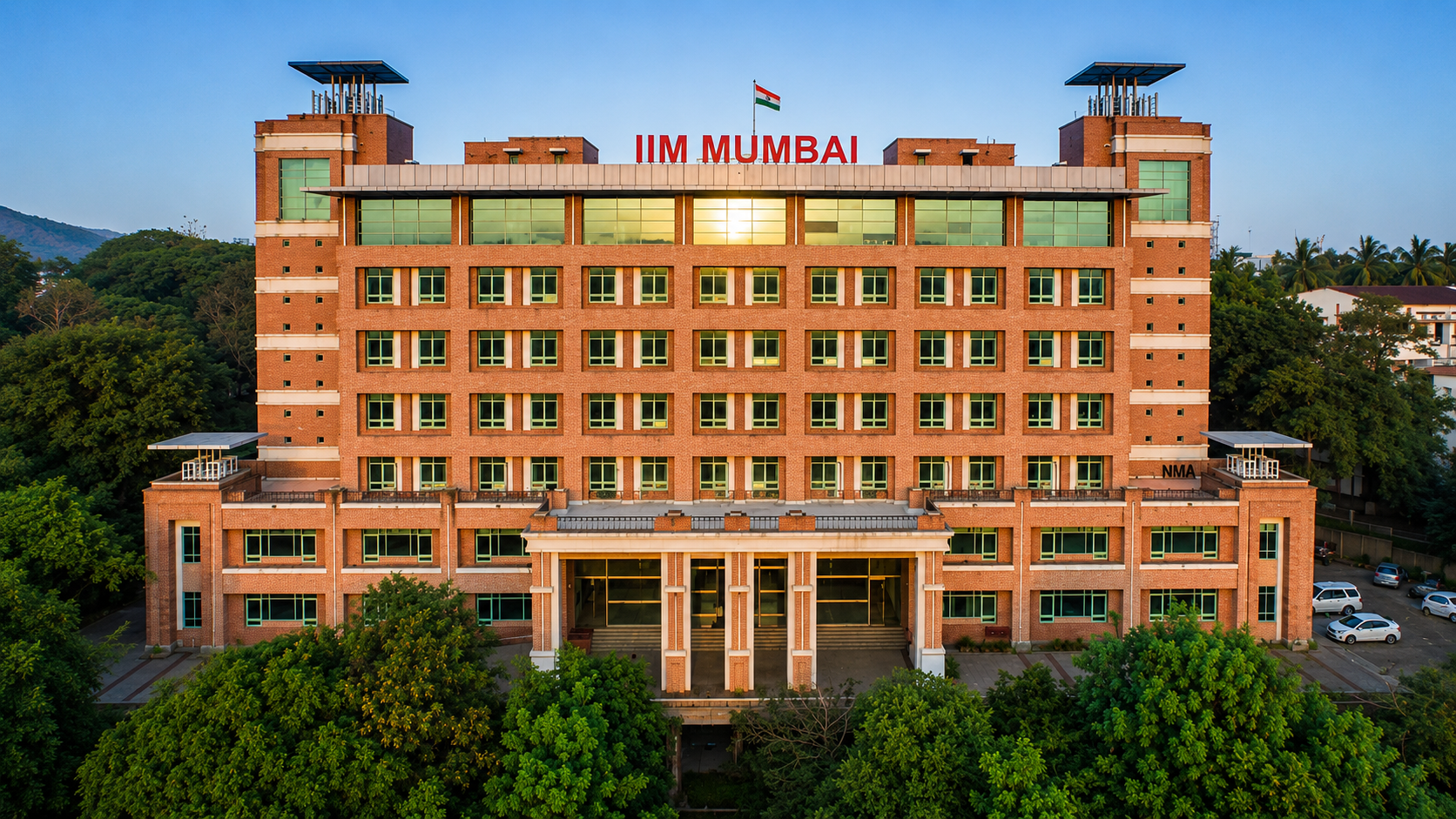
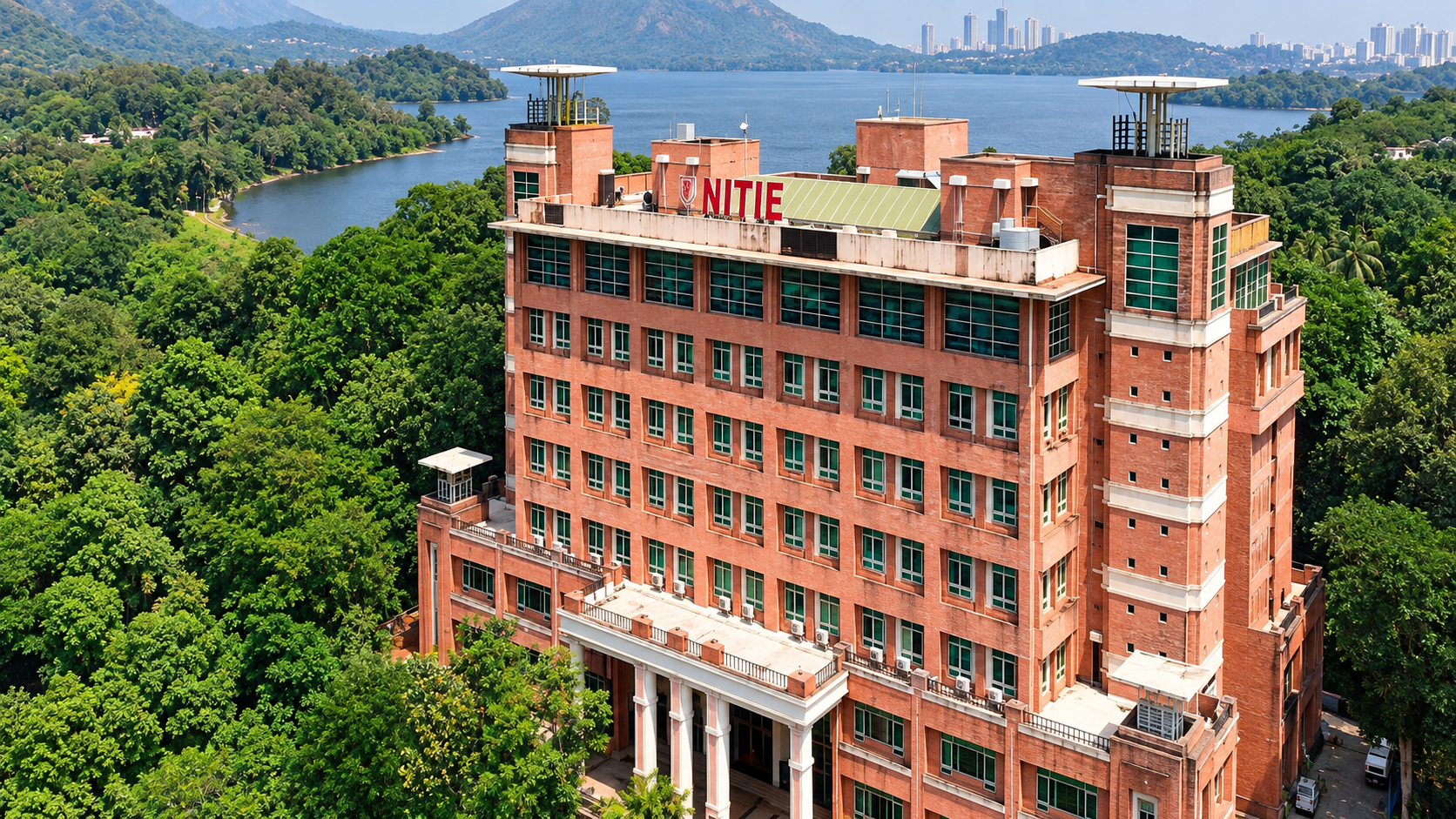
IIM Mumbai (formerly NITIE, ranked 6th in the NIRF 2026 Management rankings) runs its own institute-level aptitude test for this programme, called IMAT. It's home proctored, so you don't need to travel to a test centre, and it's designed to evaluate working professionals rather than compete with CAT's fresher-heavy applicant pool.
Here's the detail that actually answers the headline question: CAT is not mandatory for this programme. Admission to MBA-PGPM accepts any one of three routes:
- IMAT - the institute's own home-proctored test, or
- A valid CAT score, or
- A valid GRE or GMAT score
In other words, if you never cleared CAT, never attempted it, or simply don't want to compete in that exam cycle again, IMAT is a fully legitimate, IIM-administered alternative that leads to the same degree, the same classroom, and the same alumni status as anyone who walked in through CAT.
That's the honest answer to "IIM MBA without CAT": yes, it's possible, but it's not a loophole. It's a separate admissions track built specifically for candidates who already have work experience.
What MBA-PGPM at IIM Mumbai actually is
This isn't a short executive certificate. It's a full two-year Post-Graduate Programme in Management, delivered on weekends (Saturday and Sunday), so you can stay employed full-time while you study.
A few things worth knowing upfront:
- Format: Offline classes, not a webinar-style online course. You attend in person, either at the IIM Mumbai campus or at one of five outreach centres Pune, Chennai, Bengaluru, Hyderabad, and Delhi, with the same curriculum, faculty, and degree regardless of centre.
- Intake: 300 seats across all centres combined.
- Credential: An IIM Mumbai degree with full alumni status not a "certificate in partnership with," an actual postgraduate management degree from the institute.
- Institutional pedigree: IIM Mumbai carries over 60 years of legacy as NITIE, with particular strength in operations, supply chain, and industrial management, alongside the broader general management curriculum this programme is built around.
For a working professional weighing an IIM MBA without CAT against a generic private-university executive MBA, the ranking and alumni status are the difference between a credential that opens doors and one that simply decorates a resume.
Inside the curriculum: how the two years are structured
The programme runs across six academic modules, split into 16 core courses and 8 electives, with two capstone components layered on top.
Core courses (16) cover the full general-management spine: Marketing Management, Financial Reporting & Accounting, Corporate Finance, Microeconomics and Macroeconomics for Managers, Organization Behaviour & HRM, Operations Management, Strategic Management, Data Science for Managerial Decisions, ESG Analytics, Digital Marketing, Supply Chain Management, and Managing Negotiations, among others.
Electives (8) open up in the second half of the programme, letting you specialise in Finance, Marketing, Operations, Analytics, or HR depending on where you want your career to go next.
Capstone and applied learning is where the programme earns its "rigour and application" reputation:
- A Group Project in Year 1, built for applied cross-functional integration
- A two-stage Capstone Project in Year 2, combining research depth with strategic execution, essentially a real business problem you work through end to end
Evaluation isn't just exam-weighted either: 40% continuous evaluation (assignments, quizzes, case studies, participation, projects), 20% mid-terms, and 40% module-end final exams. It's built to reward consistent applied work, not just exam-day recall, which matters if you're balancing this against a full-time job.
Eligibility and why CAT was never the real barrier
Here's the part that surprises people once they actually read the fine print: the real eligibility barrier for MBA-PGPM was never the entrance exam. It's work experience.
- Educational qualification: First-class graduate, minimum 60% marks (with relaxation for SC/ST candidates as per government norms)
- Work experience: A minimum of 2 years of relevant post-graduation experience, non-negotiable
- Best suited for: Working professionals and aspiring managers looking to build managerial, leadership, and strategic capability without stepping away from their careers
So if you're a fresh graduate with zero work experience, IMAT isn't a shortcut for you, this programme simply isn't designed for that profile, regardless of which entrance test you clear. But if you're two, five, or ten years into your career, IMAT removes the one obstacle, a fresher-oriented entrance exam, that was never really measuring what this programme cares about anyway.
How the admission process actually works
- Register and apply – Pay a non-refundable ₹3,000 application fee, complete your documentation, and choose your preferred learning centre (IIM Mumbai campus or one of the five outreach cities).
- Clear the selection stage – Book the home-proctored IMAT, or submit a valid CAT, GRE, or GMAT score instead.
- Attend the personal interview – Shortlisted candidates go through a PI round.
- Receive your offer and secure your seat – Confirm within the stipulated window and complete instalment formalities before classes begin.
For the current admission cycle, the key dates are tight and worth flagging: IMAT is scheduled for 27 September 2026, personal interviews run 7–9 October 2026, results are expected around 13 October 2026, seat booking closes between 14-23 October 2026, full fee payment is due by 1 November 2026, and the batch commences in January 2027.
What it costs
Fees differ slightly depending on whether you study at the Mumbai campus or an outreach centre, and you can choose between annual or module-wise payment:
IIM Mumbai campus
- Annual payment: ₹18,00,000 (inclusive of taxes, application fee separate)
- Module-wise payment: ₹19,00,000
Outreach centres (Pune / Chennai / Bengaluru / Hyderabad / Delhi)
- Annual payment: ₹14,86,000
- Module-wise payment: ₹15,36,000
On top of this, there's a non-refundable ₹3,000 application fee and a ₹1,00,000 seat-securing amount adjusted against the total fee. Outreach centre candidates should also note a refundable ₹50,000 caution deposit, held separately from the programme fee.
It's a serious financial commitment, which is exactly why the programme is built for people already earning a working professional's salary, not for someone starting from zero.
So, is an IIM MBA without CAT really possible?
Yes, with an important caveat: it's possible specifically through routes designed for people with work experience, not as a general workaround for freshers avoiding exam prep.
If you're weighing this against attempting CAT for a full-time IIM seat, the honest comparison isn't "which exam is easier." It's "which programme actually matches where you are in your career." A fresher chasing a full-time MBA still needs CAT, JEE-adjacent logic doesn't apply here. But a working professional with two-plus years of experience, who doesn't want to quit their job for two years, gets a legitimate, IIM-branded alternative that evaluates them on relevant terms, through IMAT, GRE, or GMAT.
The bigger shift worth noticing: IIMs have quietly stopped treating CAT as the only front door. As more institutes build dedicated pathways for working professionals, the better question isn't "how do I avoid CAT," it's "which entrance route was actually built for someone at my career stage."
For working professionals eyeing IIM Mumbai in 2026, that route now has a name: IMAT.
Frequently Asked Questions
Can I get an IIM MBA without appearing for CAT? Yes, for IIM Mumbai's MBA-PGPM specifically. Admission accepts IMAT (the institute's own home-proctored test), a valid CAT score, or a valid GRE/GMAT score any one of the three qualifies you for the next admission stage.
What is IMAT and how is it different from CAT? IMAT is IIM Mumbai's own entrance assessment for the MBA-PGPM programme, taken from home under proctored conditions. Unlike CAT, which is a national-level exam primarily built around fresher and general MBA admissions, IMAT is specifically administered for this working-professionals programme.
Is MBA-PGPM a full IIM degree or just a certificate? It's a full two-year Post-Graduate Programme in Management awarded by IIM Mumbai, carrying complete alumni status, the same degree regardless of whether you study at the Mumbai campus or an outreach centre.
Who is eligible for MBA-PGPM at IIM Mumbai? You need a first-class graduate degree (minimum 60%, with government-mandated relaxation for SC/ST candidates) and at least 2 years of relevant post-graduation work experience. There's no upper age limit specified, but the work-experience requirement is firm.
Can freshers apply through IMAT instead of CAT? No. The 2-year minimum work experience requirement applies regardless of which entrance route you take. IMAT isn't a way to skip CAT for freshers, it's built for candidates who already meet the work-experience bar.
Is the programme online or in-person? It's offline, classroom-based, delivered on weekends (Saturday and Sunday) either at the IIM Mumbai campus or at outreach centres in Pune, Chennai, Bengaluru, Hyderabad, or Delhi.
How much does MBA-PGPM at IIM Mumbai cost? Between ₹14,86,000 and ₹19,00,000 depending on your chosen centre (Mumbai campus vs. outreach) and payment structure (annual vs. module-wise), plus a ₹3,000 application fee and a ₹1,00,000 seat-securing amount.
Want the exact syllabus, module-wise fee breakdown, or a walkthrough of the IMAT selection process before the 27 September deadline? Explore the MBA-PGPM programme page →