
Top 10 reasons to pursue an MBA in technology and management in 2026

Did you know? Nearly every industry banking, retail, healthcare, manufacturing now runs on software, data, and AI. Employers aren't just hiring managers anymore; they're hiring managers who can also speak the language of technology. That shift is exactly why demand for an MBA in Technology and Management has surged in 2026.
If you're searching for "MBA in technology and management" chances are you're standing at a career crossroads: a strong technical or engineering background, real ambition but no clear path to leadership. A traditional MBA broadens your business knowledge. An MBA in Technology and Management does that and keeps you fluent in the systems, data, and digital products your company actually runs on.
In this guide, we break down the top 10 reasons professionals are choosing an MBA in Technology and Management in 2026, the job roles and salaries it unlocks, the misconceptions holding people back, and how a programme like IIT Jodhpur's MBA in Technology is built specifically for this shift.
What is an MBA in technology and management?
An MBA in Technology and Management is a postgraduate business degree that blends core MBA fundamentals finance, strategy, marketing, operations with technology-focused coursework in areas like artificial intelligence, data analytics, digital products, and enterprise technology. Unlike a traditional MBA, it's built for professionals who want to lead technology-driven organizations rather than step away from tech entirely.
To pursue one, you typically need:
- A 3-year or 4-year bachelor's degree
- Relevant work experience (requirements vary by programme)
- In some cases, an entrance assessment testing reasoning, verbal, and numerical ability
Working professionals often look for 1-year or hybrid MBA formats that minimise career breaks a big reason executive and online MBA in Technology and Management programmes have grown so fast in 2026.
Top 10 reasons to pursue an MBA in technology and management
Here are the top 10 reasons professionals with technical backgrounds are choosing an MBA in Technology and Management over a traditional MBA or a purely technical master's degree.
1. You learn to translate technology into business impact
An MBA in Technology and Management trains you to convert technical work into business outcomes leadership actually cares about cost savings, revenue growth, market share. Instead of just shipping features, you learn to frame them: what a new automation saves in operating cost, what a data pipeline unlocks in decision speed, what a product feature means for retention.
This single skill translating "what we built" into "why it matters" is what separates engineers who stay in execution roles from those who move into product, strategy, and general management.
Case in point: A software engineer builds a feature that improves user engagement but struggles to justify further investment to leadership. With MBA-level business framing, the same engineer can present the feature's impact in terms of retention lift and revenue contribution turning a technical update into a resourced, leadership-backed initiative.
2. You build products people actually want, not just what's technically possible
Engineering-first thinking optimises for "can we build it." An MBA in Technology and Management shifts you toward "should we build it, and will the market pay for it." You learn market research, customer discovery, and prioritization frameworks that keep product decisions tied to real demand not assumptions.
- Customer-centric design: Use research and user data to build what customers actually need, not just what's technically elegant.
- Cross-functional collaboration: Learn to work fluently with marketing, sales, and design so the product ships aligned with business goals.
- Revenue-first prioritisation: Balance technical feasibility against growth potential when deciding what gets built next.
3. You connect innovation to revenue
Great technology that doesn't generate a return is a cost centre, not an asset. An MBA in Technology and Management teaches you to tie every technical initiative a new platform, an AI feature, a process automation back to measurable business goals: revenue targets, budget efficiency, KPIs leadership can track.
This is the skill that gets R&D and engineering leaders a seat at the strategy table, instead of being asked to justify their budget every quarter.
4. You learn to spot emerging tech trends before they go mainstream
Technology management coursework builds your ability to read market signals funding patterns, patent activity, competitor moves and anticipate what's coming next, whether that's AI agents, edge computing, or the next infrastructure shift.
This foresight is what turns a technical specialist into a strategic advisor who helps leadership decide where to invest early, rather than reacting after competitors have already moved.
5. You learn to lead cross-disciplinary innovation teams
Building anything meaningful in tech today requires engineers, designers, data scientists, and marketers working toward one goal. An MBA in Technology and Management gives you the frameworks to align these groups, resolve competing priorities, and keep delivery on track skills a purely technical degree rarely covers.
6. You learn to pitch complex tech ideas with business clarity
Brilliant technology dies in the room if you can't explain why it matters. This is one of the most in-demand and least taught skills among technical professionals. An MBA in Technology and Management teaches you to simplify complex systems into a clear, investor-ready or leadership-ready story: the problem, the solution, the market size, the return.
- Break down technical complexity into business value
- Structure a pitch using proven investment and strategy frameworks
- Understand what different stakeholders investors, leadership, customers actually prioritize
7. You learn to build business models that survive market shifts
Technology changes fast. An MBA in Technology and Management teaches you to design revenue models and go-to-market strategies that can adapt not just launch once and hope the market doesn't move. You learn to identify multiple revenue streams, plan for pivots, and assess market and regulatory risk before they become existential threats.
8. You learn to navigate organisational dynamics and secure resources
Good ideas don't fund themselves. An MBA in Technology and Management builds your ability to influence decision-makers, build internal alliances, and negotiate for the budget and headcount your projects need skills that determine whether a strong technical idea actually gets built, or quietly dies in a backlog.
9. You learn to apply behavioural science to drive product adoption
Understanding why users adopt or abandon a product is a business skill, not a technical one. An MBA in Technology and Management introduces behavioural economics principles: reducing friction, designing incentive structures, and using data to refine user experience so products don't just launch, they stick.
10. You build crisis management skills for when tech fails
Outages, breaches, and failed launches are inevitable in any tech-driven business. An MBA in Technology and Management prepares you to lead through these moments building response protocols, communicating transparently under pressure, and turning failures into process improvements rather than reputational damage.
Common misconceptions about an MBA in Technology and Management
Several myths stop qualified professionals from applying. Here's what's actually true.
Top job roles and salaries after an MBA in Technology and Management
An MBA in Technology and Management prepares you for roles that sit exactly where business decisions and technical execution meet product, strategy, consulting, and digital transformation.
Salary figures are indicative and vary by industry, company, location, and experience.
Top companies hiring MBA in Technology and Management graduates
Companies across product, consulting, and enterprise tech actively look for professionals who combine technical fluency with management training, including Google, Amazon, Microsoft, Flipkart, Accenture, Deloitte, TCS, and Infosys across roles in product management, digital strategy, business analysis, and technology consulting.
Key skills you gain with an MBA in Technology and Management
- Strategic and Analytical Thinking - make data-driven decisions and evaluate trade-offs like a business leader
- AI and Data Fluency - apply AI, analytics, and digital tools to real business problems
- Leadership and Team Management - lead cross-functional and cross-disciplinary teams
- Business Communication - pitch, negotiate, and present with clarity and authority
- Financial and Operational Acumen - understand budgets, ROI, and business economics
- Digital Product Strategy - design and scale technology-driven products
- Networking - build a professional network across tech and business functions
Why the MBA Technology Programme at IIT Jodhpur stands out
If you're comparing MBA in Technology and Management programmes, IIT Jodhpur's MBA Technology is built specifically around this business-plus-technology intersection, rather than treating it as an add-on to a generic MBA.
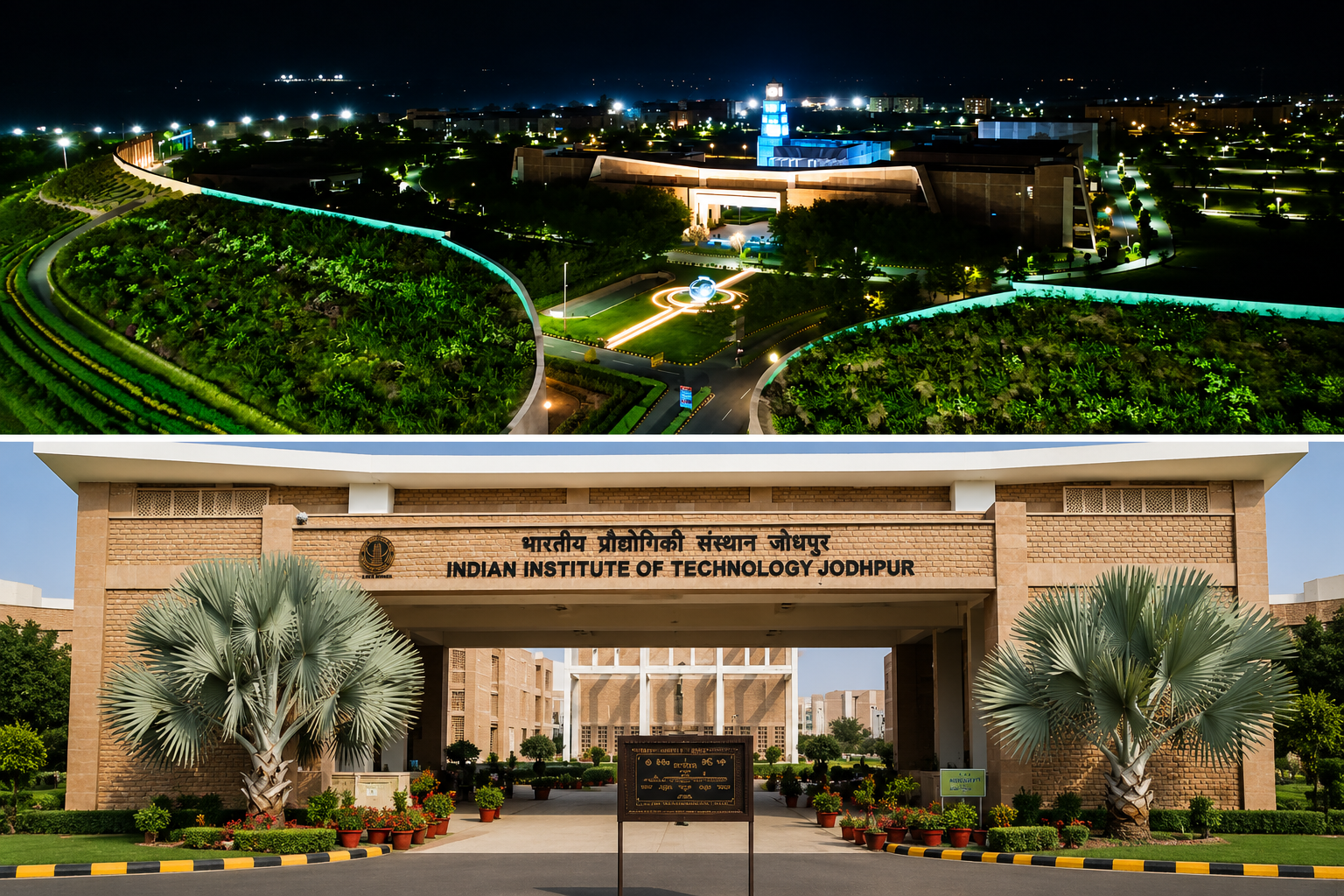
- 66-credit programme across 4 semesters - Year 1 builds core business foundations (strategy, finance, operations, digital enterprise management); Year 2 goes deep into AI in business, specialisation electives, and an industry-integrated capstone.
- Two specialisation pathways - choose Analytics & AI (machine learning, big data, business storytelling with data) or Digital Product Management (product strategy, digital business models, go-to-market execution).
- Live, faculty-led learning - weekly interactive sessions with IIT Jodhpur faculty, built for case discussion and peer learning, not passive video lectures.
- Campus immersion - two structured on-campus immersions per year (5-7 days each) for hands-on workshops and direct faculty access.
- IIT Jodhpur alumni status - graduates receive the same degree recognition, credits, and alumni network access as full-time, on-campus students.
- Built for working professionals - a hybrid format designed around minimal career disruption, with a capstone project tied to real industry problems.
Eligibility: A 3- or 4-year undergraduate degree with 60% marks and at least two years of relevant work experience.
Conclusion
An MBA in Technology and Management isn't just another credential, it's the fastest way to move from executing decisions to making them. It takes the technical depth you already have and layers on the strategic thinking, leadership, and business fluency that unlock product, consulting, and leadership roles paying significantly more than purely technical positions.
If you're ready to make that move, programmes like IIT Jodhpur's MBA Technology with its AI and analytics specialisations, live faculty access, and full IIT alumni status are built for exactly this transition.
FAQs
1. What is an MBA in Technology and Management? It's a postgraduate management degree that combines core business education finance, strategy, marketing, operations with technology-focused coursework in AI, analytics, and digital transformation, preparing graduates to lead technology-driven organizations.
2. Is an MBA in Technology and Management worth it in 2026? Yes, for professionals aiming at product management, digital transformation, or tech leadership roles. It typically leads to higher salaries and faster progression into decision-making positions compared to staying in a purely technical track.
3. What is the difference between an MBA in Technology Management and a traditional MBA? A traditional MBA offers broad business training applicable across industries. An MBA in Technology and Management adds a technology-specific layer AI, analytics, digital products making it more targeted for tech-driven roles like CTO, Product Manager, or Digital Transformation Manager.
4. Can I pursue an MBA in Technology and Management without a tech background? Yes, though it's especially valuable for engineers, IT professionals, and technical graduates who want to move into leadership without losing their technical grounding.
5. What salary can I expect after an MBA in Technology and Management? In India, salaries typically range from ₹6L for entry-level analyst roles to ₹30L+ for senior product, consulting, or digital transformation roles, depending on company, location, and experience.
6. What job roles can I get after an MBA in Technology and Management? Common roles include Product Manager, Technology Consultant, Digital Transformation Manager, Business Analyst, Technical Program Manager, and eventually CTO or VP of Product.
7. How long does an MBA in Technology and Management take? Most programmes run 2 years full-time. Executive and hybrid formats designed for working professionals like IIT Jodhpur's MBA Technology also typically run around 2 years, structured around live sessions and periodic campus immersions.
8. Do I need work experience to apply? It depends on the programme. Some accept fresh graduates; others, including IIT Jodhpur's MBA Technology, require at least two years of relevant work experience alongside a bachelor's degree.
9. Which specialisations are available in an MBA in Technology and Management? Common specialisations include Analytics & AI, Digital Product Management, IT Management, and Technology Consulting allowing you to align the degree with your specific career goals.
10. Is an online or hybrid MBA in Technology and Management as valuable as a full-time one? Reputable hybrid programmes from established institutions with live faculty sessions, campus immersions, and full alumni status hold the same academic weight as on-campus degrees, while offering the flexibility to keep working.