
Master AI-driven email marketing: full strategy guide

Despite the relentless evolution of social media algorithms and rising pay-per-click ad costs, email marketing remains the undisputed king of owned revenue engines. Generating an average return of $36 to $42 for every $1 spent, direct inbox communication provides unparalleled control, predictability, and long-term customer lifetime value.
However, modern email marketing isn’t about sending weekly batch-and-blast newsletters. High-converting brands leverage predictive AI models, automated behavioral workflows, hyper-segmentation, and bulletproof domain authentication to transform subscribers into loyal customers.
Why email marketing is your most valuable, owned asset
Relying entirely on third-party channels such as social media algorithms or paid acquisition networks leaves your business vulnerable to sudden reach drops, policy updates, and escalating ad costs.
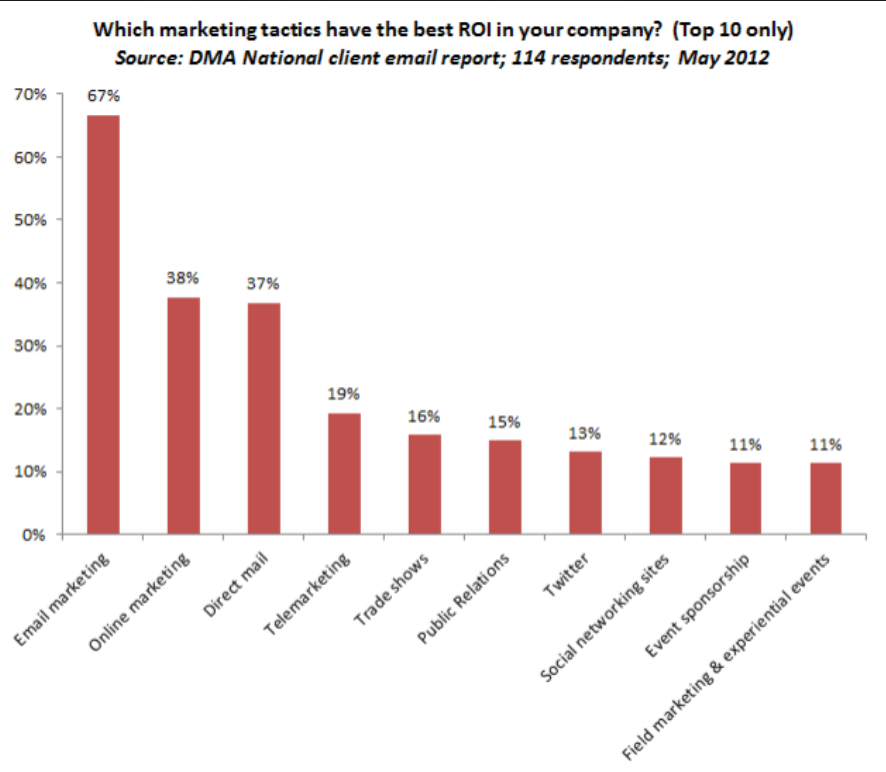
Owned Asset vs. Rented Reach
- Direct Audience Ownership: Unlike social followers or search traffic, your email list is a portable asset that no algorithm change can revoke.
- Higher Engagement Density: While organic reach on social media feeds often dips below 2% to 5%, properly authenticated email lists maintain open rates between 20% and 40%+.
- Predictable Revenue Generation: Automated, behavior-triggered emails continuously convert subscribers in the background, driving consistent revenue without ongoing ad spend.
Performance Benchmarks for Success
- Open Rates: Broad promotional broadcasts average 21.3% - 24.1%, while automated behavior-triggered emails regularly exceed 35% - 50%.
- Click-Through Rates (CTR): Industry averages sit around 2.0% - 3.5%, whereas targeted lifecycle sequences achieve 5.5% - 10%+.
- Conversion Rates: Standard broadcasts convert at 1.5% - 2.8%, but well-timed abandoned cart and welcome workflows deliver 6.5% - 13.5%+.
- Revenue Per Recipient (RPR): General blasts yield $0.10 - $0.25, while personalized, multi-step flows average $1.80 - $6.50+ per recipient.
Automated, behavior-based triggered messages generate up to 13x more revenue than batch mailings. Relying solely on manual broadcasts leaves significant profit on the table.
The 4 high converting automated lifecycle sequences
To turn casual traffic into repeat buyers, structure your email infrastructure around four key behavioral workflows:
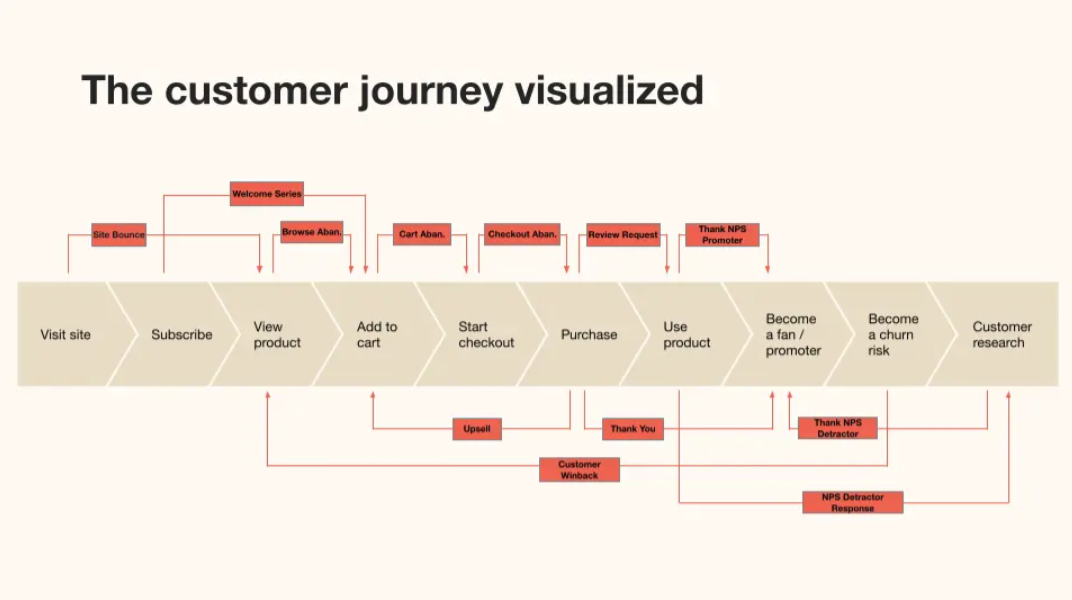
1. The Welcome & onboarding sequence
Your welcome sequence yields the highest engagement of any email campaign, with open rates routinely surpassing 60%.
- Strategic Objective: Deliver promised opt-in incentives, introduce core brand values, and establish clear content expectations.
- Execution Blueprint: Send Email #1 immediately upon registration. Follow up 48 hours later with storytelling, brand positioning, and curated top resources across a 5-day cadence.
2. High-intent cart & browse abandonment recovery
When interested users leave items behind, automated recovery workflows re-engage them before purchase intent fades.
- Trigger Mechanism: Product added to cart or viewed multiple times without transaction completion within 60 minutes.
- Execution Blueprint: Implement a 3-part recovery flow using dynamic product preview blocks, authentic customer social proof, and calculated urgency or light discounts in the final message.
3. Customer retention, Cross-Sell & Replenishment
Acquiring new customers costs 5x to 7x more than retaining existing ones. Post-purchase automation turns single-time buyers into brand advocates.
- Trigger Mechanism: Time elapsed since last purchase based on historical product usage cycles.
- Execution Blueprint: Send tailored product recommendations, educational usage tips, and timely re-order reminders synchronized with typical product consumption windows.
4. Win-Back & Re-Engagement Sequences
Inactive subscribers degrade domain health and lower deliverability scores over time if left unaddressed.
- Trigger Mechanism: Zero opens or clicks over a 60- to 90-day window.
- Execution Blueprint: Launch a 2-part re-engagement campaign offering exclusive incentives or an easy opt-out link. Unresponsive contacts should be systematically pruned to preserve list health.
The shift toward applied AI & digital growth strategy
Modern digital marketing requires a multi-faceted skill set. Email campaigns do not operate in a vacuum they intersect directly with user acquisition, landing page optimization, predictive audience modeling, and complex web analytics.
It connects email automation with search engine optimization (SEO), organic growth strategy, paid search and social campaigns.
Upskilling Path: Applied AI & Digital Marketing Integration
To lead in today's performance marketing landscape, professionals and business owners must combine foundational strategy with hands-on technical tools like Generative AI and advanced analytics.
The Digital Marketing Program with Applied AI by IIM Ranchi directly addresses these operational demands:
- Email Mastery & AI Copywriting: Focuses on list segmentation, predictive Customer Lifetime Value (CLV) modeling, and leveraging AI models like ChatGPT to produce high-converting subject lines, email copy, and dynamic content.
- Comprehensive Digital Strategy: Connects email automation with search engine optimization (SEO), paid search and social campaigns, and conversion rate optimization (CRO).
- Applied Capstone Projects: Participants gain practical experience building real-world growth assets, such as multi-channel attribution frameworks, Looker Studio dashboards, and CRO audits.
For marketers, agency leads, and growth managers looking to scale owned revenue channels, structured upskilling ensures marketing decisions are backed by data and modern toolsets.
Essential Technology Stack & Technical Infrastructure
Building a scalable email operation requires a reliable technological foundation across platform selection and domain authentication.
Enterprise Platforms (ESPs)
- Klaviyo: The industry benchmark for e-commerce brands, offering deep transactional integrations and predictive customer analytics.
- Mailchimp: A versatile choice for startups, small businesses, and creators building foundational automations.
- Active Campaign: A robust solution for B2B marketing automation, sales pipeline tracking, and CRM workflows.
Bulletproof Domain Authentication Framework
Modern inbox providers enforce rigorous sender authentication protocols to protect users from phishing and spam. Failing to set up these records will cause campaign messages to land in spam folders:
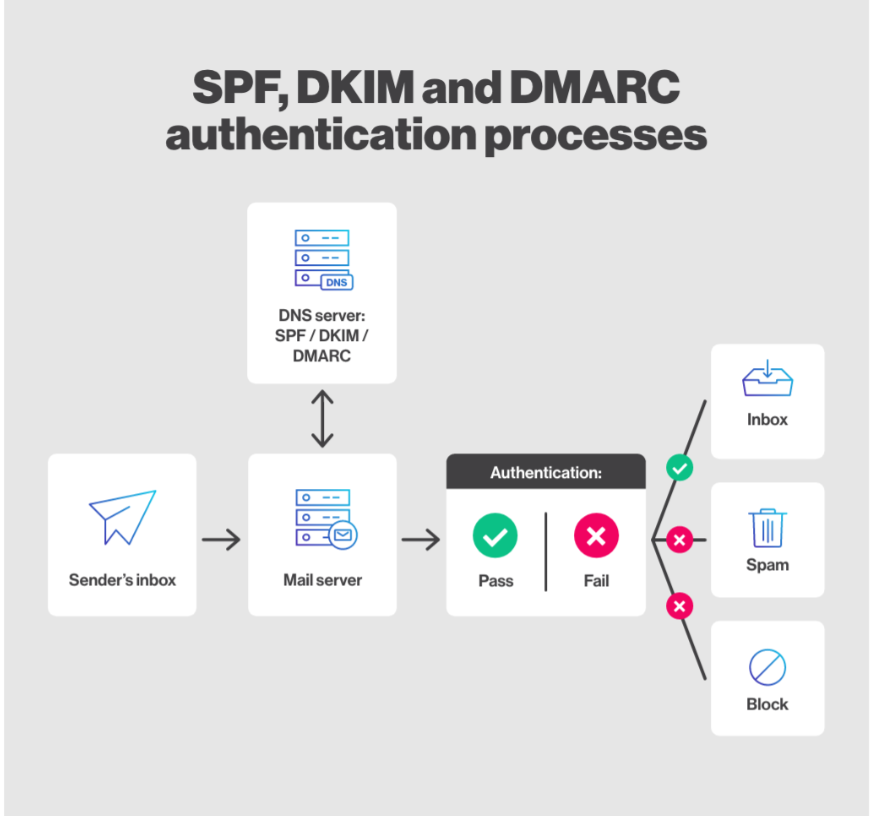
- SPF (Sender Policy Framework): Specifies which server IP addresses are authorized to send emails on behalf of your domain.
- DKIM (DomainKeys Identified Mail): Attaches an encrypted cryptographic signature to every message, verifying that content was not altered in transit.
- DMARC (Domain-based Message Authentication): Establishes explicit handling policies (None, Quarantine, Reject) for emails that fail SPF or DKIM checks, safeguarding your domain reputation.
Continuous Optimization Framework
Scaling email revenue requires continuous testing, list hygiene, and strategic refinement. Follow this 4-step framework:
- Behavioral Segmentation: Divide your subscriber base into dynamic cohorts based on recency, purchase frequency, monetary value, and content engagement levels.
- AI-Enhanced Personalization: Utilize AI tools to generate contextual subject line variations, personalize dynamic product blocks, and refine send-time optimization.
- Rigorous Testing: Systematically test offer hooks, call-to-action designs, sender names, and landing page alignment to continuously improve conversion rates.
- Deliverability & Hygiene Maintenance: Conduct quarterly list hygiene to prune unengaged profiles, clear hard bounces, and maintain top-tier sender reputation across inbox providers.
Frequently Asked Questions (Course & Enrolment)
1. Who is this program designed for?
This certification is ideal for marketing professionals, working executives, agency owners, entrepreneurs, and career switchers looking to master modern digital growth strategies, performance analytics, and Applied AI tools.
2. What certification will I receive upon completion?
Upon successfully meeting the course criteria (attending live sessions and completing required assessments), you will earn an official Certificate of Completion from IIM Ranchi.
3. How does the Applied AI curriculum help in real-world marketing?
Instead of just theory, you get hands-on training using Generative AI tools (like ChatGPT) for writing ad copy, setting up email automation workflows, personalizing customer campaigns, and predicting campaign performance.
4. What is the time commitment required for the course?
The program runs for 6 months with a flexible schedule requiring approximately 8 to 10 hours per week, making it manageable alongside full-time work or studies.
5. Are there any live projects or portfolio-building opportunities?
Yes. You will complete real-world case studies and capstone projects such as multi-channel performance marketing optimization and e-commerce conversion rate audits that you can feature directly in your professional portfolio.