
7 things students should know about the HIMSHIKHAR program at IIT Mandi

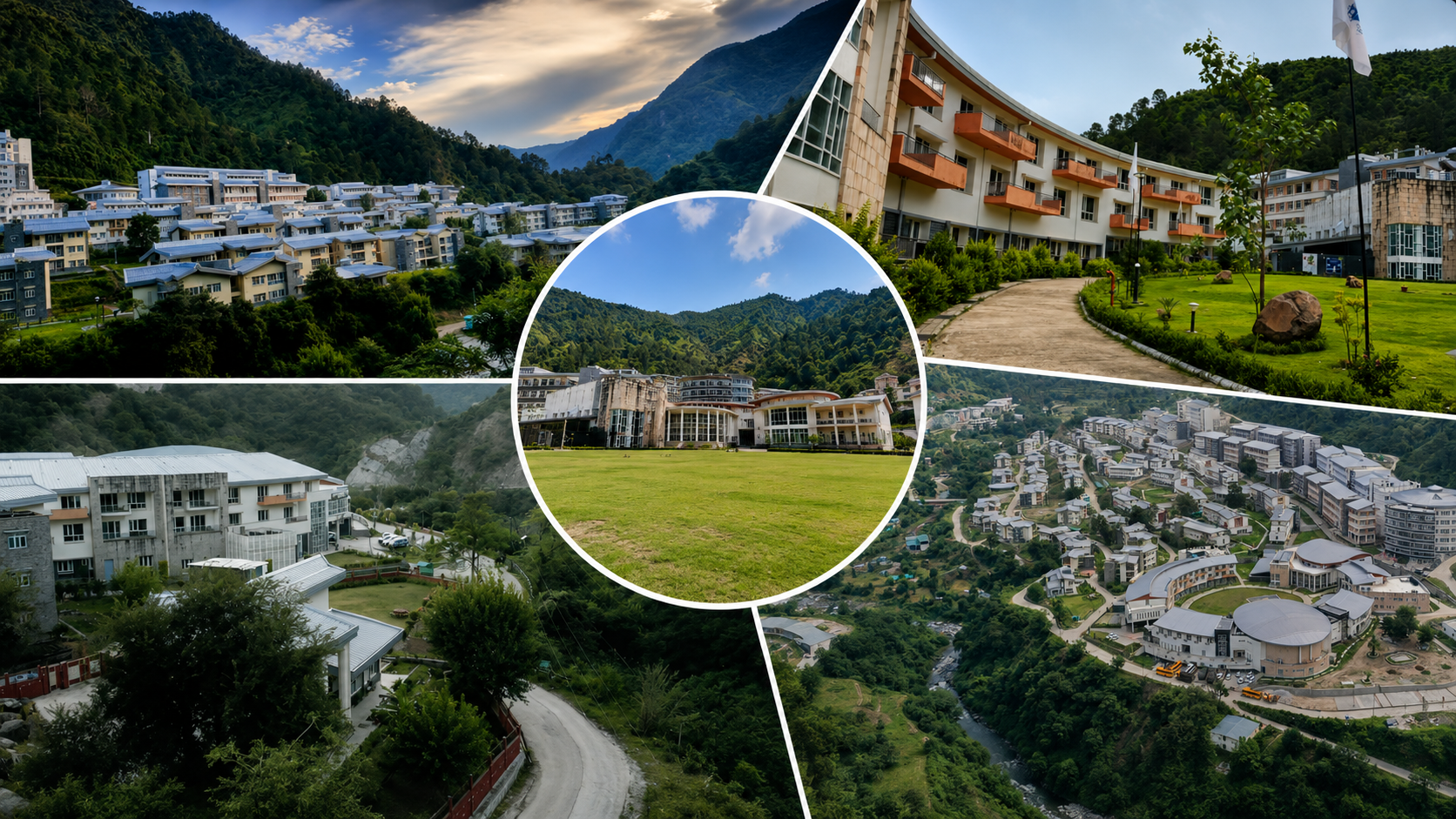
Every summer, thousands of students across India search for programs that do more than just fill a few weeks. They want something real a credential that holds up, skills that actually transfer, and an experience worth talking about. The HIMSHIKHAR 2026 Special Edition at IIT Mandi is one of those programs but before you apply, you probably have questions.
Here are the seven things students need to know about:
1. What exactly is the HIMSHIKHAR 2026 special edition, and how is it different from a regular online course?
HIMSHIKHAR 2026 Special Edition is a one-month residential program in AI-Driven Analytics and Coding, run by the Centre for Continuing Education (CCE) at IIT Mandi in collaboration with Masai. It is held entirely on the IIT Mandi campus in Kamand Valley, Himachal Pradesh.
The difference from an online course is structural, not just logistical. In an online program, you log in, watch content, and submit assignments from wherever you are. In a residential program, you live on campus, attend live sessions taught by IIT Mandi faculty, work in labs with PhD Teaching Assistants, and build a capstone project that you present in front of an industry panel.
The learning environment changes everything. Peer pressure is positive. Distractions are minimal. The Himalayan campus itself at 1,000 metres above sea level, surrounded by pine forests creates a focused, immersive atmosphere that no online format can replicate.
You also walk away with something tangible: a Completion Certificate from CCE, IIT Mandi and a Project Completion Letter from Masai, both tied to real work you built and defended.
Bottom line: An online course gives you content. A residential IIT program gives you an experience and a credential that reflects it.
2. Who is this program for? Do I need a technical background to apply?
The program is open to anyone who has passed Class 12 and is under 35 years of age. There is no stream restriction and no prior coding experience required.
In practice, students from four types of backgrounds tend to get the most out of it:
College students on summer break particularly those in their 1st, 2nd, or 3rd year who want to use the break to build real skills and a credible certificate rather than letting two months pass by.
Recent graduates students who have finished their degree and are entering the job market, where employers increasingly want to see evidence of applied skills, not just a diploma.
Students from non-technical streams commerce, humanities, or management backgrounds who understand that data literacy and AI tools are now relevant to every career, not just engineering.
Anyone who missed the first HIMSHIKHAR batch, the two-month residential program is already live on campus. The Special Edition is the same IIT Mandi experience, built for students who want to join in a focused one-month format.
The curriculum starts from the ground up excel, SQL, Python basics before building toward machine learning and applied AI. You do not need to know how to code before you arrive.
3. What will I actually learn? What does the curriculum look like week by week?
The program runs across four structured weeks, each building on the last.
Week 1 Data Analysis with Excel and SQL Spreadsheet fundamentals, formulas, pivot tables, and data cleaning with Excel. Then SQL: querying, filtering, joining, and operating on relational databases. This week builds the foundation that every analytics workflow depends on.
Week 2 Python and the Data Toolkit Python basics followed by NumPy for numerical computation and Pandas for loading, transforming, and analyzing real datasets. By the end of this week, you are not just writing code you are thinking in data structures.
Week 3 Exploratory Data Analysis and Visualization Seaborn for data visualization. Exploratory Data Analysis covering distributions, correlations, outliers, and missing values. Descriptive statistics and an introduction to feature engineering. This is where data stops being numbers and starts becoming insight.
Week 4 Predictive Modeling and Applied AI The machine learning workflow: features, labels, train-test splits, regression models, evaluation metrics, and overfitting. Then applied prompt engineering to how to use large language models and AI tools as part of real analytics workflows, not just as a novelty.
Alongside the four-week curriculum, there is a Masterclasses Series covering Applied Prompt Engineering and LLM Workflows, delivered by industry professionals in live, in-person sessions.
The program ends with a capstone project and a boardroom-style demo in front of IIT Mandi faculty and industry panelists a real presentation of real work, not a quiz or an online submission.
4. Who are the faculty? Is this actually taught by IIT Mandi professors?
Yes. The program is taught by IIT Mandi faculty not guest lecturers or external trainers brought in for the program.
Dr. Aditya Nigam, Associate Professor at IIT Mandi, holds a PhD from IIT Kanpur with over a decade of experience teaching Deep Learning. He specializes in Biometrics and Medical Image Processing.
Dr. Indu Joshi, Assistant Professor at IIT Mandi, completed her PhD at IIT Delhi and postdoctoral research at Inria France and TU Munich. She was awarded the Institute Silver Medal by the President of India for her M.Tech and is a Deep Learning specialist.
Dr. Parimala Kancharla, Assistant Professor at IIT Mandi, holds a PhD from IIT Hyderabad and was previously a Research Scientist at Intel Labs, Bangalore. She specializes in Generative Modeling and Deep Learning Based Video Compression.
Sessions are live and in-person not recorded, not asynchronous. Real instruction, real feedback, real conversations with professors who work in the fields they teach. In addition, four industry mentors run weekly masterclasses and provide direct feedback on your project work throughout the month.
5. What does campus life actually look like? What is included in the residential fee?
You live and learn on the IIT Mandi campus in Kamand Valley, the same campus used by IIT Mandi's degree students.
A typical weekday on the Special Edition looks like this:
- Morning: Faculty-led sessions connecting theoretical concepts to real applications
- Lab hours: Guided practice with IIT Mandi PhD Teaching Assistants
- Afternoon: Project time building your capstone under structured guidance
- Evening: Doubt-clearing sessions and peer collaboration, including optional late-night coding sessions for students who want the extra hours
Weekends are yours and the Himalayas are right outside the campus.
The residential fee of ₹15,000 covers shared hostel accommodation, three meals a day at the IIT Mandi mess, access to smart classrooms and labs, internet and e-library access, and the official student welcome kit. A refundable ₹5,000 hostel security deposit is payable separately on arrival.
Living on campus also means something harder to put a price on: the fellowship. You will be in the same space as students from colleges across India who made the same deliberate choice to spend their summer building something. That peer network, formed over shared meals, late project sessions, and weekend trail walks, is one of the most consistently mentioned outcomes by students from the first HIMSHIKHAR batch.
6. What credentials do I get? Will this certificate actually matter to employers?
You receive two credentials at the end of the program:
1. Completion Certificate from CCE, IIT Mandi Issued by the Centre for Continuing Education at the Indian Institute of Technology Mandi. This is an institutional credential from a government-established IIT not a third party certificate. It carries the IIT name, which has real weight in hiring conversations, higher education applications, and every professional introduction you will make for years.
2. Project Completion Letter from Masai This documents the specific project you built, the problem you solved, and the boardroom demo you delivered. Where a certificate tells an employer you attended a program, the project letter tells them what you actually did.
The combination of an IIT credential and a documented project portfolio is what makes this defensible in interviews. Employers in 2026 are not just looking at certificates, they are asking candidates to walk them through their work. The capstone project and boardroom demo give you exactly that: a real piece of work you built, presented, and can speak to with confidence.
7. What has the first HIMSHIKHAR batch actually experienced and why does that matter for the special edition?
This is probably the most important question of all because the Special Edition isn't a concept or a promise. It is a program modelled on something that is already working.
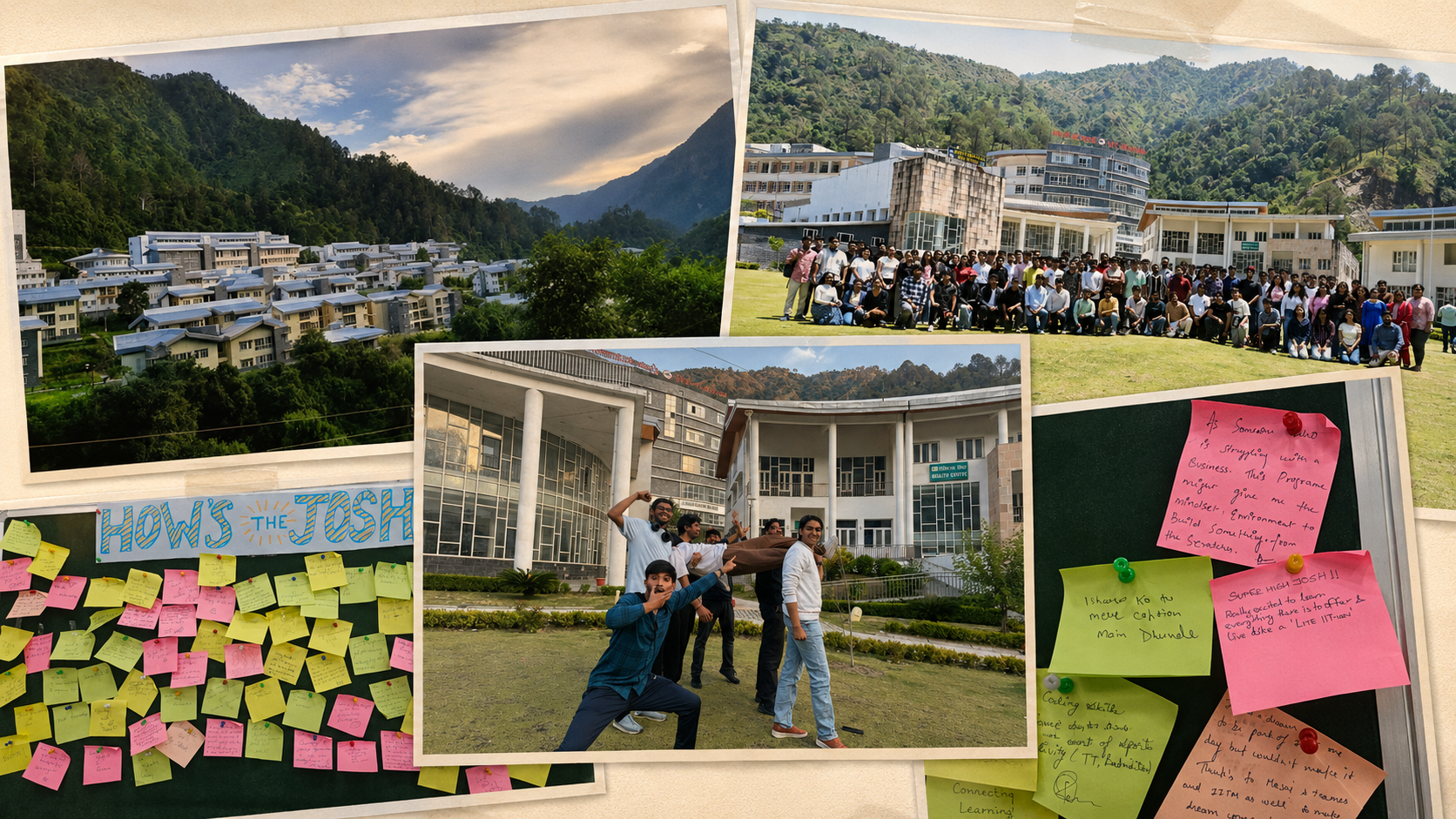
The first HIMSHIKHAR batch launched its two months residential program earlier this year, and by every measure, it has exceeded expectations. Students from colleges across India are currently living inside the IIT Mandi campus in Kamand Valley attending live classes taught by IIT faculty, working in labs, and building real projects toward their boardroom demo.
What the first batch is describing isn't just the curriculum. It's the atmosphere. The combination of Himalayan surroundings and IIT academic culture has created a learning environment students call unlike anything they have experienced elsewhere. Not because of the mountains though waking up surrounded by pine forests at 1,000 metres above sea level is genuinely different but because of what happens when ambitious, motivated students from different colleges and backgrounds are placed in the same space and given something real to work toward together.
Interactive sessions with IIT professors and industry mentors are happening live not recorded, not asynchronous. Real conversations, real feedback, real learning. Students are sharing meals in the IIT mess, working through late-night project sessions together, and exploring mountain trails on weekends. The fellowship energy the shared sense of purpose that forms when you live and learn alongside people who chose to be there is one of the most consistently talked-about outcomes of the program.
The first boardroom demo is on the horizon. Students are already building toward it and the pressure of a real presentation in front of faculty and industry is producing exactly the kind of focused, high-stakes work that changes how students see their own capabilities.
Why this matters for the Special Edition: You are not joining a program that is hoping to deliver on a promise. You are joining a program whose blueprint is already proven on the same campus, with the same faculty, in the same environment. The Special Edition is one month, not two. But the experience it is modelled on is real, it is live, and it is working.
Apply for HIMSHIKHAR 2026 Special Edition →
So, is the HIMSHIKHAR special edition worth it?
That depends on what you are comparing it to.
Compared to spending the summer at home, watching placements approach without a project or a credential to show for the break yes, clearly.
Compared to an online course you can pause whenever something else comes up the difference is in what you actually build and retain. Most students do not finish self-paced online programs. Most students who live on an IIT campus for a month in a structured, residential environment do because the environment makes quitting harder than continuing.
Compared to waiting for a better opportunity, consider that the first HIMSHIKHAR batch is already on campus right now, doing exactly what the Special Edition is built around. The blueprint is proven. The faculty are the same. The campus is the same. You are not betting on a promise. You are joining a program whose results are already visible.
One month. One IIT campus. A real credential, a real project, and a peer group of students who chose to spend their summer building something.
That is a different kind of summer.
Reporting: June 27, 2026 | Classes begin: June 29, 2026 | 250 seats | IIT Mandi, Himachal Pradesh
For queries: WhatsApp +91 87929 74750 | info.cce@iitmandi.ac.in