
Is Leap by Masai worth it? An honest review of the founder's cohort (2026)

Leap by Masai is worth it if you want to turn an idea into a live product with real users, meet a co-founder in person, and earn a verified place in front of investors, and you want to do it without giving up equity or quitting your job. It is not worth it if you are looking for guaranteed funding, a certificate to put on a CV, or a free theory course. The programme costs ₹1,50,000 + GST for a solo founder and ₹2,50,000 for a founding pair, takes 0% equity, and requires you to clear published traction benchmarks before you can pitch in Bangalore.
The rest of this guide shows the numbers, the structure and the trade-offs so you can decide for yourself.
What is Leap by Masai?
Leap by Masai is the founder track from Masai School. The Founders' Cohort, publicly announced on 19 October 2026, is described by Masai as a build-first programme for aspiring founders. It runs in three phases over roughly two months:
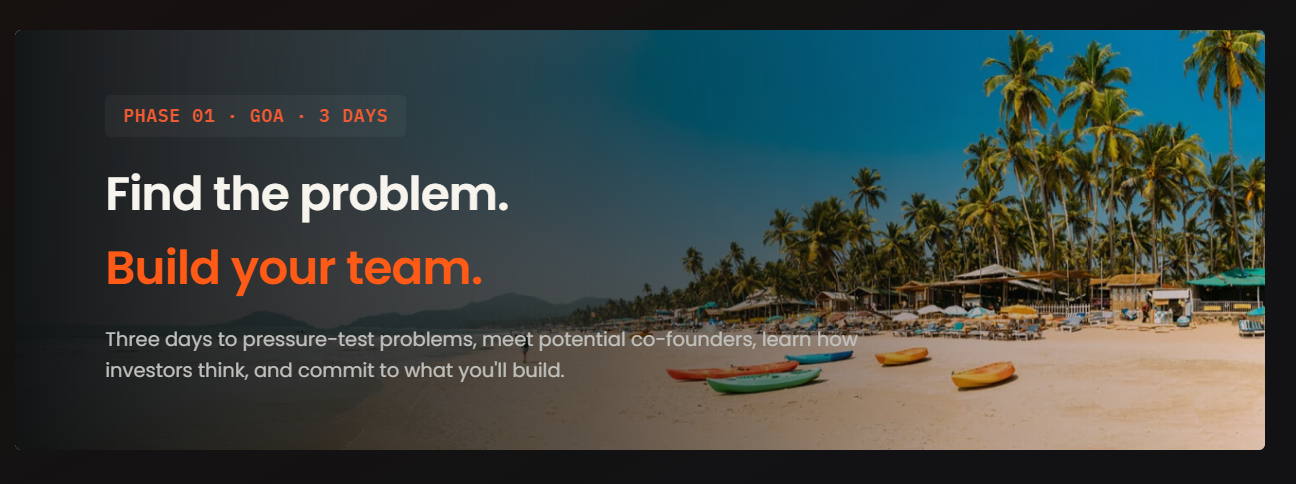
- Find (3 days, Goa): around 100 founders in one room for problem discovery, an investor masterclass and co-founder matching.
- Build (6 weeks, online): ship, test with users, find distribution, set a price, collect payment and read your data.
- Pitch (2 days, Bangalore): pitch coaching, mock investor panels and a 90-second, one-slide pitch to investors, for teams that clear the Gate.
The current cohort starts on 20 November 2026. Always confirm dates on the official page before applying.
What does Leap by Masai cost?
Item | Cost |
|---|---|
Application fee | ₹999 (non-refundable) |
Seat reservation (after selection and counselling) | ₹5,000 |
Solo founder programme fee | ₹1,50,000 + GST |
Founding pair programme fee | ₹2,50,000 total (₹1,25,000 + GST per founder) |
Equity or revenue share | 0% and 0% |
Included in the fee: shared rooms and scheduled meals in Goa (and Bangalore for qualifying teams), all founder, practitioner and mentor sessions, templates and learning materials, and the Bangalore pitch programme and Pitch Night for qualifying teams.
Not included: travel to Goa and Bangalore, tools, hosting and API costs for your own venture, your laptop, and incorporation, legal, tax and accounting costs. Refunds follow Masai's published Refund & Withdrawal Policy, which you should read before paying.
A useful way to read the price: you are paying for a structured, founder-led environment and a pitch opportunity, not buying equity-free capital. Masai uses the fee to cover programme costs and takes nothing from your company.
What you actually get: the six-week build, week by week
Most programmes describe outcomes in general terms. Leap publishes the weekly sequence.
- Week 2, Ship a live MVP fast: cut scope aggressively, use modern AI-native building tools, get something usable online.
- Week 3, Stop guessing, talk to people: speak to 20 real users and change at least one thing you believed.
- Week 4, Find distribution: choose a channel, get your first users, start a repeatable path to acquisition.
- Week 5, Ask for money: set a price, put checkout live, make the first real ask for payment.
- Week 6, Read the data: understand retention, conversion and user behaviour; decide whether to persist, iterate or pivot.
- Week 7, Get investor-ready: turn the product, user, traction and number evidence into a business case and pitch.
(Week 1 is the Goa phase.) The format varies weekly across practitioner masterclasses, working labs, founder masterclasses, mentor pods of 10 to 15 founders at a similar stage, and 1:1 reviews on your product, funnel or traction.
The Gate: the feature that separates Leap from most programmes
The most important thing to understand about Leap is the Gate. Not everyone who joins gets to pitch in Bangalore. To qualify, your numbers are checked against benchmarks published in Goa:
Benchmark | Consumer startups | B2B startups | Already running a business |
|---|---|---|---|
Product | Live MVP | Live MVP | Benchmarks set with you in week 1 |
Usage | 1,000 users | 5 companies using it | Set against your category and stage |
Revenue | 50 paying customers | 1 paid pilot | Set against your category and stage |
Economics | Validated unit economics | Validated unit economics | Set against your category and stage |
Masai states that all usage, transactions and economic activity are checked for authenticity. Every team that clears the Gate gets to pitch. Teams that do not clear it stay in the community and keep building but do not take part in the Bangalore leg.
Why this matters for the "is it worth it" question: a typical programme rewards attendance. The Gate rewards evidence. That is uncomfortable, and it is the point. It also means the pitch room is filled with teams that have real numbers, which makes the room more valuable to everyone in it, including the investors.
Who teaches, and who is in the investor room?
Founders and operators leading sessions include Ankush Sachdeva (ShareChat), Amit Agarwal (NoBroker), Harshvardhan Lunia (Lendingkart), Ishendra Agarwal (GIVA), Arpita Aditi (Dil Foods), Abhishek Goyal (Tracxn), Farid Ahsan (General Autonomy) and Prateek Shukla (Masai). Masai states that the founders involved have collectively raised over $2.4 billion, and the teaching is organised around problems they have personally solved.
Investors expected at Pitch Night include investors from India Quotient, Capria Ventures and Prana Ventures, alongside leading angel investors. The phrase to hold onto is expected: attendance is a Masai commitment to put you in the room, not a promise that any investor will write a cheque.
Leap by Masai pros and cons
Pros
- 0% equity and 0% revenue share, so you keep your cap table clean.
- Designed to fit around a job: weekend sessions, about 6 to 8 hours a week online.
- In-person co-founder matching, and both solo and pair routes supported for the whole programme.
- Hard, published benchmarks instead of vague "mentorship".
- Teachers who have built and raised capital in India across lending, proptech, social media, jewellery, food and startup data.
- A defined path to a 90-second investor pitch, with coaching and mock panels beforehand.
- NDA signed by every participant, with confidentiality terms for mentors and practitioners.
Cons and honest limits
- No funding guarantee. Masai says so directly. A pitch is not an offer.
- You must clear the Gate to pitch in Bangalore. If your numbers are not there by then, you miss the final leg.
- Shared accommodation (twin or triple sharing, no private rooms), by design.
- Masai will not build your product for you. Execution stays with you and your team.
- Medical fitness certificate is required before the residential phase.
Leap by Masai vs other options: how the maths compares
Leap by Masai | Antler India | NSRCEL Launchpad | Startup India Learning Program | Mesa PGP | |
|---|---|---|---|---|---|
Upfront cost | ₹1.5L + GST | Free to join | Free | Free | ₹23.95L+ tuition + GST |
Equity | 0% | Equity for investment | None | None | None |
Time | ~2 months, part-time online | Full-time | 5 months | 4 weeks | 12 months full-time |
Verified traction gate | Yes | Investment Committee review | No | No | No |
In-person co-founder matching | Yes (Goa) | Yes | Not core | No | Cohort peers |
Scheduled investor pitch | Yes, for Gate-clearers | Via IC | Selective grants | No | No |
The free options are genuinely good for learning, and Antler is genuinely good for founders who want capital and can go full-time. Leap's position is different: it is for founders who want to prove traction on a fixed timeline, keep their equity, keep their job, and pitch. If that sentence describes you, the ₹1.77 lakh (with 18% GST) buys something the free routes do not package together.
Terms for other programmes change, verify on each official page.
Is Leap by Masai worth it for you? A five-question test
Answer these honestly:
- Do I want to build a live product and get real users within about 6 weeks? If yes, the structure will push you. If you prefer to learn before building, a free course may suit you better first.
- Do I need a co-founder, or a sounding board of 100 other founders? If yes, Goa is a concentrated shortcut.
- Can I give about 6 to 8 hours each week plus five full days in Goa and Bangalore? If not, the calendar will defeat you.
- Can I fund about ₹1.77 lakh (with GST) plus travel and tools without it hurting my runway? If not, start with free programmes and return later.
- Do I want pressure, benchmarks and a deadline? If you work best with accountability, the Gate is a feature. If it sounds stressful, be honest about that.
Three or more yeses: Leap is likely a strong fit. Fewer: choose a lower-commitment route first.
Who should skip it
- Anyone seeking guaranteed funding or a job placement.
- Founders who want the programme to write the code or run the marketing.
- People who want purely self-paced learning with no schedule.
How to apply
- Apply: pay ₹999 and share what you want to build or solve.
- Get reviewed: Masai looks at intent, ambition and fit, including domain expertise and your "why this idea".
- Counselling: if selected, speak with the Leap team.
- Reserve your seat: ₹5,000.
- Complete enrolment: pay the balance and join your assigned cohort.
There is no age limit, no requirement to quit your job, and no need to know how to code. Apply to the Leap by Masai Founders' Cohort.
Frequently asked questions
Is Leap by Masai worth it?
It is worth it for founders who want to build a live product, meet a co-founder in person and earn a verified spot in an investor pitch, without giving up equity or leaving their job. It is not designed for guaranteed funding, passive learning or finished-product handoffs.
How much does Leap by Masai cost?
The fee is ₹1,50,000 + GST for a solo founder, or ₹2,50,000 for a founding pair (₹1,25,000 + GST each). Applying costs ₹999 and a seat reservation costs ₹5,000. Travel, tools, laptop and legal costs are separate.
Does Leap by Masai take equity?
No. Masai takes 0% equity and 0% revenue share in your venture. It uses the programme fee to cover costs.
Is funding guaranteed after Leap?
No. Teams that clear the Gate pitch to investors including India Quotient, Capria Ventures and Prana Ventures, but each fund makes its own investment decision.
What is the Gate in Leap by Masai?
The Gate is the set of benchmarks you must clear to pitch in Bangalore: for consumer startups a live MVP, 1,000 users, 50 paying customers and validated unit economics; for B2B a live MVP, 5 companies using it, 1 paid pilot and validated unit economics.
Do I need to quit my job to join Leap?
No. The online phase runs on weekends and needs about 6 to 8 hours a week. Full-day attendance is needed only for 3 days in Goa and 2 days in Bangalore.
Can I join Leap without a startup idea or a co-founder?
Yes. You should list the problems and areas you care about, and Goa includes problem discovery and co-founder matching. Solo founders and founding pairs are both supported.
What happens if I do not clear the Gate?
You stay part of the Leap community and keep building, but you do not take part in the Bangalore pitch.
Is my idea protected during the programme?
Every participant signs an NDA before the programme begins, and mentors, practitioners and visiting founders are bound by confidentiality terms. As with any founder environment, use your own judgement about what you share and when.
What are Leap by Masai's other programmes?
Masai's Leap umbrella also includes an AI Residency and a Forward Deployed Engineer programme, each aimed at a different type of builder. This guide covers the Founders' Cohort.
When does the next cohort start?
The Founders' Cohort page currently lists 20 November 2026. Confirm on the official page, as dates can change.
This review is based on Masai's published programme information as of October 2026. Fees, dates and policies can change, verify on the official page before you apply.