
Does IIT Jodhpur's BS in Management & Technology Have Placements?

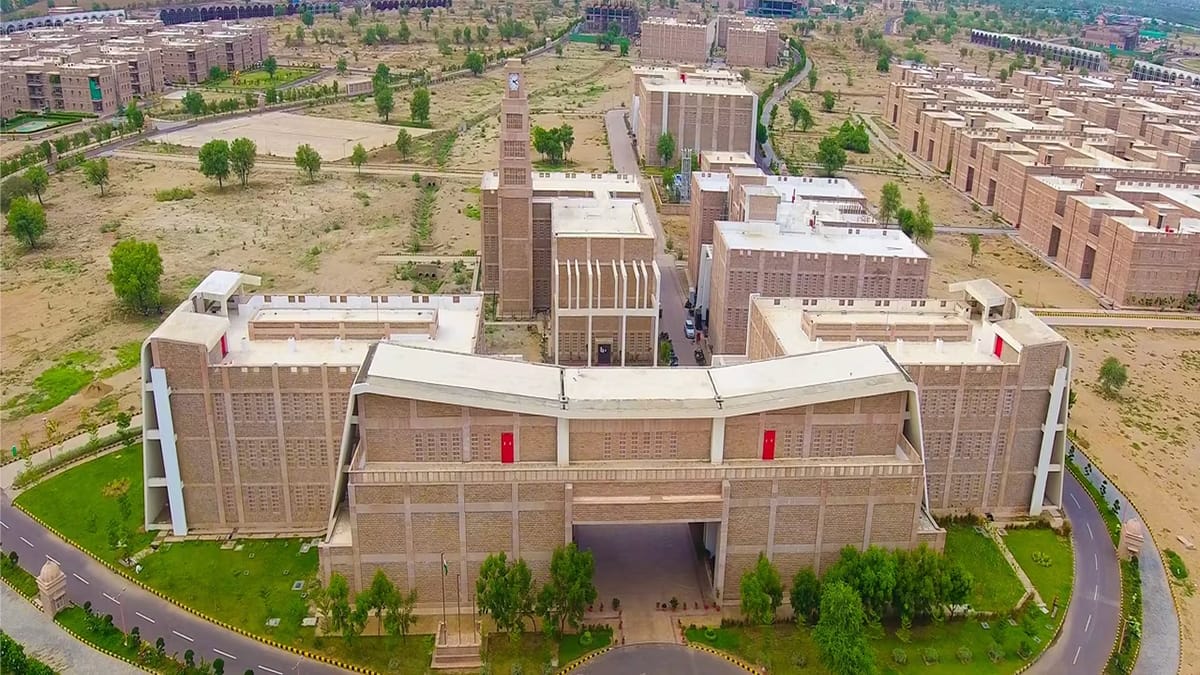
No. The B.S. in Management and Technology is an off-campus, online degree, and it does not run an on-campus placement drive the way IIT Jodhpur's full-time B.Tech programmes do. There is no placement cell guarantee, no campus recruitment cycle, and no published average package for this specific programme. What it does give you is an IIT Jodhpur degree, alumni status, and a curriculum built explicitly toward six named role types. This page explains exactly what that means for your career in practical terms, without the inflated, unverified numbers other sites have started publishing for this exact programme.
Why this question matters more than most applicants realise
Placement is usually the single biggest factor people weigh when choosing between degree options, because it's the shortcut for "will this actually get me a job." For a conventional on-campus IIT B.Tech, that shortcut is meaningful: there's a real placement cell, real recruiter relationships, and real historical data. For an off-campus, online degree like this one, that shortcut simply doesn't exist, and pretending otherwise does you no favours when you're making a five-figure-dollar, four-year financial and time commitment. This page is deliberately built to remove the ambiguity rather than to sell you a comforting answer.
What the programme is actually built for
The curriculum is explicitly structured around six career directions, stated directly on the official programme page:
- Business Analyst, using data and AI tools to support business decisions across finance, marketing, strategy and operations
- Product Management Associate, early-career product roles at tech and tech-enabled companies, where a business-plus-technology grounding is increasingly the norm rather than the exception
- Operations & Supply Chain Analyst, process, logistics and operational efficiency roles that increasingly rely on AI-driven forecasting and automation tools
- Management Consultant, entry into consulting with a technical grounding most pure-business consulting candidates simply don't bring
- Entrepreneur / Startup Founder. The degree includes access to IIT Jodhpur's Technology Innovation and Start-up Center (IITJ-TISC), which periodically invites applications for incubation, mentorship and funding support
- Higher education, the degree qualifies you for postgraduate study, including MBA programmes and other specialised master's degrees, where a technical-plus-business foundation is a genuine differentiator against most undergraduate applicants
Notice what's absent from that list: there's no "core software engineer" or "AI/ML engineer" role type named here, and that's intentional. This degree is not positioned as a computer science replacement, and treating it as one will set the wrong expectations from day one.
Why no salary number attached to this degree is safe to trust yet
No cohort of this specific programme has graduated and entered the job market at scale as of this writing. Any site quoting a specific "average package" for this exact degree, and at least one third-party aggregator currently does, publishing a headline salary figure with no visible sourcing, is either quoting data from a different IIT Jodhpur programme entirely, extrapolating from unrelated cohorts, or simply making a number up to fill a content gap. Treat every salary figure you see attached to this specific degree with real scepticism until IIT Jodhpur or Masai publishes verified, sourced outcome data from an actual graduating batch.
What you *can* reasonably benchmark against is the broader Indian job market for the role types this curriculum targets, not as a promise this degree makes, but as honest market context for what these skills are worth right now:
- AI-skilled Business Analysts in India earn roughly Rs 10-17.5 LPA on average, meaningfully above the Rs 7-10 LPA typical for generalist business analyst roles without AI fluency (2026 market analysis).
- AI Product Manager compensation now averages roughly Rs 30 LPA in metro markets, according to 2026 Glassdoor India data, though entry-level associate-level product roles naturally start well below that experienced-level average.
- India's overall AI job market grew roughly 32% year-on-year heading into 2026, with a widely cited talent gap of close to a million AI-skilled professionals needed by 2027 against a much smaller trained pool (NASSCOM, Quess Corp analysis, 2026).
Use these as reference points for the *roles*, not as a projection for what this specific degree's graduates will earn. That distinction matters, and conflating the two is exactly how unverified "average package" numbers end up on third-party listing sites.
How this degree actually gets you hired, without a placement cell
Three things do the work that a placement cell would otherwise do, and understanding all three before you enrol will materially change how well the degree serves you:
- The IIT Jodhpur name on your resume and LinkedIn, plus verified alumni status. This is a real, durable credibility signal that recruiters recognise regardless of delivery mode, it opens conversations and gets resumes past initial filters in a way a lesser-known institution's name typically doesn't. But a name that opens a door is not the same as a placement cell that walks you through it; you still have to convert that opened door into an offer yourself.
- A portfolio built from applied coursework. The curriculum runs on real-world projects across finance, marketing, strategy and operations rather than purely lecture-and-exam assessment. If you take this seriously and build a genuinely strong portfolio during the four years, case studies, live projects, demonstrable work, you'll have something concrete to show hiring managers that a transcript alone can't provide.
- Your own outreach, internships and networking. Without a placement cell, you are responsible for finding internships, building referral relationships and applying directly, essentially the same process most working professionals already navigate throughout their careers. This is also precisely why the programme's structure suits people who are already employed and building a case for a lateral move or promotion, not only fresh Class 12 pass-outs expecting a first job to be handed to them at graduation.
Where AI-era hiring is heading, and why the timing of this degree matters
India's AI job postings grew roughly 32% year-on-year heading into 2026, and. This is the important nuance, AI-embedded business roles, not just pure AI engineering roles, accounted for a substantial share of that growth (NASSCOM, Quess Corp analysis, 2026). That is precisely the lane this degree targets: business and operations roles with genuine AI fluency, not a computer science degree competing head-to-head for core engineering jobs. Over 90% of India's early-career tech talent is now assessed as AI-native or AI-proficient, according to the 2026 NASSCOM AI-Native Early-career Talent Index, which raises the baseline expectation for every graduate entering the market, a curriculum that builds AI literacy into a business core from day one, rather than treating it as a bolt-on elective, is a reasonable response to that shift. It's a sound bet if the career you actually want sits in that business-plus-technology lane; it's the wrong degree entirely if what you're really hoping for is a guaranteed on-campus job offer handed to you by a placement office, because that mechanism simply doesn't exist here.
What "outcomes" honestly looks like for an off-campus degree like this
It's worth being explicit about what success actually looks like for someone completing this programme, since the framing shapes your expectations for the whole four years:
- A credential, not a job offer. The degree confirms you completed a rigorous, IIT-designed curriculum. It does not, by itself, place you in a role. The difference between those two things is the entire point of this page.
- A stackable safety net. Because the programme allows exits after Year 1 (Certificate), Year 2 (Diploma) and Year 3 (B.Sc.), your outcomes calculus doesn't have to assume you'll complete all four years to get value, each exit point carries its own credential and its own market value, however smaller.
- A network, over time. Alumni status and cohort relationships compound in value well beyond graduation day, in ways that are genuinely hard to quantify in a single "average package" number but matter for career progression over a decade, not just the first job.
- A foundation for further study. If your actual goal is an eventual MBA or specialised master's, this degree functions as strong preparatory groundwork, and its outcomes should be measured partly against that later milestone, not solely against an immediate first job.
Frequently asked questions
Does IIT Jodhpur guarantee placement for this degree? No IIT, on campus or online, formally guarantees placement for any programme. This off-campus programme specifically does not run a placement drive at all; the on-campus B.Tech placement cell is an entirely separate system that this degree does not access, and applicants should not expect it to.
What is the average package for this programme? Not published, and not currently verifiable. No cohort of this specific programme has graduated at scale yet. Be sceptical of any third-party site stating a specific salary figure for this exact degree, treat such figures as unverified until IIT Jodhpur or Masai publishes sourced outcome data.
Can I get a job at a top tech company with this degree? The degree targets business-and-technology roles, business analyst, product management, operations, consulting, rather than core software engineering or ML engineering roles, which typically require a different, more technically specialised skill and degree profile. Top tech companies do hire for business-adjacent roles too, and this degree is a reasonable path into those specific roles at such companies, but it is not the right route into a core engineering seat.
If there's no placement cell, is this degree still worth the fee? That depends entirely on whether you're prepared to do your own career-building work alongside the coursework. If you treat the degree as a credential-plus-network foundation and actively build your own portfolio and outreach, many people find the value proposition strong. If you're expecting the institute to hand you a job the way a strong on-campus placement cell might, this specific programme will disappoint you.
How is this different from what full-time IIT B.Tech students get? Full-time, on-campus B.Tech students access a dedicated placement cell with structured recruiter relationships, campus interview drives and historical outcome data spanning years. This off-campus degree accesses none of that infrastructure, it's a genuinely different product in terms of career support, even though both carry the IIT Jodhpur name.
Apply for the entrance test: Start your application on the official IIT Jodhpur admissions portal to begin the process for the current Batch 2 cycle.