
Cybersecurity roadmap: How to start learning cybersecurity in the AI era


Introduction
Every time you log in to an account, make an online payment, or share personal information, cybersecurity is working behind the scenes to keep that information safe.
But what happens when those defenses fail?
That’s where cybersecurity professionals come in. They identify vulnerabilities, investigate suspicious activity, protect networks, and help organisations respond to cyberattacks.
If you want to learn cybersecurity, you don’t need to start by learning every hacking tool you see online. You need a clear learning path, hands-on practice, and a way to demonstrate what you know.
Here’s a step-by-step cybersecurity roadmap for beginners, covering the fundamentals, essential tools, practical projects, specialisations, and career preparation.
Step 1: Understand the fundamentals of cybersecurity
Before jumping into ethical hacking, understand what you’re trying to protect and how attacks happen.
Start with these core concepts:
- Networking: Learn IP addresses, DNS, TCP/IP, ports, HTTP/HTTPS, and how devices communicate.
- Operating systems: Understand files, processes, permissions, users, and basic Windows and Linux administration.
- Security fundamentals: Learn authentication, authorisation, encryption, hashing, firewalls, and access control.
- Common cyber threats: Understand phishing, malware, ransomware, credential theft, and social engineering.
You don’t need to master everything before moving forward. Your goal is to understand the basic concepts well enough to recognise how a security problem develops.
Try this: Use Wireshark to inspect network traffic from your own device or a controlled lab. Start by identifying familiar protocols and understanding what the traffic reveals.
Step 2: Learn linux, python, and basic scripting
Cybersecurity involves more than using security software. You’ll often need to inspect systems, analyse information, and automate repetitive tasks.

Build these skills next:
- Linux: Practise navigating directories, managing files, checking permissions, and working with command-line tools.
- Python: Learn variables, loops, functions, conditionals, file handling, and basic error handling.
- Bash: Understand how to combine commands and automate routine tasks.
- Git and GitHub: Learn to save, organise, and document your projects.
You don’t need to become a software developer first. Focus on writing small scripts that solve real problems.
Try this: Build a Python script that reads a sample security log, counts failed login attempts, and reports unusual patterns. Use sample data rather than collecting anyone’s private information.
Step 3: Learn ethical hacking and vulnerability assessment
Ethical hacking involves examining systems for weaknesses so they can be fixed before attackers exploit them.
Start by learning how vulnerabilities occur and how to test for them responsibly.
Focus on:
- Reconnaissance and information gathering
- Port scanning and service identification
- Web application security
- Common vulnerabilities covered by the OWASP Top 10
- Vulnerability assessment and penetration-testing reports
Once you understand the concepts, practise with tools such as Nmap and Burp Suite in authorised environments.
For example, a web application might accept user input without validating it properly. Learning how to identify and explain that weakness—and recommend a fix, is more valuable than simply running a tool and copying its output.
Try this: Set up an intentionally vulnerable training application, such as OWASP Juice Shop, and work through its security challenges in the designated lab environment.
Important: Only scan or test systems you own or have explicit permission to assess.
Step 4: Learn how to detect and respond to attacks
Finding vulnerabilities is only one side of cybersecurity. Organisations also need professionals who can identify attacks, investigate alerts, and limit damage.
This is where Security Operations Centre (SOC) skills come in.
Learn to:
- Read and interpret system logs
- Identify suspicious login activity
- Understand security alerts
- Investigate phishing indicators
- Recognise malware-related behaviour
- Follow incident response procedures
Explore tools such as Microsoft Sentinel, a security information and event management (SIEM) platform, and understand how endpoint detection and response (EDR) tools help security teams investigate threats.
Try this: Use a sample authentication log to identify repeated failed logins, unusual login times, and potentially suspicious activity. Document what you found and what you would investigate next.
The goal is to develop an investigator’s mindset: look for evidence, verify your findings, and avoid jumping to conclusions.
Step 5: Choose a cybersecurity specialisation
Once you understand the fundamentals, explore the areas that interest you most. You don’t have to learn every specialisation at once.
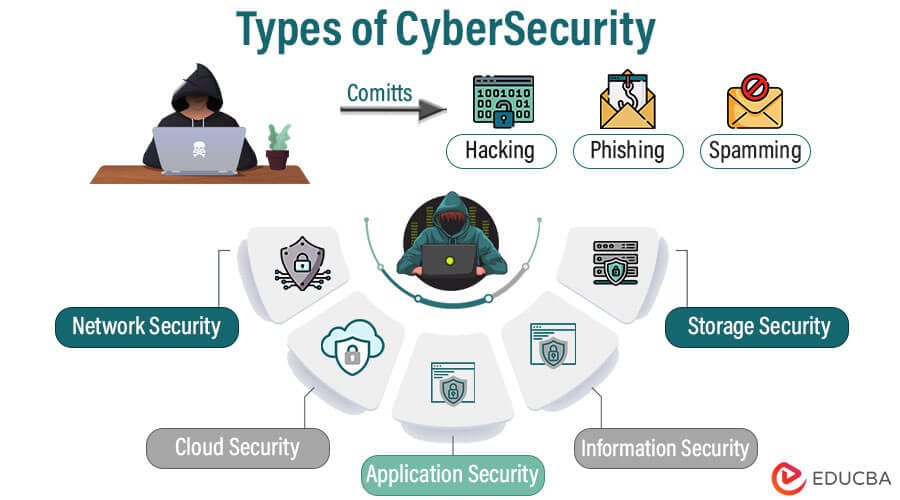
Here are five common paths:
1. Ethical Hacking and Penetration Testing
Find and validate security weaknesses, test applications, and recommend fixes. Useful areas to explore include Nmap, Burp Suite, and Metasploit in authorised labs.
2. Security Operations and Incident Response
Monitor systems, investigate suspicious events, and respond to attacks. Learn log analysis, SIEM workflows, threat detection, and incident handling.
3. Cloud Security
Protect cloud infrastructure, identities, storage, and applications. Start with cloud fundamentals, identity and access management, network controls, and secure configurations.
4. Application and DevSecOps Security
Help development teams identify vulnerabilities throughout the software development lifecycle. Explore secure coding, code scanning, dependency security, and CI/CD pipeline protection.
5. AI Security and Cyber Risk Management
Explore risks involving AI systems, model misuse, data exposure, security automation, governance, and compliance.
You can explore other areas later, including digital forensics, malware analysis, and operational technology security.
How to choose: Try a small project in two or three areas before committing to one. Your interest in investigating attacks, securing infrastructure, or finding software vulnerabilities can help guide your next steps.
Step 6: Build projects that prove your skills
Watching tutorials can help you understand cybersecurity concepts, but practical projects help you demonstrate how you apply them.
Start with projects that match your current skill level.
Beginner projects
- Security log analyser: Write a Python script that summarises failed logins and unusual events in sample logs.
- Network analysis report: Use Wireshark to inspect authorised lab traffic and explain the protocols you observed.
- Phishing awareness analysis: Examine a set of simulated phishing emails and document the warning signs.
Intermediate projects
- Web application security assessment: Test an intentionally vulnerable application and document the findings, severity, evidence, and recommended fixes.
- SOC investigation report: Analyse sample alerts, identify suspicious patterns, and explain your investigation process.
- Cloud security review: Examine a test cloud environment for risky permissions or misconfigurations and recommend improvements.
For every project, include four things:
- The problem you investigated.
- The tools and methods you used.
- Your findings and supporting evidence.
- The fixes or recommendations you proposed.
Upload appropriate code and reports to GitHub, removing credentials, private data, and other sensitive information.
A well-documented project that explains your reasoning can be more useful than a collection of tool screenshots.
Step 7: Prepare for cybersecurity roles
Once you have a foundation and a few projects, start connecting your learning to entry-level opportunities.
Depending on your background and skills, you could explore roles such as:
- SOC Analyst
- Security Analyst
- Junior Penetration Tester
- Vulnerability Assessment Analyst
- Cloud Security Associate
These roles have different requirements, and some may expect prior IT experience or stronger technical foundations.
To prepare, focus on:
- Practising networking, Linux, and security fundamentals.
- Explaining your projects clearly.
- Learning how to investigate a security scenario step by step.
- Building a resume that highlights relevant skills and practical work.
- Reviewing job descriptions to identify recurring requirements.
- Exploring relevant certifications where they fit your goals and budget.
You don’t need to collect every cybersecurity certification available. Choose credentials based on your target role, current experience, and the skills you still need to develop.
A practical 12-week cybersecurity learning plan
Use this as a starting schedule, not a guarantee of job readiness. Your progress will depend on your existing knowledge, available time, and the depth of your practice.
Spend time practising alongside learning. If a concept is still unclear, extend that phase rather than rushing to the next tool.
How a structured cybersecurity programme can help
You can learn cybersecurity through documentation, online labs, tutorials, and independent projects. The challenge is knowing what to learn next, how to practise safely, and how to connect individual skills into a complete workflow.
A structured programme may help if you want guided instruction, a planned curriculum, expert feedback, and project-based learning.
One option to explore is the IITM Pravartak Certificate Programme in Cybersecurity & Ethical Hacking in the AI Era.
The programme is designed for tech freshers and early-career professionals, particularly those from CS, IT, electronics, or engineering backgrounds and professionals working in IT, DevOps, cloud, or software engineering.
The 10-month online programme covers:
- Cybersecurity foundations: Networking, operating systems, programming, cryptography, and threat intelligence.
- Ethical hacking: Reconnaissance, web application vulnerabilities, penetration testing, and malware analysis.
- Security operations: SIEM workflows, threat hunting, detection, and incident response.
- Cloud and DevSecOps: Cloud security, secure development pipelines, and infrastructure security.
- AI and cybersecurity: AI-assisted security workflows, AI product security, and threat detection.
- Risk and compliance: Security governance, ISO 27001, privacy, and cyber risk management.
Learners also work on practical projects, including ethical hacking reports, security operations projects, cloud security assessments, and an end-to-end capstone based on a real Indian breach scenario.
The programme includes live online sessions and offers two optional two-day campus immersion experiences at IIT Madras Research Park. Certification is subject to the programme's stated eligibility requirements.
This can be worth exploring if you prefer a structured learning path rather than piecing together every topic yourself. Review the current eligibility criteria, curriculum, schedule, and fees before deciding whether it fits your needs.
Final thoughts
Cybersecurity is a broad field, and there is no single tool or certification that makes someone job-ready.
Start with networking, operating systems, and security fundamentals. Learn enough Python to automate simple tasks. Practise in authorised labs, build projects, and document your findings. Then choose a specialisation based on the work you enjoy and the roles you want to pursue.
The goal isn’t to learn every cybersecurity tool. It’s to understand security problems, investigate them methodically, and demonstrate how you can help solve them.