
Best cybersecurity tools for beginners in 2027, and legal practice
Cybersecurity tools for beginners as of 11 November 2026: Wireshark, Nmap, Burp Suite, ZAP and more, plus legal practice labs and what India's IT Act says.

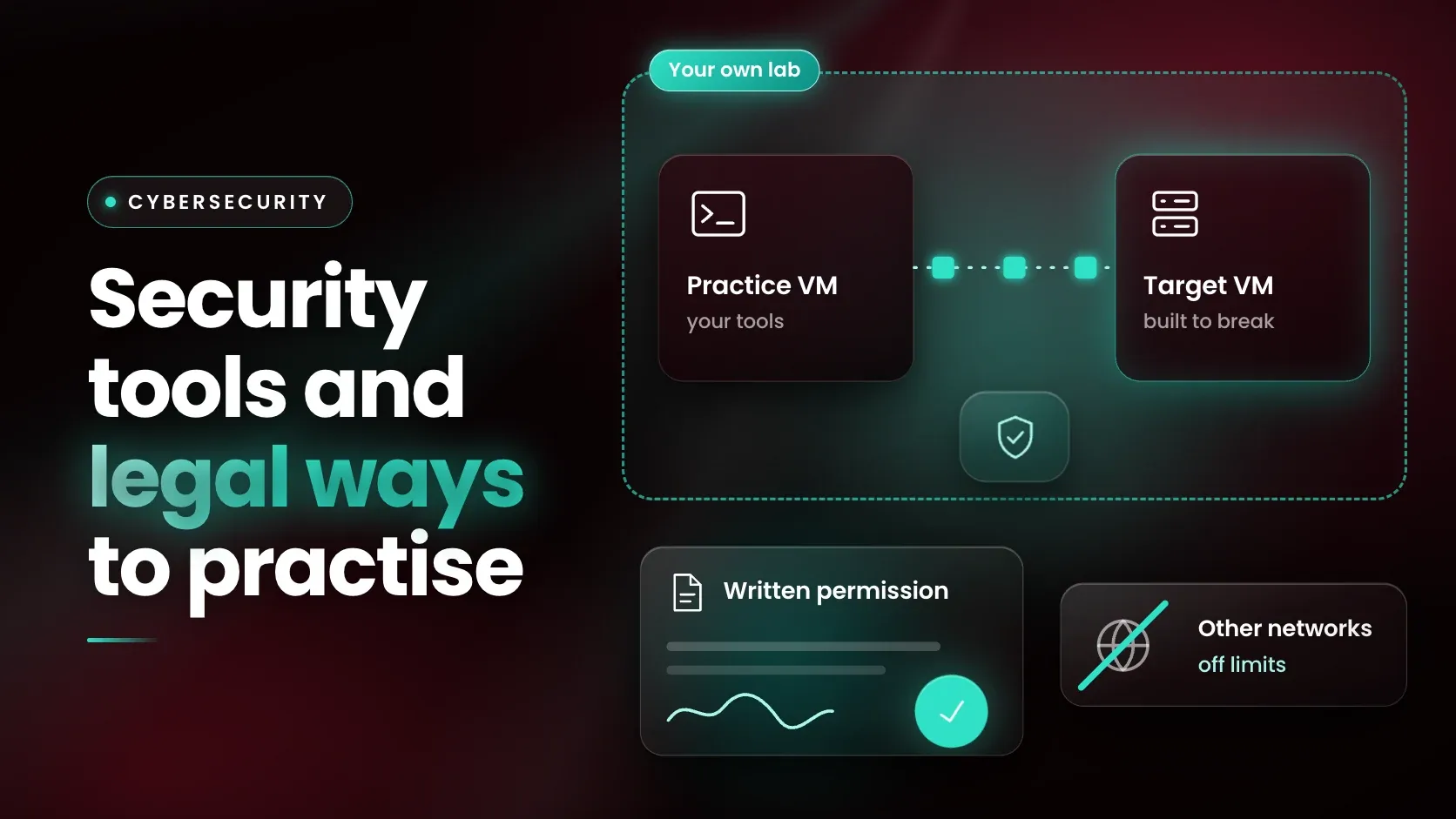
Cybersecurity tools for beginners are programs that inspect network traffic, map hosts, test web applications, audit passwords and analyse files. Ten are covered here, checked on 11 November 2026: Wireshark, Nmap, OpenVAS, CyberChef, Ghidra, Burp Suite Community Edition, ZAP, Metasploit Framework, John the Ripper and Kali Linux. Each belongs only on systems the learner owns or has written permission to test, and the routes below show where to practise legally.
Last updated: 11 November 2026.
Is it legal to practise hacking at home in India?
Section 43 of the Information Technology Act, 2000 is written around permission, so practice belongs on machines the learner owns or on applications published for attack practice.
As published on India Code, section 43 applies to a person who, without the permission of the owner or any other person in charge of a computer, computer system or computer network, accesses or secures access to it, downloads or copies data from it, introduces a computer contaminant or computer virus, damages or disrupts it, or denies access to an authorised person, among other acts the section lists. The consequence under section 43 is liability to pay compensation to the person affected.
Section 66 applies the same acts when done dishonestly or fraudulently, and makes them punishable with imprisonment of up to three years, a fine of up to Rs 5 lakh, or both. Whether a particular port scan counts as access is a question for lawyers. The Nmap project's legal chapter calls the legal ramifications of scanning complex and controversial, advises written authorisation from the target network's representatives, and adds that unauthorised scanning is sometimes against an internet provider's acceptable use policy.
Kali Linux's documentation warns that misuse of security tools without specific authorisation may bring personal and legal consequences. A college or workplace network belongs to someone else, so written permission comes first. This describes published text and is not legal advice.
Which tools help a beginner see networks, data and programs?
Five tools let a beginner observe and analyse before changing anything: Wireshark, Nmap, OpenVAS, CyberChef and Ghidra.
Wireshark
Wireshark is an open-source network protocol analyzer that captures and browses the traffic on a network, with deep inspection of hundreds of protocols. It is released under the GNU General Public License, and its download page lists 4.6.9 as the stable release. A learner can open a published capture file from the Wireshark Wiki's Sample Captures page and follow an HTTP exchange. The limit is stated in the User's Guide: Wireshark is not an intrusion detection system, so it measures traffic and will not warn when something strange happens.
Nmap
Nmap, short for Network Mapper, is a free and open source utility for network discovery and security auditing. It uses raw IP packets to find which hosts are available, which services and versions they offer, which operating systems they run and which firewalls are in use. The latest stable release on its download page is 7.993. A learner can scan a home lab machine, or scanme.nmap.org, which the project says users may scan, a few times a day. The limit is legal: Nmap's own guide advises written authorisation before scanning any other network.
OpenVAS
OpenVAS is the name for the Greenbone Vulnerability Management software stack, whose source is the Greenbone Community Edition. Its documentation includes a Kali Linux install guide and a containers section, and the scanner repository carries the GPL-2.0 licence. A learner can scan a lab virtual machine for known vulnerabilities and read the report. The limit is stability: git checkouts change daily and may be incomplete, so release archives or containers suit learning. Tenable's Nessus Essentials is an alternative with a 30-day free licence for non-commercial use and a limit of up to 5 IPs.
CyberChef
CyberChef is a web app from GCHQ for carrying out data operations in a browser, such as Base64 and XOR encoding, AES encryption, hexdumps, compression and hashes. Its README says it is entirely client-side, so input is never sent to the CyberChef web server, and the Apache-2.0 app can be downloaded and run locally. A learner can paste an encoded string and chain operations to decode it. The limit is size: files up to about 2GB load depending on the browser, and some operations may run for a very long time on that much data.
Ghidra
Ghidra is a software reverse engineering framework created and maintained by the US National Security Agency Research Directorate, with disassembly, decompilation, graphing and scripting for compiled code on Windows, macOS and Linux. GitHub lists the Apache-2.0 licence and Ghidra 12.2, published on 22 October 2026, as the latest release. A learner can open a small program they compiled themselves and read its decompiled code. The limits are that an official release needs a 64-bit JDK 25 and that the README warns of known vulnerabilities in certain versions.
Which tools help a beginner test web applications, passwords and systems?
Five tools move from observing to testing, which is why each needs a practice target the learner owns: Burp Suite Community Edition, ZAP, Metasploit Framework, John the Ripper and Kali Linux.
Burp Suite
Burp Suite Community Edition is PortSwigger's free download of its web security testing toolkit. It includes an HTTP(s) and WebSockets proxy with history, Repeater, Decoder, Sequencer and Comparer, plus a demo of Burp Intruder. A learner can route a browser through the proxy and inspect the requests made by an intentionally vulnerable app such as OWASP Juice Shop. The limit is the edition: project files, the full Intruder and the web vulnerability scanner are listed as Professional features.
ZAP
Zed Attack Proxy (ZAP) by Checkmarx is a free, open-source penetration testing tool for web applications that sits as a proxy between the browser and the application. It was formerly called OWASP ZAP; the project says it left OWASP in September 2023. A learner can run its automated scan against a practice app hosted locally. The limit is safety: ZAP's guide says active scanning is a real attack that must only target applications the tester has permission to test, and Safe Mode reduces what it can do.
Metasploit Framework
Metasploit Framework is Rapid7's open-source penetration testing framework, released under a BSD-style licence, with msfconsole as its main interface and a copy pre-installed on Kali. Its documentation addresses users who want to improve at hacking things they have permission to hack. A learner can read module descriptions to see which products and versions a disclosed flaw affects. The limit is risk: the documentation warns that a failed exploit may crash the service it touches, so modules belong only on lab machines the learner owns.
John the Ripper
John the Ripper is an open-source password security auditing and password recovery tool from Openwall, supporting hundreds of hash and cipher types. The community edition is distributed primarily as source code, and a commercial Pro edition exists. A learner can audit the password hashes of a lab account to see how weak choices fail. hashcat is a related tool with CUDA, HIP, Metal and OpenCL backends, under the MIT licence, at version 8.0.0 dated 25 October 2026. The limit is set-up: source-first distribution, and GPU drivers for hashcat.
Kali Linux
Kali Linux is an open-source, Debian-based Linux distribution from OffSec for penetration testing and security auditing, with several hundred tools. Release 2026.3 appeared on 4 November 2026, and pre-built VMware and VirtualBox images let it run inside a virtual machine. Parrot OS 7.4 is an alternative security distribution, with Home, Security and HTB editions. The limit comes from Kali's documentation: it is not recommended for people unfamiliar with Linux, and its documentation assumes prior Linux knowledge.
How do the ten tools compare?
The table gives each tool's best use, its licence as stated by its publisher, and one main limit.
| Tool | Best for | Licence as stated | Main limit |
|---|---|---|---|
| Wireshark | Reading packet captures | GNU General Public License | Not an intrusion detection system |
| Nmap | Mapping hosts and services | Nmap Public Source License | Needs written authorisation for other networks |
| OpenVAS | Scanning a lab for known flaws | GPL-2.0 scanner | Git checkouts change daily |
| CyberChef | Decoding and hashing data | Apache-2.0 | Slow on very large inputs |
| Ghidra | Reading compiled programs | Apache-2.0 | Needs JDK 25; known vulnerabilities in some versions |
| Burp Suite Community Edition | Inspecting web traffic | Free edition of a commercial product | No scanner or project files |
| ZAP | Scanning a practice web app | Apache v2 | Active scans are real attacks |
| Metasploit Framework | Reading module descriptions in a lab | BSD-style | Modules can crash services |
| John the Ripper | Auditing lab password hashes | Open source, with a Pro edition | Source-first set-up |
| Kali Linux | A ready-made testing platform | Open source | Not for new Linux users |
Where can a beginner practise ethical hacking legally?
A beginner can practise on machines the learner owns, on applications built to be attacked, on targets whose owners invite testing and on lab platforms that publish free content. Employers notice the gap: the Data Security Council of India's 2025-2026 cyber security skilling report, published on 1 May 2026, reported that 63% of enterprises see limited hands-on practical skills among candidates.
A home lab uses a virtualisation tool such as VirtualBox, which describes itself as open source virtualisation and lists version 7.2.22 from 20 October 2026. The DVWA README, for Damn Vulnerable Web Application, recommends a virtual machine in NAT networking mode and warns against putting the app on any internet-facing server. OWASP Juice Shop, which its README calls probably the most modern and sophisticated insecure web application, covers the entire OWASP Top Ten, and the README gives a Docker command that binds it to the local machine only.
Invited targets and data sets also exist. The scanme.nmap.org machine is open to Nmap scans within the limit its page states, and the Wireshark Wiki offers capture files to analyse offline. PortSwigger's Web Security Academy is a free online training center with interactive labs and lists API testing among its topics, and the list of API testing tools covers the HTTP clients used for that work.
Two platforms state free content. TryHackMe's home page lists 1,000+ free rooms and 1 hour of free daily AttackBox time, and Hack The Box's page says one new machine is released free every week. Free allowances change, and each platform's terms apply.
Which cybersecurity tools should a beginner learn first?
A beginner should learn tools that observe before tools that change things, which gives this order: Wireshark and CyberChef, then Nmap on a home lab, then Burp Suite Community Edition or ZAP against Juice Shop. Metasploit Framework and password tools come last, since Metasploit's documentation warns that modules can crash services and every such tool needs authorisation.
Kali is optional. Wireshark and Nmap publish Windows installers on their download pages, and CyberChef runs in a browser. The beginner guide on whether cybersecurity is hard to learn covers the wider skill picture.
How can a downloaded security tool be verified?
A downloaded security tool should be checked against the checksum or signature its publisher posts before it is installed. The Get Kali page lists a SHA256 checksum beside each image, and hashcat's page lists a PGP signature and signing key for each download. This script, run with Python 3.15.0, streams a file through SHA-256 and compares the result with the published value.
import hashlib, sys

def sha256_of(path, chunk=1 << 20):
    h = hashlib.sha256()
    with open(path, "rb") as f:
        while block := f.read(chunk):
            h.update(block)
    return h.hexdigest()

path, published = sys.argv[1], sys.argv[2].strip().lower()
actual = sha256_of(path)
print("file     :", path)
print("computed :", actual)
print("result   :", "MATCH" if actual == published else "DIFFERENT, do not install")
On a 15-byte local test file, the script printed the digest below and MATCH when given the same value. An all-zero value printed DIFFERENT, do not install.
file     : sample.bin
computed : b0058f1f3c3f40ca223d41fdfd68737c21db51576ec6bffc6a491ba03583d7ea
result   : MATCH
What limits apply to beginner security tools?
Names, ownership and free terms change. ZAP was an OWASP project until September 2023 and is now ZAP by Checkmarx, and Tenable's page now offers Nessus Essentials as a 30-day free licence, so each free tier needs checking on the vendor page. Security tools also carry their own risk: Ghidra's README warns of known vulnerabilities in certain versions, so tools should come from the publisher and be kept current.
Intentionally vulnerable apps such as Juice Shop and DVWA are built to be broken, so success against them shows familiarity with a tool, not an ability to test a production system.
Where does the cybersecurity programme fit?
Certificate Programme in Cybersecurity & Ethical Hacking in the AI Era is an online programme from IITM Pravartak, the Technology Innovation Hub of IIT Madras, taught in live online classes with two optional campus immersions at IIT Madras Research Park, covering ethical hacking, security operations, cloud security, DevSecOps, AI security, risk and compliance, and a breach-response capstone. Its modules include Recon, Scanning & Web Application Attacks and Cloud Security, Zero Trust & Multi-Cloud. The AWS, Azure and Google Cloud comparison covers the three clouds themselves.
Frequently asked questions
Which cybersecurity tools should a beginner learn first?
A beginner should learn the cybersecurity tools that observe before those that change things. Wireshark and CyberChef come first, then Nmap on a home lab, then Burp Suite Community Edition or ZAP against an intentionally vulnerable app such as OWASP Juice Shop. Metasploit Framework and password tools come later because they carry more risk.
Is it legal to practise hacking at home?
Practising on machines a learner owns, or on applications published for attack practice, involves no one else's computer, and India's Information Technology Act, 2000 is written around permission. Section 43 covers acts done without the permission of the owner or person in charge, and section 66 makes them punishable when done dishonestly or fraudulently. This describes published text and is not legal advice.
Do you need Kali Linux to start?
No, Kali Linux is not needed to start. Kali's own documentation says it is not recommended for people unfamiliar with Linux and assumes prior Linux knowledge. Wireshark and Nmap offer Windows installers, and CyberChef runs in a browser, so a beginner can learn several tools without Kali and add it later in a virtual machine.
What is the difference between ZAP and Burp Suite?
ZAP by Checkmarx is a free, open-source, proxy-based tool for testing web applications. Burp Suite Community Edition is PortSwigger's free download with a proxy, Repeater, Decoder, Sequencer, Comparer and a demo Intruder, while the scanner and project files are Professional features. Both test web applications, and both require permission to test anything beyond a practice app.
Is ZAP still an OWASP project?
No. The ZAP project says it took ZAP out of OWASP in September 2023 to obtain funding, and it is now known as ZAP by Checkmarx, a name announced on 24 September 2024. ZAP remains open source under the Apache v2 licence, and the project calls any reference to OWASP ZAP out of date.
Next step
A learner can set up a virtual machine lab, run Juice Shop locally and open Wireshark sample captures before touching any other system. For structured practice in ethical hacking, security operations and cloud security, see Certificate Programme in Cybersecurity & Ethical Hacking in the AI Era.