
AI updates 2026: Biggest breakthroughs, tools, trends and industry shifts so far

Artificial Intelligence is no longer a technology shaping the future.
It is actively reshaping the present right now, in 2026.
Halfway through the year, the AI industry has already witnessed more meaningful shifts than most people anticipated: autonomous AI agents operating inside enterprise workflows, multimodal systems that see, hear, and reason simultaneously, trillion dollar infrastructure bets being placed on AI compute, and scientific research being accelerated at a pace that would have seemed implausible three years ago.
The conversation has moved well beyond chatbots and content generation. Today's AI systems are writing production grade code, assisting in drug discovery, running multi-step business workflows, and increasingly functioning as autonomous digital colleagues rather than simple assistants.
For students, working professionals, business leaders, and anyone building a career in tech, understanding these developments isn't optional anymore. It's foundational.
This article covers the biggest AI updates of 2026 so far what's actually happening, what the data says, and what it means for the future of work.
Why 2026 is a defining year for artificial intelligence
The first wave of AI adoption was about experimentation.
Organizations explored generative AI tools. Employees tested chatbots. Businesses looked for quick productivity gains. Most of it was surface level.
The second wave is proving far more significant and far more structural.
In 2026, AI has moved from experimentation to implementation. Companies are integrating AI into core operations: finance, HR, supply chain, software development, customer experience, and strategic decision-making. According to the Stanford HAI AI Index Report 2026, enterprise AI adoption has accelerated sharply, with over 78% of global organizations now actively deploying AI in at least one business function up from 55% in 2024.
The most important AI race isn't happening between ChatGPT and Gemini. It's happening inside organizations, quietly, in the form of workflow automation, operational AI, and AI-assisted decision-making.
That shift marks a critical turning point not just for the technology, but for every career connected to it.
1. The rise of agentic AI: from assistants to autonomous workers
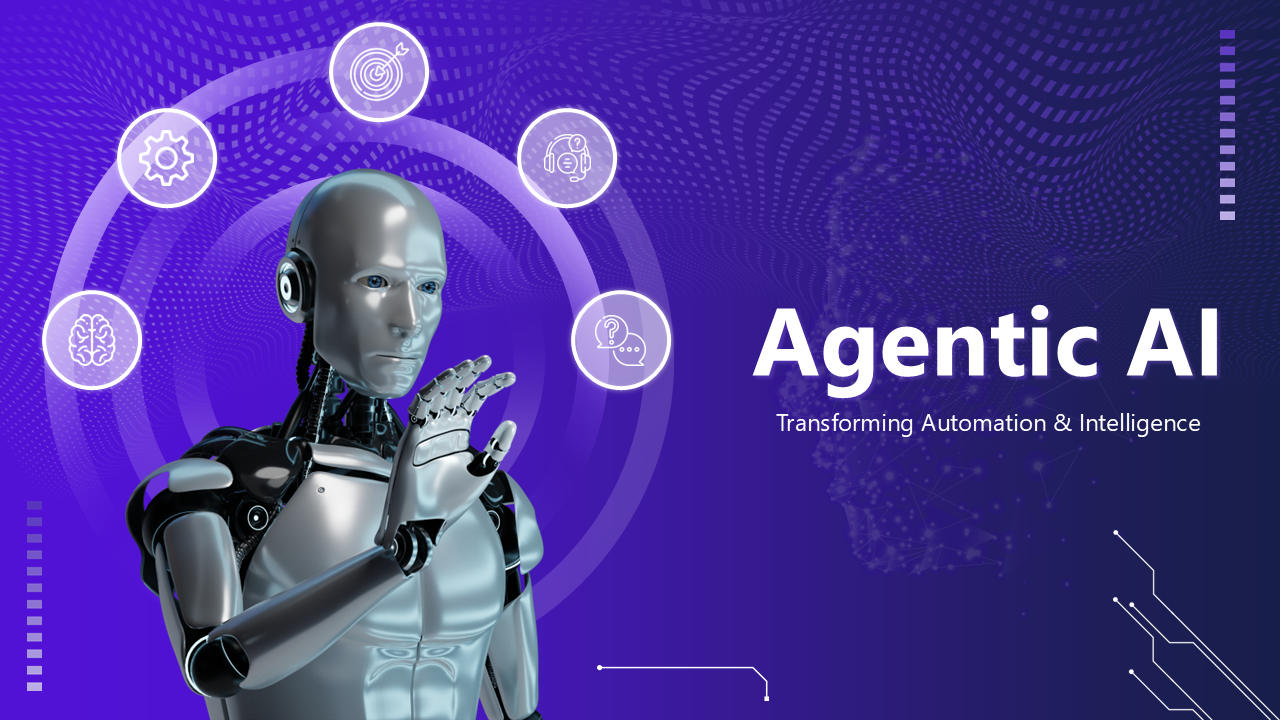
The single biggest AI trend of 2026 is the emergence of agentic AI.
Unlike traditional AI assistants that respond to a prompt and stop, agentic systems can plan, reason, execute multi-step tasks, coordinate tools, and adapt when something goes wrong with minimal human intervention at each step.
The practical difference:
Frameworks like LangChain, LangGraph, AutoGen, and CrewAI are what engineers use to build these systems. Concepts like multi-agent orchestration, RAG (Retrieval-Augmented Generation), and tool-use pipelines are no longer research-paper abstractions — they're in live job descriptions at Deloitte, TCS, Wipro, and hundreds of startups across India right now.
According to NASSCOM's India AI Talent Report 2025, demand for agentic AI skills in India grew over 300% between early 2025 and Q1 2026. India currently has a shortfall of over 50,000 trained agentic AI professionals, a gap the market is actively trying to fill.
The future of work will increasingly involve professionals managing teams of AI agents alongside human colleagues. Understanding how agentic systems work, not just using them as end tools is what separates the people building that future from those trying to catch up to it.
2. Enterprise AI: the real battleground nobody's talking about
Consumer AI products get the headlines. Enterprise AI generates revenue.
One of the most significant but under-covered developments of 2026 is the depth of AI adoption inside businesses. Companies are deploying AI across functions that were largely untouched two years ago:
- Finance - automated reconciliation, fraud detection, real-time risk modeling
- Human resources - AI-assisted hiring, performance analysis, attrition prediction
- Supply chain - demand forecasting, inventory optimization, disruption prediction
- Customer support - autonomous resolution agents handling full conversation cycles
- Software development - AI-assisted code review, automated testing, architecture suggestions
- Marketing - hyper-personalized campaign generation, real-time content optimization
The WEF Future of Jobs Report 2025 projects 170 million new roles globally by 2030, with AI, data, and automation skills listed as the most critical cross-industry capabilities. The same report flags that 39% of existing skills will be disrupted within five years.
For professionals, the implication is direct: AI skills are no longer a differentiator. They're rapidly becoming table stakes.
3. AI in scientific research: from tool to collaborator
One of the most consequential and least discussed AI developments of 2026 is what's happening in research labs.
AI systems are now actively assisting scientists with:
- Drug discovery predicting molecular interactions and candidate compounds at speeds no human team can match
- Biological research protein folding analysis, genomic sequencing, disease modeling
- Climate science simulation modeling at scale, real-time environmental data analysis
- Materials science identifying novel compounds for batteries, semiconductors, and construction
A concrete example: Anthropic's Claude Science, an AI-powered research environment specifically designed to help scientists analyze complex datasets, run simulations, and accelerate the path from hypothesis to finding was launched in 2026 and is already being used in academic and pharmaceutical research settings.
This isn't AI replacing scientists. It's AI removing the bottlenecks that slow science down data processing, literature review, pattern identification so human researchers can focus on what only humans can do: ask the right questions.
The implications for healthcare, climate, and materials research are significant enough that the Nobel Committee has already begun discussing how to classify AI-assisted discoveries.
4. The AI infrastructure boom: bigger than most people realize
When most people think about AI infrastructure, they think GPUs.
The reality is an order of magnitude larger.
The rapid growth of AI is driving unprecedented capital investment in:
- Data centers hyperscale facilities being built at record pace globally
- Energy infrastructure AI compute is power-hungry; energy supply has become a genuine constraint
- Networking systems moving data at the speed AI requires demands new networking architectures
- Semiconductor design Nvidia, Qualcomm, and a wave of custom chip startups are designing silicon specifically for AI workloads
Industry estimates now project $6-8 trillion in global AI infrastructure investment through 2030, according to Goldman Sachs Research (2025). Microsoft, Google, Amazon, and Meta have each announced multi-hundred-billion-dollar AI infrastructure commitments for 2025-2027.
For India specifically, this represents a significant opportunity. India's data center capacity is expanding rapidly, with new government-backed AI compute infrastructure announced under the India AI Mission 2026.
The infrastructure story isn't visible the way a new model release is. But it is the foundation that makes everything else on this list possible.
5. Multimodal AI: the new standard, not the next frontier
Text-only AI is already yesterday's model.
In 2026, leading AI systems process and generate across multiple modalities simultaneously:
- Text and documents
- Images and video
- Audio and speech
- Code and structured data
- Real-time sensor data
This shift commonly referred to as multimodal AI means systems can reason across formats the way humans naturally do. A model that can simultaneously read a clinical report, analyze a scan, reference a patient history, and generate a structured recommendation is categorically different from a system that only processes text.
The industries being transformed most significantly include healthcare diagnostics, legal document analysis, education, creative production, and design. In the creative production space, the Seedance 2.0 model illustrates how multimodal systems can integrate written prompts, visual references, and motion cues to produce polished video output.
The practical effect for users is that AI tools are becoming dramatically more useful across real-world workflows not just text-heavy ones.
According to Gartner's 2026 AI Hype Cycle, multimodal AI has moved from "Peak of Inflated Expectations" to early "Slope of Enlightenment" meaning it's past the hype stage and into genuine, productive enterprise deployment.
6. AI and software development: what's actually changing
Software development is one of the industries most visibly and rapidly reshaped by AI.
Developers are now using AI assistants for:
- Code generation and completion
- Automated debugging and error detection
- Test case generation
- Documentation writing
- Architecture recommendations
- Security vulnerability scanning
GitHub's internal data suggests developers using AI coding assistants complete tasks 55% faster on average than those working without them. That's not a marginal efficiency gain, it's a fundamental change in how software gets built.
The important nuance: this doesn't eliminate the need for developers. It changes what the job looks like. The developer of 2026 spends less time on implementation mechanics and more time on system design, product thinking, and outcome definition. The floor for what counts as a "developer skill set" is moving up, not disappearing.
For anyone learning to code or building a software career, this makes AI tool fluency not just programming language knowledge an essential component of the skill stack.
7. The efficiency shift: smaller, faster, smarter
For years, the dominant logic in AI was: bigger model = better performance.
2026 is complicating that assumption.
Researchers and companies are now prioritizing:
- Smaller, specialized models optimized for specific tasks rather than general capability
- Faster inference lower latency for real-time applications
- Reduced compute costs making AI economically viable at scale
- Improved reasoning accuracy and logical coherence, not just output volume
- On-device AI models running locally on laptops and phones, not only in the cloud
This efficiency movement reflects a maturing market. The companies that built the largest models are now racing to make them deployable at a price point that makes commercial sense. The next generation of AI may not be the most powerful. It will be the most practical.
8. AI regulation and governance: moving from discussion to policy
As AI capabilities expand, regulatory attention is intensifying globally.
In 2026, the policy conversation has moved from "should we regulate AI?" to "how do we implement it?"
Key developments:
- The EU AI Act began phased enforcement in early 2026, requiring high-risk AI systems to meet specific transparency and safety standards
- The US established new federal guidelines on AI use in critical infrastructure, healthcare, and financial services
- India is developing its own AI governance framework under the Digital India Act revision, with particular focus on data sovereignty and multilingual AI fairness
For companies building AI products and professionals working in AI-adjacent roles, understanding the regulatory landscape is becoming a functional requirement not just a compliance checkbox.
The challenge moving forward isn't choosing between innovation and safety. It's building systems where both are designed in from the start.
9. India's growing role in the global AI ecosystem
India is no longer just a market for global AI products. It is becoming a creator of them.
The India AI Impact Summit 2026 showcased a range of domestic AI research initiatives, multilingual foundation models, AI-powered public infrastructure projects, and startup ecosystem developments that signal genuine capability-building, not just adoption.
Specific areas of growth:
- Multilingual AI models trained on Indian languages addressing a gap that global models have historically underserved
- AI in agriculture crop disease detection, yield prediction, supply chain optimization for farmers
- AI in healthcare diagnostic tools designed for India's healthcare infrastructure and patient demographics
- AI infrastructure government-backed compute capacity under India AI Mission 2026
For Indian students and professionals, this trajectory creates meaningful career opportunities across AI engineering, data science, machine learning, product management, AI policy, and AI entrepreneurship in domestic companies, not just global ones.
What these AI updates mean for your career
New tools and model releases attract attention. But the more important question is the one most articles don't answer directly:
What does this mean for how you work, learn, and build a career?
Three things stand out:
AI literacy is becoming a baseline requirement, not a specialization Understanding how AI systems work not at a research level, but at a working level is increasingly valuable across every industry. Finance professionals using AI for modeling, marketers using AI for personalization, analysts using AI for insight generation these aren't "AI jobs." They're jobs where AI competency is now expected.
Human skills are appreciating, not depreciating Critical thinking, strategic judgment, communication, creativity, and ethical reasoning remain genuinely difficult to automate. As AI handles more execution, these human capacities become more valuable not less. The professionals who combine strong human judgment with AI fluency will be disproportionately valuable.
Adaptability is the most durable career asset The specific tools being used in 2026 will be different from those dominant in 2028. The professionals who build the habit of continuous learning not just completing a course once are the ones positioned to stay relevant through successive waves of change.
The goal isn't competing with AI. It's learning to work with it well enough that you become more effective than someone who doesn't.
Key AI trends to watch in the second half of 2026
- Agentic AI deployment at enterprise scale
- Multimodal AI entering mainstream product development
- AI-powered scientific discovery accelerating across pharma and climate research
- Small model efficiency becoming a commercial differentiator
- AI regulation moving from frameworks to enforcement
- India's AI ecosystem maturing from adoption to creation
- AI-assisted software development reshaping developer roles
- Workforce transformation conversations moving from theoretical to operational
Final Insight
If 2023 was the year AI captured public attention, and 2024-2025 were years of exploration, 2026 is the year implementation becomes unavoidable.
The biggest AI breakthroughs are no longer confined to model releases and research papers. They're happening inside businesses, research labs, government systems, and everyday workflows quietly, at scale, with real consequences for how industries operate and how careers develop.
The organizations and professionals who understand these shifts early not just as news items but as structural changes in how value gets created will be best positioned for what comes next.
Because the future of AI isn't something that is approaching.
It's already the present.
Also Read
ChatGPT Prompts that actually work for marketing professionals in 2026:
Best AI ML Courses in India 2026: Fees, Duration & What You Actually Learn
What is Agentic AI and why is it the most in demand skill in India’s job market right now?