
What does a Product Manager do? Career guide 2026

In 2026, that job description is shifting fast. AI product management is now one of the fastest-growing niches in tech, senior-level PM hiring has grown roughly 87% year-on-year, and companies are increasingly hiring for skills over pedigree. This guide breaks down the real day-to-day, the skills that matter, how to become a product manager with or without experience, and current product manager salary data for India with the data laid out in tables, not buried in paragraphs.
What does a Product Manager do, exactly?
A product manager defines the product strategy, sets the roadmap, and prioritizes what gets built while balancing user needs, business goals, and engineering reality. As Atlassian's Sherif Mansour puts it, a PM is the person who identifies customer needs and business objectives, then rallies a team to turn that vision into a reality.
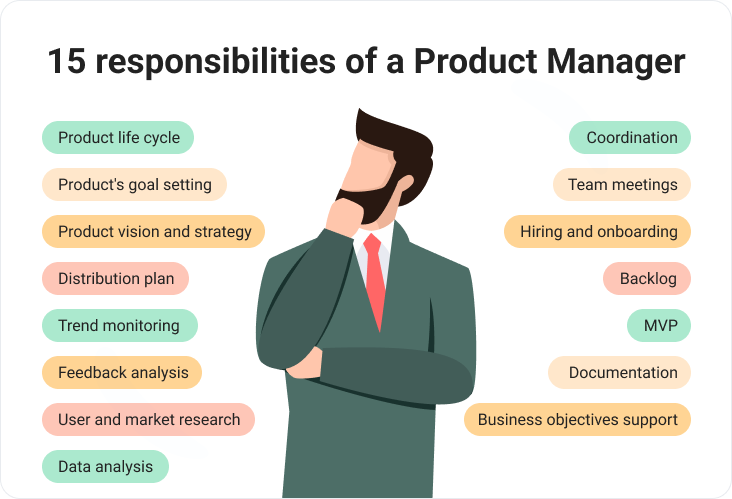
Here's what that actually looks like week to week:
A large share of a PM's real job, according to Atlassian, is understanding and representing user needs, monitoring the market, defining a product vision, aligning stakeholders, and prioritizing features not writing code or managing a team's day-to-day tasks.
Product Manager vs. Product Owner vs. Project Manager
This is one of the most Googled questions in product management, and the confusion is fair all three roles touch the same product. The short answer: PMs define the what and why, product owners execute the how, and project managers keep everyone on schedule and on budget.
According to Atlassian, the product owner works more closely with the development team to execute against the goals that the product manager helps to define, while the PM operates at a more conceptual, outward-facing level.
Product Manager skills you need in 2026
The skill list hasn't changed dramatically but the weighting has. AI fluency and business acumen have jumped from "nice to have" to core requirements. Industry data shows AI is now the single biggest force reshaping market research, product development workflows, and hiring practices in product management.
Product leadership research backs this up: system-level thinking, data literacy, and AI and machine learning knowledge are now named among the top skills product managers need going into 2026, alongside collaboration and influence.
Long-tail keyword insight: if you're searching "skills needed to become a product manager with no experience," start with communication, structured problem-solving, and basic data analysis these transfer from almost any prior role.
How to become a Product Manager (Step-by-Step)
There's no single degree or certification required to break into product management. Employers typically want a mix of relevant experience, demonstrated product thinking, and strong communication skills, according to Prospects.ac.uk, which notes that employers prefer candidates with a degree in a business or marketing-related subject , though technical roles may require an engineering background.
- Learn the fundamentals - product lifecycle, agile/scrum basics, user-centered design, and roadmapping.
- Pick your entry lane - transition from engineering, design, marketing, or business analysis; these backgrounds all overlap heavily with PM work.
- Build a portfolio project - a case study, side app, or market research deep-dive shows product thinking better than a resume bullet.
- Get structured training - short, beginner-friendly programs help formalize scattered knowledge quickly.
- Network and shadow real PMs - most PM hires still come through referrals and internal moves.
Product Manager salary in India (2026)
Compensation varies enormously by level, city, and company type. Here's a consolidated view based on 2026 industry salary data:
Bengaluru remains the highest-paying hub for product roles, commanding a 20-35% premium over most other Indian cities, with Hyderabad, Mumbai, and Gurugram/NCR following closely behind.
Keyword note: whether you search product manager salary in India per month, AI product manager salary India 2026, or product manager salary Bengaluru, the pattern is consistent specialization (AI/ML, fintech, growth) and company tier matter more than years of experience alone.
Product Manager career path
Product management is also increasingly seen as a pipeline into the C-suite, YouTube CEO Neal Mohan, for example, began his career as a product manager before rising through leadership ranks.
Is Product Management a good career in 2026?
Short answer: yes, with a caveat. Total PM job listings were up 12% year-on-year, and one industry report noted senior-level product hiring growing around 87% year-on-year but that growth is concentrated at the experienced end of the market, not entry-level headcount. If you're breaking in fresh, expect more competition; if you're a few years in with a track record, demand is strong.
Explore the Product Management with Generative & Agentic AI programme by BITSoM, featuring hands-on projects, industry mentorship and AI-focused product skills.
Explore the Programme →
Key Takeaways
- A product manager owns the why and what, not the day-to-day execution, that's the product owner's job.
- AI literacy, data fluency, and business acumen are now baseline PM skills, not differentiators.
- You don't need a specific degree to become a product manager, transferable skills and a strong portfolio matter more.
- In India, PM salaries range from ₹8 LPA at entry level to ₹1 Cr+ at the CPO level, with Bengaluru paying a consistent premium.
- Senior-level PM hiring is growing fast; entry-level hiring is more competitive and requires a stronger portfolio to stand out.