
Skills every software developer should learn in 2026

You've probably read six versions of this blog already. Same format every time: a list of fifteen technologies, a paragraph on "communication skills," a stock photo of someone typing on a laptop that's clearly turned off. You close the tab knowing exactly as much as before you opened it.
Here's the uncomfortable part nobody says out loud: most of those lists were written to rank on Google, not to help you get hired. They're padded with buzzwords IoT, RPA, blockchain that almost no entry-level job description in 2026 is actually asking for. Meanwhile the two or three things that quietly decide whether your resume gets opened get buried in bullet point eleven.
This guide skips the padding. It's built around what's actually showing up in real 2026 job postings, what recruiters scan for in the first ten seconds, and because this matters just as much as what you can stop worrying about.
Why the usual "top skills for 2026" list is already outdated
Most of these roundups get written once and republished with the year changed. That's how you end up with "Angular expertise" and "IoT" sitting next to each other as if they carry equal weight in 2026, when one is a decade-old framework choice and the other barely shows up in mainstream software roles at all.
The honest version looks different, because the job itself has changed. AI tools now write a meaningful share of boilerplate code, which means companies aren't hiring people who can only type syntax quickly, they're hiring people who can read a system, spot what's wrong with AI-generated code, and design something that scales. That shift is the whole reason this list needed a rewrite, not a re-date.
What recruiters actually screen for before they read your resume
Applicant tracking systems and hiring managers aren't reading your GitHub bio first. They're scanning for signal proof you can build something real, not just recite definitions. Three things consistently move a resume from "maybe" to "shortlisted":
- A live project they can click into, not a folder of tutorial clones
- Fundamentals that hold up under a follow-up question, not just a listed skill
- Evidence you can work with, not around, AI tools
Keep that filter running as you go through the rest of this list it's the difference between learning something and learning something that shows.
Core technical skills every software developer needs in 2026
Programming fundamentals (still the foundation, not optional)
No amount of AI autocomplete replaces understanding what your code actually does. Python, Java, JavaScript, and Go remain the most requested languages across 2026 job listings, but the language matters less than whether you genuinely understand variables, control flow, object-oriented concepts, and error handling well enough to debug them without asking an AI model first.
Data structures and algorithms (DSA)
DSA hasn't disappeared from interviews if anything, product-based companies lean on it harder now to filter candidates who lean too heavily on AI-generated code without understanding it. Arrays, linked lists, trees, graphs, hash maps, and dynamic programming remain the core interview syllabus for 2026 hiring.
Databases: SQL and NoSQL
Every application eventually needs to store something. SQL databases MySQL, PostgreSQL remain the baseline expectation, while NoSQL options like MongoDB and Redis show up constantly in modern stacks. Understanding database design, normalization, and query optimization is one of the most underrated software developer skills for 2026, precisely because so few freshers bother to learn it properly.
Full stack web development basics
Even developers who plan to specialize in backend work benefit from knowing how the frontend consumes their APIs. On the frontend: HTML, CSS, JavaScript, and React. On the backend: Node.js, Django, or Spring Boot, plus a working understanding of REST APIs. This overlap is what "full stack thinking" actually means not that you master every framework, but that you understand the whole request-response journey.
Git and version control
This one barely needs an argument: if you can't branch, commit, raise a pull request, and resolve a merge conflict, you're not ready for a team codebase, full stop. Git and GitHub remain non-negotiable software engineer skills for 2026, and yet it's one of the most common gaps in fresher interviews.
Cloud computing and DevOps skills for 2026
Cloud is no longer a "nice to have" specialization it's baseline infrastructure literacy. AWS, Microsoft Azure, and Google Cloud dominate job postings, and even a working knowledge of deployment, storage services, and serverless functions meaningfully improves your employability.
DevOps skills sit right next to it. Docker and Kubernetes for containerization, plus CI/CD tools like Jenkins or GitHub Actions, show up constantly in 2026 software engineer job descriptions not because every fresher needs to be a DevOps engineer, but because understanding how code actually ships separates candidates who've only ever coded locally from candidates who understand real software delivery.
AI literacy: the skill that wasn't on any 2020 list
This is the biggest shift from older "skills required" guides, and it's the one most of them still underplay. You don't need to become a machine learning engineer. But every software developer in 2026 is expected to:
- Use AI coding assistants effectively, without blindly trusting their output
- Understand prompt engineering well enough to get useful, specific results
- Know enough machine learning basics to work alongside AI-powered features, even if you're not building the model yourself
- Review and debug AI-generated code with the same rigor as human-written code
Developers who treat AI tools as a shortcut around learning fundamentals tend to plateau fast. Developers who treat AI as leverage on top of solid fundamentals are the ones actually pulling ahead in 2026 hiring.
Cybersecurity fundamentals every developer should know
You don't need a security specialization to be expected to write secure code. Authentication, authorization, encryption basics, and secure coding practices especially around the OWASP Top 10 are now baseline expectations, not electives, because so much software ships broken in exactly these areas.
System design and software architecture
This is where mid-level hiring quietly diverges from fresher hiring. Once you're past your first year or two, interviewers stop asking "can you code this" and start asking "can you design this to survive real traffic." Design patterns, microservices, scalability, and performance optimization are the skills that move you from "developer" to "engineer" in the eyes of a hiring panel.
Soft skills that quietly decide promotions
Every list mentions "communication skills" and moves on. Here's what that actually looks like day to day:
- Problem-solving the ability to break a vague, half-explained bug report into a concrete, testable hypothesis
- Communication explaining a technical blocker to a non-technical manager without either dumbing it down or losing them
- Teamwork working inside Agile and Scrum workflows without needing everything re-explained every sprint
- Adaptability picking up a new framework or tool fast enough that it doesn't become a six-month excuse
These aren't filler. They're the reason two developers with identical technical skills get very different performance reviews.
Why projects matter more than certificates in 2026
Recruiters increasingly skim past certification lists straight to the projects section, and for good reason a certificate proves you sat through a course; a project proves you can actually ship something. Projects that consistently stand out in 2026 portfolios:
- A full stack application with real authentication, not a demo login
- An AI-integrated tool even a simple one using a public API
- A project connected to a real (even small) database, not hardcoded sample data
A clean, active GitHub portfolio is doing more work for your job search than most students realize. Consistent commits, clear README files, and a couple of genuinely finished projects tell a hiring manager more in thirty seconds than a resume line ever could.
Why internship experience still outweighs a perfect GPA
Internships hand you something no course can fully simulate: what it feels like to work inside someone else's codebase, under someone else's deadlines, using someone else's conventions. Students who've done even one internship consistently perform better in interviews not because they know more syntax, but because they've already survived the parts of the job that catch fresh graduates off guard.
Skills people think matter in 2026 vs what actually gets you hired
The honest takeaway: breadth without depth reads as noise to a hiring manager. Depth in the fundamentals, backed by real projects and comfortable AI fluency, is what actually moves you up the shortlist in 2026.
Common mistakes students make while building 2026-ready skills
- Trying to learn everything at once. Spreading yourself across ten technologies usually means mastering none of them.
- Skipping DSA entirely because "AI can do it now." Interviewers can tell the difference between understanding a solution and copy-pasting one.
- Avoiding projects until you "feel ready." You build readiness by doing the project, not before it.
- Ignoring soft skills as an afterthought. Two candidates with the same technical score are ranked by how well they communicate under pressure.
- Treating AI tools as optional. Employers increasingly expect fluency here the same way they expect Git fluency.
Career paths this skill set opens up in 2026
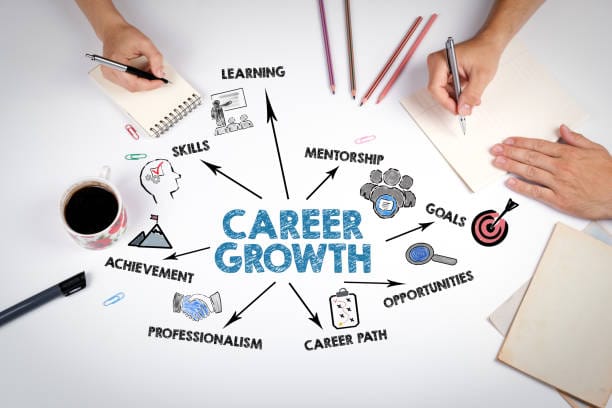
Building this skill set doesn't lock you into one job title. It opens the door to:
- Software Engineer / Full Stack Developer
- Backend Developer / Frontend Developer
- DevOps Engineer / Cloud Engineer
- AI Engineer / Machine Learning Engineer
- Data Engineer / Solutions Architect
The demand across all of these roles keeps climbing the entry point is the same fundamentals-first skill set, and the specialization comes later, once you know which part of the stack you actually enjoy.
The bigger picture
None of this is about chasing every trending keyword or collecting badges. The developers actually getting hired in 2026 are the ones who went deep on fundamentals, built things that work, got comfortable with AI as a tool rather than a crutch, and can explain their thinking clearly to another human. That's a shorter list than the fifteen-technology roundups make it look and it's a far more honest one.
If the goal is your first developer job, a career switch into tech, or simply not getting filtered out before a human even opens your resume, start with the fundamentals on this list, build one project you're actually proud of, and go from there.
Frequently asked questions
1. What are the most important skills every software developer should learn in 2026? Programming fundamentals, data structures and algorithms, databases, Git, cloud basics, and AI tool fluency form the core. Soft skills like communication and adaptability decide who gets promoted from there.
2. Is DSA still important in 2026, or has AI made it irrelevant? DSA is still central to technical interviews, especially at product-based companies. AI tools haven't reduced its importance if anything, they've made genuine understanding easier to spot and fake understanding easier to catch.
3. Do I need to learn AI and machine learning to get a software developer job in 2026? Not a full ML specialization. But basic AI literacy using coding assistants well, understanding prompt engineering, and reviewing AI-generated code critically is now expected across most developer roles.
4. Which programming language should I learn first in 2026? Python and Java remain the strongest starting points for fundamentals, with JavaScript essential if you're heading toward web development.
5. Are certificates enough without projects? No. Recruiters increasingly weight a working GitHub portfolio over a stack of certificates, since projects prove applied skill rather than course completion.
6. How important is cloud computing for a fresher software developer? Very. Even basic familiarity with AWS, Azure, or Google Cloud meaningfully improves employability, since most companies now deploy to the cloud by default.
7. What soft skills matter most for software engineers in 2026? Problem-solving, clear communication, teamwork within Agile workflows, and adaptability to new tools consistently separate strong performers from average ones.
8. Is a computer science degree necessary to become a software developer? No. A degree helps, but a strong project portfolio, solid fundamentals, and demonstrable problem-solving ability matter more to most hiring managers than the degree itself.
9. How do I build a strong GitHub portfolio as a student? Commit consistently, write clear README files, finish projects rather than abandoning them halfway, and prioritize a few complete builds over many incomplete ones.
10. What mistakes should I avoid while learning software development skills? Avoid spreading yourself across too many technologies, skipping DSA, delaying projects until you "feel ready," and treating soft skills or AI fluency as optional extras.
11. Are internships necessary before applying for full-time developer roles? They're not mandatory, but they consistently improve interview performance by exposing students to real codebases, deadlines, and team workflows before their first full-time job.
12. What is system design, and do freshers need to know it? System design covers how to architect scalable, reliable software. It's usually a mid-level interview expectation rather than a fresher one, but early exposure helps.
13. Which cloud platform should I learn first AWS, Azure, or Google Cloud? AWS has the widest market share and job demand in 2026, making it a strong default starting point, though all three are valid depending on your target companies.
14. Do backend developers need to know frontend skills too? Not deeply, but a working understanding of HTML, CSS, and how frontend consumes your APIs makes you a noticeably more effective backend developer.
15. How long does it take to build these skills from scratch? With consistent effort, a solid fundamentals base plus one or two real projects typically takes six to twelve months faster with focused, project-driven learning rather than passive tutorial-watching.
Suggested internal links
- How to build a GitHub portfolio recruiters actually notice
- DSA roadmap for beginners: what to learn and in what order
- AI tools every developer should know how to use in 2026
Suggested external references
- Stack Overflow Developer Survey (for language and tool popularity data)
- OWASP Top 10 (for secure coding fundamentals)
- Cloud provider certification pages (AWS, Azure, GCP) for structured learning paths
Semantic keyword coverage summary
Primary and secondary keywords woven in naturally: skills every software developer should learn in 2026, software engineer skills 2026, software developer skills, skills required to become a software engineer, DSA, cloud computing, DevOps, AI literacy, prompt engineering, cybersecurity fundamentals, system design, GitHub portfolio, internship experience, soft skills for developers, in-demand programming skills 2026.