
Himshikhar FAQ - Everything you need to know about IIT Mandi's Summer Residential Program

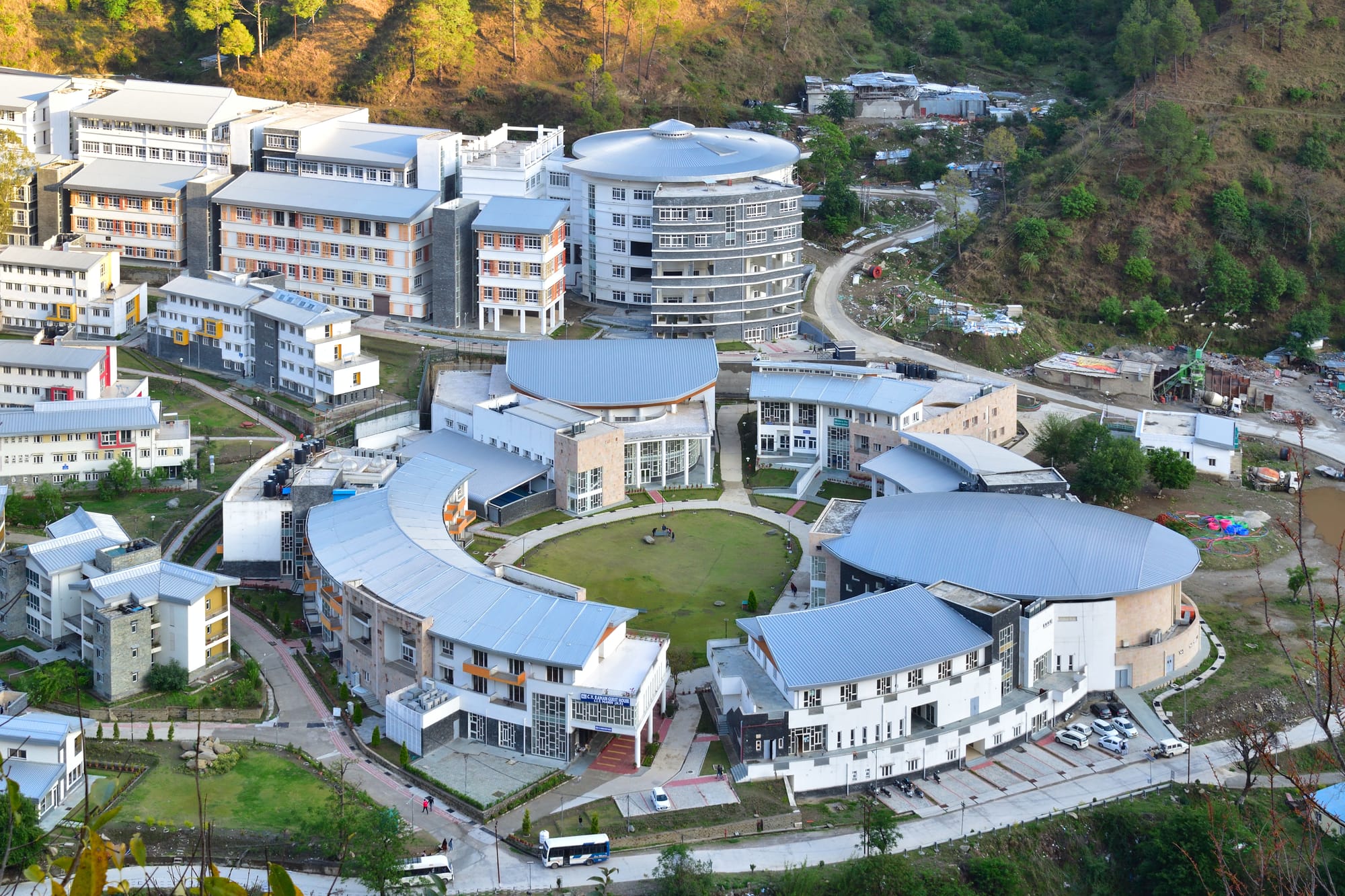
You've probably seen it by now - the IIT Mandi summer program called Himshikhar 2026. A 2-month residential program, set on an actual IIT campus deep in the Himalayas of Himachal Pradesh. IIT faculty teaching you. Hostels, mess, labs - the full campus experience. And a CCE, IIT Mandi certification at the end of it.
It sounds compelling. Maybe too good. And if you're being honest, you have questions. Real ones. The kind that don't get answered by a brochure.
Is the IIT credential actually real, or is it a marketing trick? What does a day on campus actually look like? Is the fees worth it? What happens after the program ends?
This article answers every question you have - directly, factually, and without the fluff.
By the end of it, you'll know exactly what Himshikhar 2026 is, what it isn't, and whether it's the right move for you this summer.
Is this actually from IIT Mandi, or is it just named like that?
This is the most important question, and it deserves a completely straight answer.
Himshikhar 2026 is powered by the Centre for Continuing Education (CCE), IIT Mandi - in partnership with Masai. CCE is an official academic body of IIT Mandi, not a private company that has licensed the IIT name. The certification you receive says CCE, IIT Mandi on it. The professors teaching you hold faculty positions at IIT Mandi. You live on the actual IIT Mandi campus in Kamand Valley, Himachal Pradesh.
It is not a B.Tech degree. It is not regular admission to IIT Mandi. But it is a residential, IIT-certified program where you live in IIT hostels, eat at the IIT mess, learn in IIT classrooms, and are taught by IIT Mandi professors. The credential is institutional and real.
I didn't clear JEE. Will I feel out of place?
Himshikhar is not built for JEE rankers. It's built for motivated students who want to do something real with their summer.
The cohort around you will be peers from all walks of student and professional life - 12th passouts, 2nd,3rd & final year students, working professionals - who may or may not have cleared JEE. What they share is the decision to show up, work hard, and build something real over two months.
Your entrance exam score, your college, your CGPA - none of that defines what you get out of Himshikhar. What you do with two months of living alongside driven peers, working under real deadlines, and presenting your project to a faculty and industry panel - that's what defines it.
Where exactly is IIT Mandi? How do I get there?
IIT Mandi's main campus is in the Kamand Valley, Mandi district, Himachal Pradesh - about 1,000 metres above sea level, surrounded by pine and deodar forests with the Uhl river running alongside.
How to get there:
- From Delhi: Overnight Volvo bus to Mandi town (12–13 hours), followed by a short cab to campus. Most students take this route.
- From South India / other cities: Fly into Chandigarh or Delhi, then connect to Mandi by bus or cab.
- Nearest railhead: Kiratpur Sahib (~3–4 hours by road)
- Nearest airport: Bhuntar (Kullu-Manali Airport), ~2 hours away
And once you're there - the location immediately resets everything. No traffic. No city noise. No seventeen distractions pulling your attention in different directions. Just the valley, your cohort, and the work.
What does a typical day actually look like?
This is not a vacation with some classes sprinkled in. A typical weekday at Himshikhar is structured, intense, and purposeful.
Mornings are IIT faculty-led lectures in smart classrooms. Not pre-recorded videos. Not slides read aloud. Live instruction from professors who have PhDs from IIT Kanpur, IIT Madras, IIT Delhi, and institutions abroad - researchers who've worked at GE Aviation, Inria France, Intel Labs, and IISc.
Afternoons shift to lab sessions guided by IIT Mandi PhD Teaching Assistants. Hands-on practice where you get real feedback on real code - not auto-graded multiple choice. This is where concepts stop being abstract and start becoming something you can actually build with.
Evenings are for project work, doubt-clearing sessions, peer collaboration, and Night Owl coding sessions - the informal late-night grind where the actual breakthroughs happen.
Weekends are completely yours. And when your backyard is the Himalayas, that means treks, river walks, and the kind of mental reset that makes Monday feel genuinely exciting.
It's intense. It's designed to be.
What events happen on campus? Is there more than just classes?
This is where IIT Mandi's culture comes alive - and it's something that genuinely sets the campus apart.
Xpecto - IIT Mandi's annual inter-college technical fest, billed as the Himalayas' largest technical festival - is an institution in itself. Organized by the Science and Technology Council (SnTC) of IIT Mandi, Xpecto brings together students from IITs, NITs, IIITs, and top engineering colleges across India for robotics, hackathons, RC plane competitions, astronomy events, management challenges, and more. It's the kind of event that reminds you why being on an IIT campus is different from being anywhere else.
As a Himshikhar student spending two months on campus, you become part of the same IIT Mandi community that runs and lives events like Xpecto. The culture of technical ambition, peer competition, and collaborative building that defines these events doesn't disappear between fests - it's woven into daily campus life.
Beyond that, the program itself includes bi-weekly masterclasses from 10+ industry leaders, in-person project feedback sessions, and access to the full IIT Mandi recreational infrastructure - playground, activity areas, and the campus community around you every day.
How is this different from just doing an online course?
Here's what you genuinely cannot get on YouTube or any online platform, regardless of how good the content is.
Accountability with actual stakes. When you're on a campus, with faculty monitoring your progress, a cohort depending on you, and a boardroom demo at the end of the program where you present to industry panelists - you show up differently. Online courses have notoriously low completion rates. Himshikhar runs for two months in a residential IIT setting with a structured daily schedule. The environment manufactures the discipline that willpower alone usually can't.
A credential that carries institutional weight. A YouTube completion means nothing on a resume. A CCE, IIT Mandi certification paired with a documented capstone project that was evaluated by a faculty and industry panel is proof of practical, industry-ready skills developed under IIT mentorship. Those are categorically different things in an interview.
The peer network. The students you'll spend two months with - debugging at midnight, prepping for demos, going on weekend treks in the Kamand Valley - become a real professional network. Not a LinkedIn connection you've never spoken to. People who've been through something with you.
Live faculty access. The professors teaching at Himshikhar have PhDs from IIT Kanpur, IIT Madras, IIT Delhi. You can ask them questions in person. You can take their feedback on your project directly. You can implement their suggestions and see the outcome in real time. That feedback loop beats passive content consumption in a way that's difficult to overstate.
The fee is ₹1.5 lakh. Is it actually worth it?
Let's be honest about the math.
₹1,50,000 for two months covers:
- Hostel accommodation
- All meals (breakfast, lunch, dinner)
- Smart classroom and lab access
- 190 hours of structured instruction (100 hrs IIT faculty + 50 hrs PhD TA tutorials + 40 hrs industry masterclasses)
- CCE, IIT Mandi certification
- Masai Project Completion Letter
- Industry mentor sessions and in-person feedback
- Welcome kit and campus recreation access
For context: a decent PG accommodation in Bengaluru, Mumbai, or Delhi costs ₹10,000–15,000 per month for a room alone. Add food and a structured course, and you're looking at ₹40,000–50,000 for two months - for a far less credentialed and far less immersive experience.
The real question isn't whether the fee is large. It's what it buys you: two months of deep focus in the Himalayas, IIT-quality instruction, an IIT-certified portfolio project, and an environment that genuinely changes how you think about building things.
Whether that trade is worth it depends on your career goals and your financial situation - and that deserves honest consideration, not just marketing reassurance.
What does the certificate actually say? Will it help me get a job?
The certificate is a Program Completion Certificate issued by CCE, IIT Mandi - an official IIT body. Alongside it, you receive a Project Completion Letter from Masai that documents what you built, the tech stack you used, and how it was evaluated by the panel.
Direct answer to will it get me a job? - The program does not offer placement support. There is no dedicated placement team, no company tie-ups for hiring, no guaranteed interviews.
What the program gives you is the skills, the credential, and the project portfolio to compete more effectively in the market yourself. Students who genuinely build their capstone projects, can walk an interviewer through their architecture decisions, and carry a CCE IIT Mandi certification into placements are in a meaningfully stronger position than students with only a degree and no project work. But the program won't do that conversion for you - it gives you the tools, not the outcome.
What happens six months after the program ends?
Six months after Himshikhar, the value shows up in specific, tangible ways.
Your resume is different. An IIT Mandi certification and a documented capstone project stand out in a pool where most candidates have roughly similar degrees from roughly similar colleges. It's a specific differentiator - and one that signals practical, applied skills rather than passive credential collection.
Your interview conversations are different. You've built something real - a deployed ML model, a functioning AI agent, a full-stack application with real architecture decisions. You can talk about what broke, how you debugged it, what you'd do differently. That specificity is what separates candidates who studied something from candidates who did something. Interviewers notice.
Your peer network is real. Two months in a residential setting with students from across India, under shared pressure, creates the kind of connections that actually stick. These aren't networking event handshakes. They're relationships forged in a lab at 11 PM when something's broken and you've got a demo in the morning.
Your relationship with how you learn has shifted. Having worked on intensive projects under IIT faculty supervision is an experience that changes your baseline. You've been held to a high standard and met it. That's something you carry into every room you walk into after.
This emphasis on doing rather than simply studying reflects a broader shift in how Indian higher education is evolving. As BW Education reported, "The inclusion of entrepreneurship and venture building is also significant at a time when campuses are increasingly being seen as spaces for innovation and startup creation. By introducing students to both technology and enterprise, the programme seeks to encourage applied thinking at an early stage."
Himshikhar is designed precisely around this idea - not just teaching you what AI can do, but putting you in the position of someone who has to build something with it, defend it, and take it forward.
I'm a 12th passout. Am I eligible?
Yes - for two of the five tracks.
The Software Development with AI and Entrepreneurship & Venture Building tracks are open to 12th pass and above, including students with no prior coding background.
The AI & ML, Agentic AI Systems, and Data Science tracks require you to be a 2nd year UG student or above, as they assume some foundational exposure to mathematics and basic programming.
If you're a 12th passout interested in AI, the Software Development with AI track is where to start - it takes you from zero code to deploying full-stack applications with LLM integrations over eight weeks. That's not a consolation prize. That's a legitimately powerful foundation to walk into your first college year already holding.
What exactly is the Agentic AI track? I keep seeing the term everywhere.
Agentic AI refers to AI systems that don't just respond to prompts - they plan, reason, and take action autonomously. Not a chatbot that answers your question, but an AI that books your ticket, checks your calendar, handles the follow-up, and flags you only when something needs your attention.
The Agentic AI Systems track at Himshikhar covers prompt engineering, Retrieval-Augmented Generation (RAG), single-agent workflows, and multi-agent orchestration using frameworks like CrewAI and LangGraph. Capstone projects include a Personal Finance Agent and an IRCTC Travel Concierge - both built with real API integrations.
Almost no undergraduate curriculum in India currently teaches this formally. If you're going to spend a summer learning something, learning the thing that's reshaping every industry before your peers have even heard the term is the right decision.
Who are the actual professors? Are they full-time IIT faculty?
Yes. These are verifiable, full-time IIT Mandi faculty members - not guest instructors or adjuncts assembled for a brochure.
- Dr. Aditya Nigam - Associate Professor, PhD IIT Kanpur. Over a decade of teaching Deep Learning. Research in Biometrics and Medical Image Processing.
- Dr. Arnav Vinayak Bhavsar - Professor, PhD IIT Madras. Postdoctoral research at GE Global Research and UNC Chapel Hill. AI, Deep Learning, Medical Image Analysis.
- Dr. Indu Joshi - Assistant Professor, PhD IIT Delhi. Postdoc at Inria France and TU Munich. President of India Silver Medalist.
- Dr. Manoj Thakur - Professor, PhD IIT Roorkee. 14+ years at IIT Mandi. Three-time teaching excellence awardee. ML, Optimization, Computational Finance.
- Dr. Parimala Kancharla - Assistant Professor, PhD IIT Hyderabad. Former Research Scientist at Intel Labs, Bangalore. Generative Modeling and Deep Learning Video Compression.
- Dr. Satvasheel Powar - Associate Professor & Dean (Finance & Accounts), IIT Mandi. PhD Monash University. Stanford Ignite alumnus. Leads the Entrepreneurship track.
- Dr. Rajeev Kumar - Professor, PhD IIT Roorkee. Former engineer at GE Aviation. Smart Structures and Vibration Control.
- Dr. Sanjeev Nara - Assistant Professor, PhD in Cognitive Neuroscience, Spain. Postdoc at University of Giessen, Germany. AI for Neuroimaging and Human-Computer Interaction.
These are the people standing at the front of your classroom. You can look each of them up on the IIT Mandi faculty directory.
What's a boardroom demo? Is it like a college viva?
It's nothing like a college viva.
At the end of the program, you present your capstone project to a panel of IIT Mandi faculty and industry experts. The format mirrors how product teams present to stakeholders or how founders pitch to investors - not an examiner checking whether you memorised the right answer, but a panel asking hard questions about your design decisions, your trade-offs, your results, and what you'd do differently.
You've spent two months building something real - a deployed ML model, a functioning AI agent, a full-stack application, or a complete venture pitch. The boardroom demo is you defending that work to people who will push back on it.
This is exactly why the Masai Project Completion Letter carries weight - it documents a project that was evaluated by a panel, not just submitted and auto-graded.
Can my parents talk to someone before I apply?
Yes - and this is genuinely worth doing before any payment is made.
- WhatsApp: +91 87929 74750
- Email: info.cce@iitmandi.ac.in
Counselling sessions are a formal part of the application process and are specifically built to address the questions parents and students typically raise - what the credential means, what the campus setup looks like, what a typical day looks like, and what the refund and payment policies are.
One thing to be absolutely clear about before any money changes hands: all payments after admission are non-refundable. The ₹999 application fee is also non-refundable. This is stated clearly in the program's terms and should be part of any parent or family conversation before applying.
The Full Fee Breakdown
₹5,000 hostel security deposit (refundable on departure) is payable alongside the fee.
What's included: Hostel accommodation (2 months), all meals, smart classrooms and labs, internet and e-library, CCE IIT Mandi certification, mentorship and industry sessions, welcome kit, playground and activity area access.
How to Apply: Step by Step
- Fill the application form and register for the entrance test. Application fee: ₹999.
- Clear the entrance test - aptitude and reasoning. Your score determines eligibility.
- Attend counselling - choose your track, receive your Provisional ID and Admission Letter.
- Confirm your seat - pay the seat booking fee and complete onboarding.
- Report to IIT Mandi - Reporting date: May 16, 2026. Batch starts: May 18, 2026.
One Last Thing
If you've read this far, you already know the answer.
The program is real. The faculty are real. The credential is real. And the two months on an IIT campus in the Himalayas - surrounded by serious peers, taught by serious researchers, building something you'll actually be able to defend in an interview - is a summer that most people will wish they'd taken when they had the chance.
Seats are limited by the residential capacity of the campus.
WhatsApp: +91 87929 74750 | Email: info.cce@iitmandi.ac.in Official program page: cce.iitmandi.ac.in/himshikhar-2026
Also read: