
Claude Code explained: What it is & how to use it

If your LinkedIn feed, dev Slack channels, or Reddit threads feel like they're suddenly full of one phrase, you're not imagining it. Claude Code Anthropic's terminal-based AI coding agent has gone from a niche developer tool to one of the most talked-about AI products of 2026. It isn't just developers discussing it anymore either; product managers, writers, researchers, and students are all asking the same question: what exactly is Claude Code, and is it worth learning?
This guide breaks it down in plain language what Claude Code is, how it's different from other AI tools, what it costs, how it compares to competitors, and the real questions students and early-career developers are asking about it.
What is Claude Code?
Claude Code is an agentic, terminal-based AI coding assistant built by Anthropic. Instead of living in a browser tab like a typical chatbot, it runs directly inside your command line and works on your actual project files reading them, editing them, and executing tasks on your behalf.
In simple terms:
- Claude = the underlying AI model family built by Anthropic
- Code = the terminal interface that lets that model act directly on your codebase, instead of just chatting about it
According to Anthropic's own documentation, Claude Code can build features from a plain-English description, debug issues by analyzing your codebase directly, and answer questions about any part of a project all without you copying and pasting code back and forth.
What makes it different from a typical AI chatbot:
This shift from "AI that talks about code" to "AI that acts on code" is the core reason Claude Code is described as an agentic coding tool rather than a chatbot.
Is Claude Code an Agentic AI Tool?
Yes. This is one of the most searched questions about Claude Code, and the short answer is that agentic behavior is its defining feature. Rather than requiring a person to spell out every single step, Claude Code is given a goal and independently plans the steps needed to reach it searching the codebase, writing code, running tests, and iterating.
Its agentic toolkit includes:
- Sub-agents - multiple independent Claude Code instances that can research or build in parallel instead of one task at a time
- Slash commands - reusable, user-defined shortcuts for repeatable workflows
- Hooks - automation triggers that run at specific points in a task
- Agent Skills - packaged instructions, files, and scripts Claude can invoke on its own
- MCP (Model Context Protocol) - a way to connect Claude Code to outside tools like GitHub, Google Docs, or internal company systems
This agentic design is exactly why one detailed breakdown of the tool by product educator Teresa Torres describes the shift from browser-based Claude to Claude Code as the difference between manually copying files around and having an assistant that handles the entire workflow.
Claude Code pricing in 2026
Pricing is one of the most common short-tail search queries around this tool, so here's where things stand as of mid-2026:
Anthropic recommends connecting Claude Code to a Pro or Max subscription rather than an API key for most individual users, since subscription billing caps your cost while API billing can scale up unpredictably.
Quick tip: Most individual developers and students don't need to start on Max. Pro is the standard entry point you only need to upgrade if you're consistently running into rate limits during real work sessions.
Claude Code vs GitHub copilot vs cursor: How it stacks up
A lot of the "should I learn Claude Code" debate comes down to comparing it against the two other major AI coding tools developers already know.
Community discussion, particularly on the r/ClaudeCode subreddit (which reportedly draws thousands of weekly contributors), consistently points to the same pattern: developers who invest time learning Claude Code's deeper features CLAUDE.md files, sub-agents, hooks, and slash commands report significant productivity gains, while developers who treat it like simple autocomplete get less value out of it.
The most common complaint in that same community isn't about code quality it's usage limits on the entry-level Pro plan running out faster than expected during intensive work sessions.
Claude Code: Common Questions From Students and Developers
Do I need to already know how to code to use Claude Code?
Not necessarily to get started, but you'll get far more value from it if you understand the basics of how software projects are structured. Claude Code is being positioned as a tool that accelerates learning, not replaces it Anthropic's own partnership with CodePath (the largest collegiate CS education provider in the US) put Claude Code in front of more than 20,000 students, many with limited prior coding background, to help them contribute to real open-source projects.
Is Claude Code actually worth it for beginners and students?
For students specifically learning to code, it's most useful as a guided pair-programmer rather than a shortcut asking it to explain why it made a change teaches you the underlying logic, not just the output.
How is Claude Code different from ChatGPT or a browser-based Claude chat?
The core difference is file access and memory. In a browser chat, every new conversation starts from zero context. In Claude Code, your project files themselves act as persistent memory nothing needs to be re-uploaded or re-explained each session.
What is CLAUDE.md and why does it keep coming up?
It's a markdown file Claude Code reads automatically at the start of a session to understand your project's context, conventions, and instructions essentially a memory file that keeps the AI aligned with how you want it to work, without repeating yourself every time.
Can non-developers use Claude Code too?
Yes, this is one of the more surprising 2026 trends. Product managers, researchers, and writers have started using Claude Code for tasks like structured research, competitive analysis, and workflow automation, precisely because it can read, organize, and act on local files the way a technical teammate would, similar to how marketers are building AI content workflows.
How to get started with Claude code
- Install Node.js - Claude Code runs on the Node.js runtime, a one-time setup.
- Run the install command - in your terminal (Mac uses a curl command; Windows uses an irm command via PowerShell).
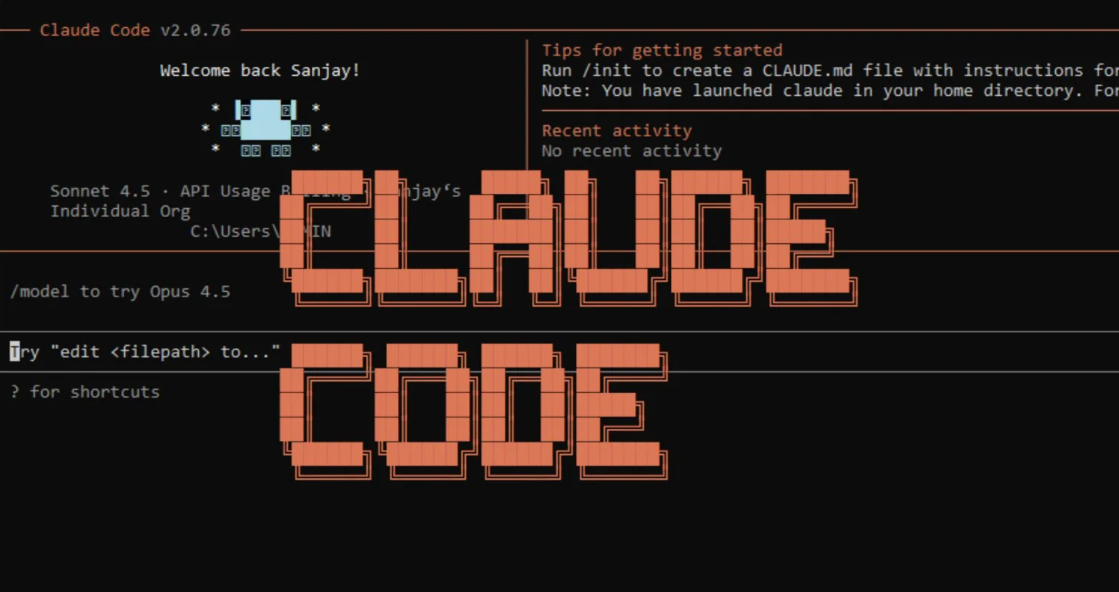
- Navigate to your project folder and launch it by typing claude.
- Connect your Claude Pro/Max account (recommended over an API key for predictable billing).
- Run /init - this is your first slash command and sets up initial project context.
Full official installation steps are available in Anthropic's Claude Code documentation.
Why agentic AI skills are becoming a career signal:
Here's the bigger pattern behind the Claude Code trend: agentic AI isn't staying confined to engineering teams. The same "give it a goal, not a script" approach that Claude Code uses for coding is now showing up in how companies plan research, run operations, and make strategic decisions. Reports of "productivity panic" inside engineering organizations in early 2026 reflect just how fast this shift is moving.
This is exactly why agentic AI skills are showing up as a hiring filter well outside pure engineering roles. Claude Code teaches you what an AI agent can do inside a codebase. But the same underlying idea agents that reason, plan, and act instead of just answering is now core to how business analysts, strategy teams, and product functions operate too.
If you're a student or early-career professional who wants that broader skill set not just using Claude Code as a tool, but understanding how Generative AI, Agentic AI, and data-driven decision-making fit together in a real business - BITSoM's Certification Program in Business Analytics with Gen & Agentic AI is built for that. It's a 6-month online program (8-10 hours/week, open to anyone 12th pass and above) covering Python, SQL, Power BI/Tableau, machine learning, LLMs and prompt engineering, and building your own AI agents through real case studies like SKU-level demand forecasting and operational dashboards, not just theory. It's aimed at exactly the audience most curious about tools like Claude Code: people early in their career who want to pair hands-on AI fluency with business decision-making skills, backed by a BITSoM certification and placement support.
Key Takeaways
- Claude Code is Anthropic's terminal-based, agentic AI coding assistant, it acts on your files directly instead of just chatting about them.
- Pricing in 2026 ranges from $17-20/month (Pro) up to $200/month (Max 20x), plus pay-as-you-go API billing.
- In developer sentiment surveys, Claude Code led AI coding tools with around 46% "most loved" status, ahead of Cursor and GitHub Copilot.
- Its biggest strength is agentic workflows sub-agents, hooks, slash commands, and persistent project memory via CLAUDE.md.
- Non-developers (PMs, researchers, writers) are increasingly using it too, not just software engineers.
- Hands-on coding fluency and AI-strategy leadership are two different (and both growing) career tracks in the agentic AI era.